
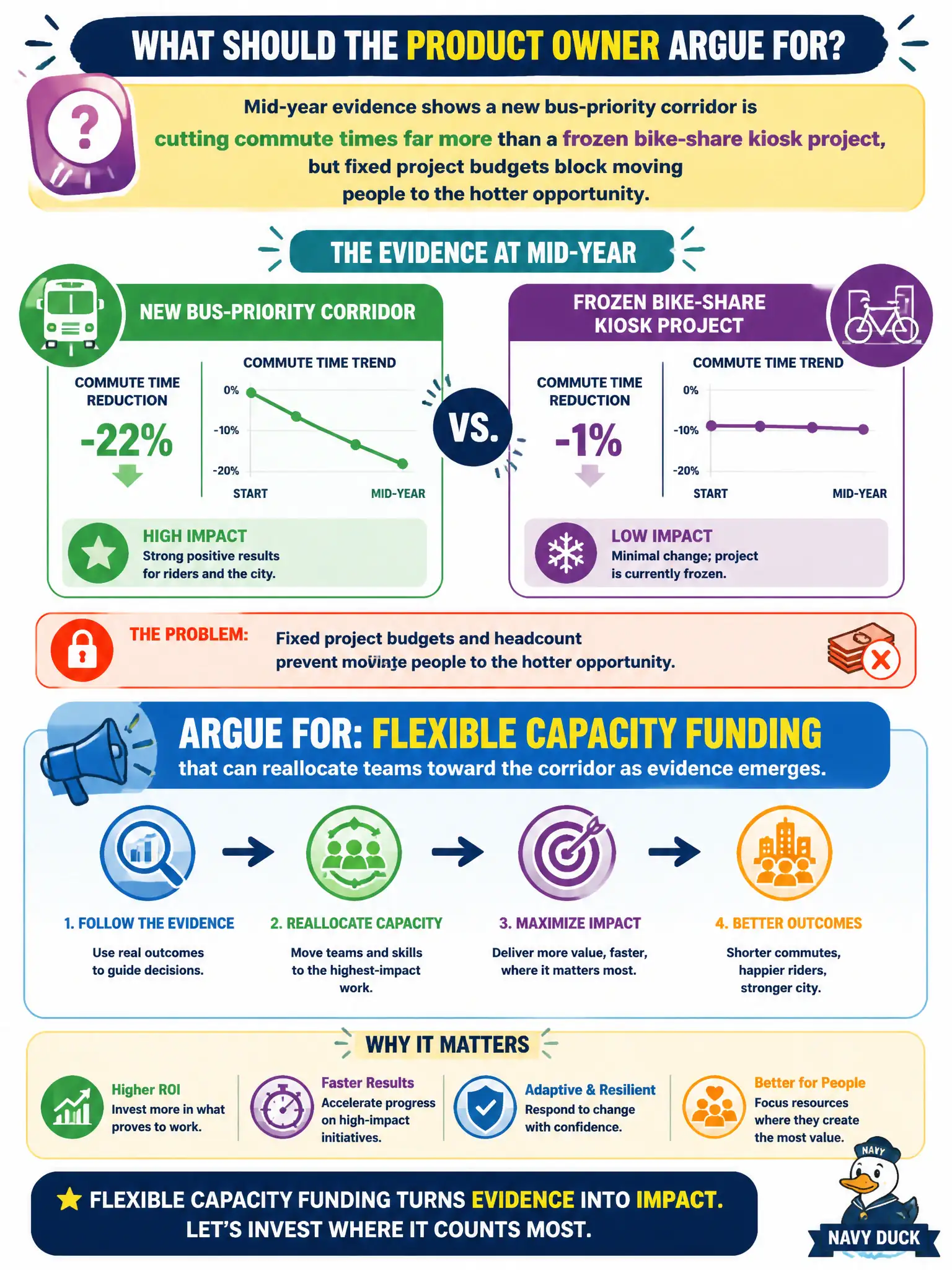
Mid-year evidence shows a new bus-priority corridor is cutting commute times far more than a frozen bike-share kiosk project, but fixed project budgets block moving people to the hotter opportunity. What should the Product Owner argue for?
Select an answer to reveal the explanation.
Short Explanation
Imagine two food trucks: one has a line around the block and one is empty, but the empty truck already bought the meat so it has to keep cooking. That is a sunk-cost trap. City portfolios should move cooks to where riders are actually getting home faster.
Full Explanation
Agile portfolios treat capacity as something to reallocate when evidence changes, not as a locked project envelope that must be spent. Mid-year evidence showing a bus-priority corridor cutting commute times far more than a frozen bike-share kiosk project should trigger flexible capacity funding toward the corridor. Sunk cost is not a reason to keep staffing a weaker transit bet, and equal splits or waiting for next year’s capital plan delay value already showing up in commute-time data. Flexible funding lets leadership inspect outcomes and adapt mid-year without pretending the original project list was a forecast of the future.
Finishing the kiosk project first because sunk cost must be recovered fails by the sunk-cost fallacy. Splitting both budgets in half so each department feels equal fails by fairness theater over evidence. Waiting for next fiscal year so the annual capital plan remains truth fails by delaying known higher-value outcomes.
Exam caveat: Reallocate capacity when outcome evidence changes; do not protect weaker bets for sunk-cost or calendar reasons. Operational check: Present corridor versus kiosk outcome data mid-year and move people toward the corridor under a flexible capacity rule, updating both forecasts transparently.