
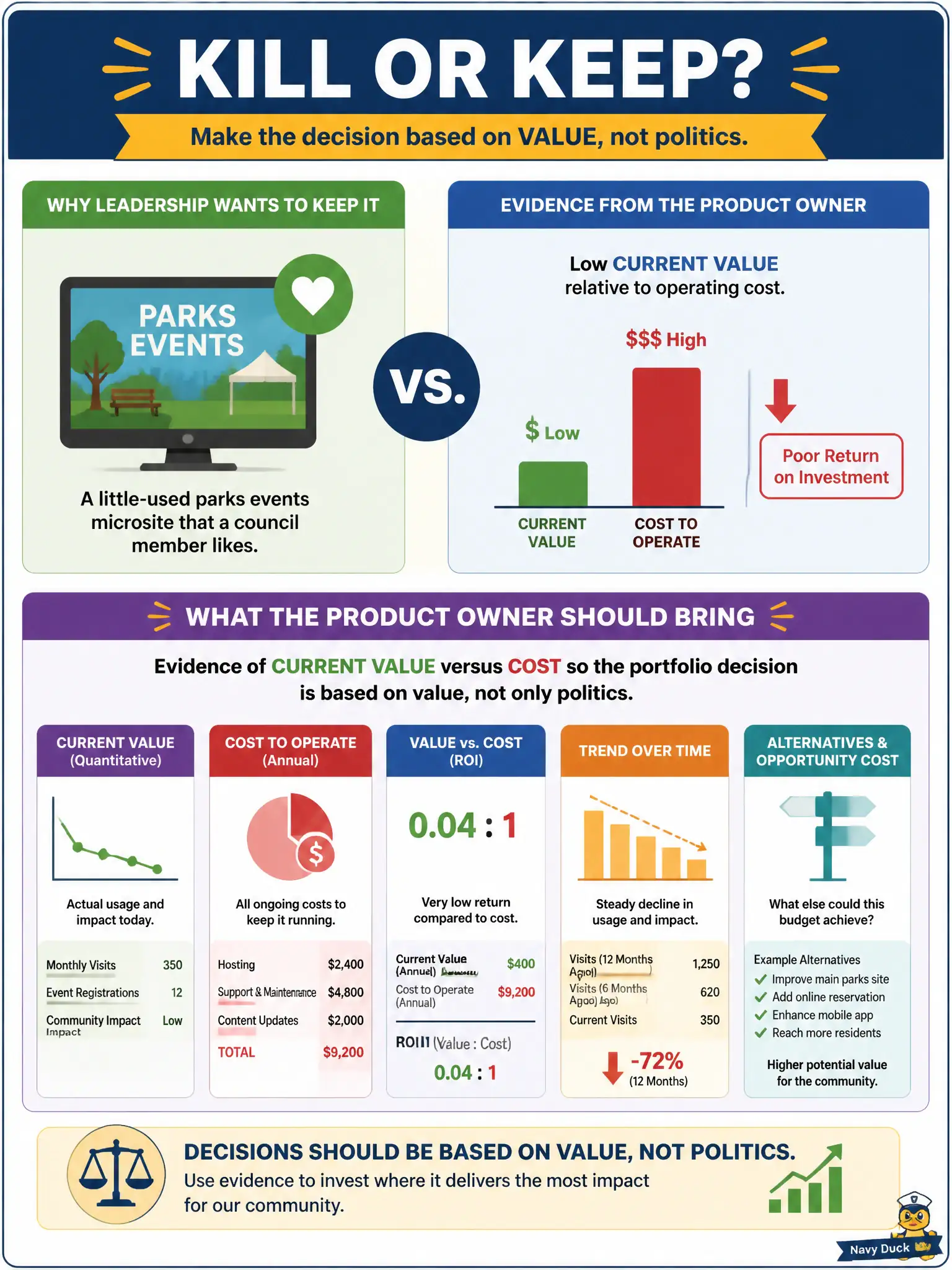
Leadership wants to keep a little-used parks events microsite because a council member likes it, while the Product Owner has evidence of low Current Value relative to operating cost. What should the Product Owner bring to the kill-or-keep discussion?
Select an answer to reveal the explanation.
Short Explanation
A favorite microsite can still be a money pit if almost nobody uses it. Bring Current Value versus cost to the table like a receipt, not a popularity contest. Portfolio kill-or-keep calls should follow evidence, even when a council member likes the logo.
Full Explanation
Portfolio keep-or-kill decisions should inspect evidence of value, not only political sponsorship. When leadership wants to keep a little-used parks events microsite because a council member likes it, the Product Owner should bring evidence of Current Value versus operating cost so the decision is based on value, not only politics. Feature promises and velocity describe output, not whether residents receive enough value to justify scarce capacity. Making that evidence transparent lets leadership choose with open eyes even when the conversation is uncomfortable.
Counting how many council members spoke at a ribbon-cutting fails because political theater is not Current Value. Promising to add more features until usage appears fails by spending more to chase a weak outcome. Using story-point velocity of the microsite team as proof the product should survive fails because output speed is not resident value.
Exam caveat: Kill-or-keep calls need Current Value versus cost evidence, not popularity alone. Operational check: Prepare a one-page parks microsite brief with usage, equity of who still benefits, operating cost, and opportunity cost to other parks work, and use it in the portfolio kill-or-keep discussion.