
Vaccine booking and restaurant-inspection scheduling both expect the same public-health Scrum Team’s full capacity next quarter. What should happen at the portfolio level?
Select an answer to reveal the explanation.
Short Explanation
Two products grabbing one team is two bosses claiming the same ambulance. If vaccine booking and restaurant inspections both think they own 100% of the people, somebody is lying to the portfolio. Make the capacity split explicit at the portfolio level, or stop pretending it is two teams.
Full Explanation
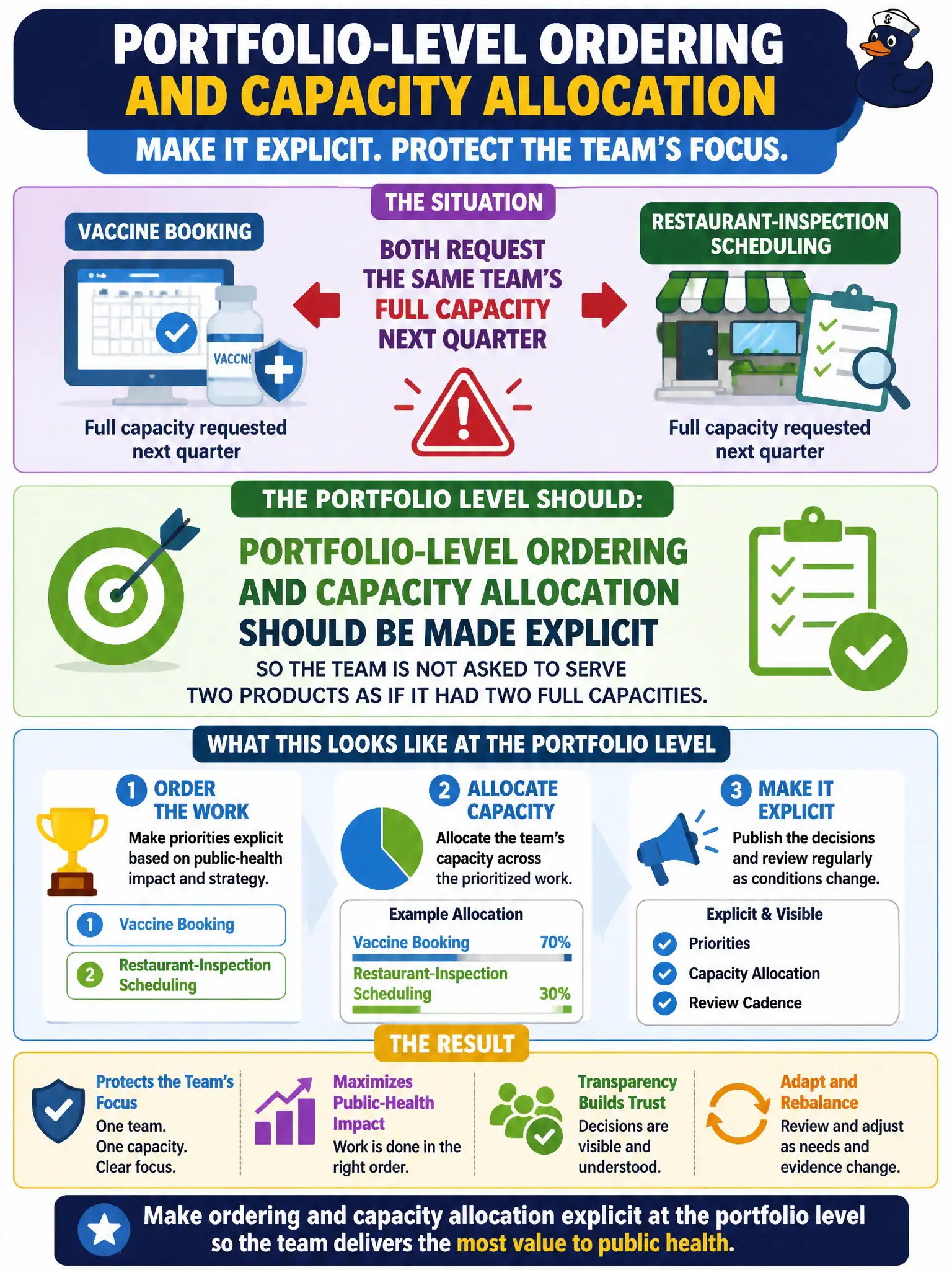
Shared Scrum Team capacity is a portfolio decision, not a local negotiation to hide. When vaccine booking and restaurant-inspection scheduling both expect the same public-health Scrum Team’s full capacity next quarter, forecasts, Product Goals, and stakeholder promises become incoherent. Portfolio-level ordering and capacity allocation should be made explicit so the team is not asked to serve two products as if it had two full capacities. Secret 50/50 splits, extra Product Owners, or first-email rules all leave the constraint untransparent and set both products up to miss.
Secretly splitting every Sprint evenly without telling either Product Owner fails by hiding the constraint and corrupting both forecasts. Adding a second Product Owner on both products fails because more orderers do not create more people. Letting whoever emails first receive the capacity fails by replacing strategy with inbox timing rather than portfolio intent.
Exam caveat: Make shared-team capacity allocation explicit at the portfolio level. Operational check: Convene portfolio leadership to choose one primary product for the team next quarter—or publish a real percentage split both Product Owners accept—and update forecasts and stakeholder promises accordingly.