
A change advisory board holds vaccine-booking releases for three extra weeks even when the Increment is Done and the operational risk is low. What should the Product Owner partner toward?
Select an answer to reveal the explanation.
Short Explanation
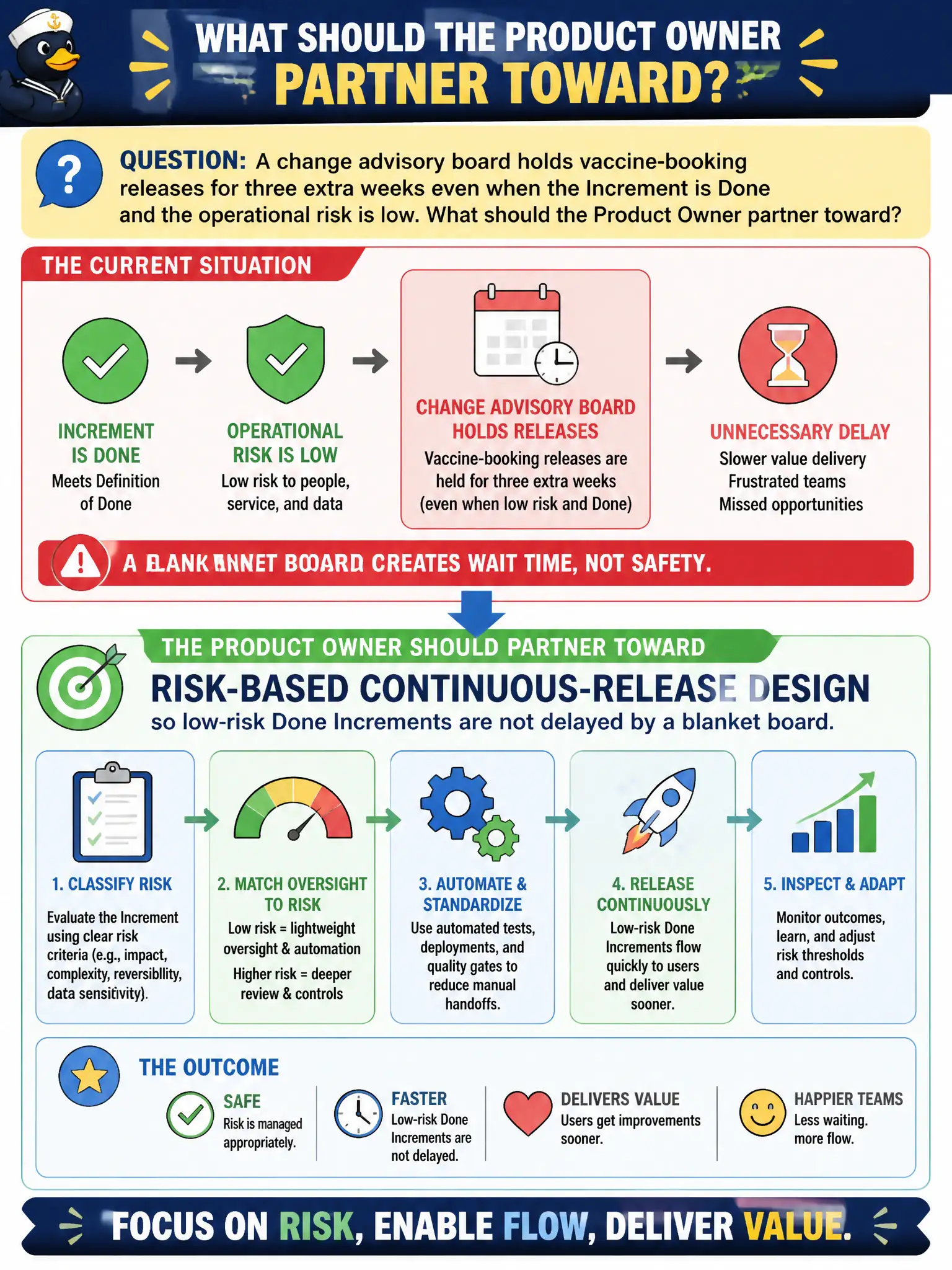
A Done vaccine-booking Increment sitting in a three-week board queue is a bike with the kickstand still down. Blanket delay is not the same thing as managing risk. Partner toward risk-based release design so low-risk health value can go live.
Full Explanation
Organization-level release controls should scale with risk, not apply a uniform delay to every Increment. When a change advisory board holds vaccine-booking releases for three extra weeks even when the Increment is Done and residual operational risk is low, Time-to-Market and empiricism suffer. The Product Owner should partner toward risk-based continuous-release design so low-risk Done Increments are not delayed by a blanket board. Expanding the board or transferring Product Backlog ownership to it magnifies politics without improving safety judgment.
A blanket freeze except for an annual window fails by maximizing delay rather than managing risk. Giving the board Product Owner accountability for the vaccine-booking backlog fails by confusing release governance with product ordering. Adding more board members so every clinic director votes on each release fails by slowing decisions with more politics.
Exam caveat: Match release control to risk; low-risk Done health Increments should not sit in a blanket queue. Operational check: Classify vaccine-booking release risk tiers with operations, allow continuous release for the low-risk Done tier, and reserve board review for higher-risk changes.