
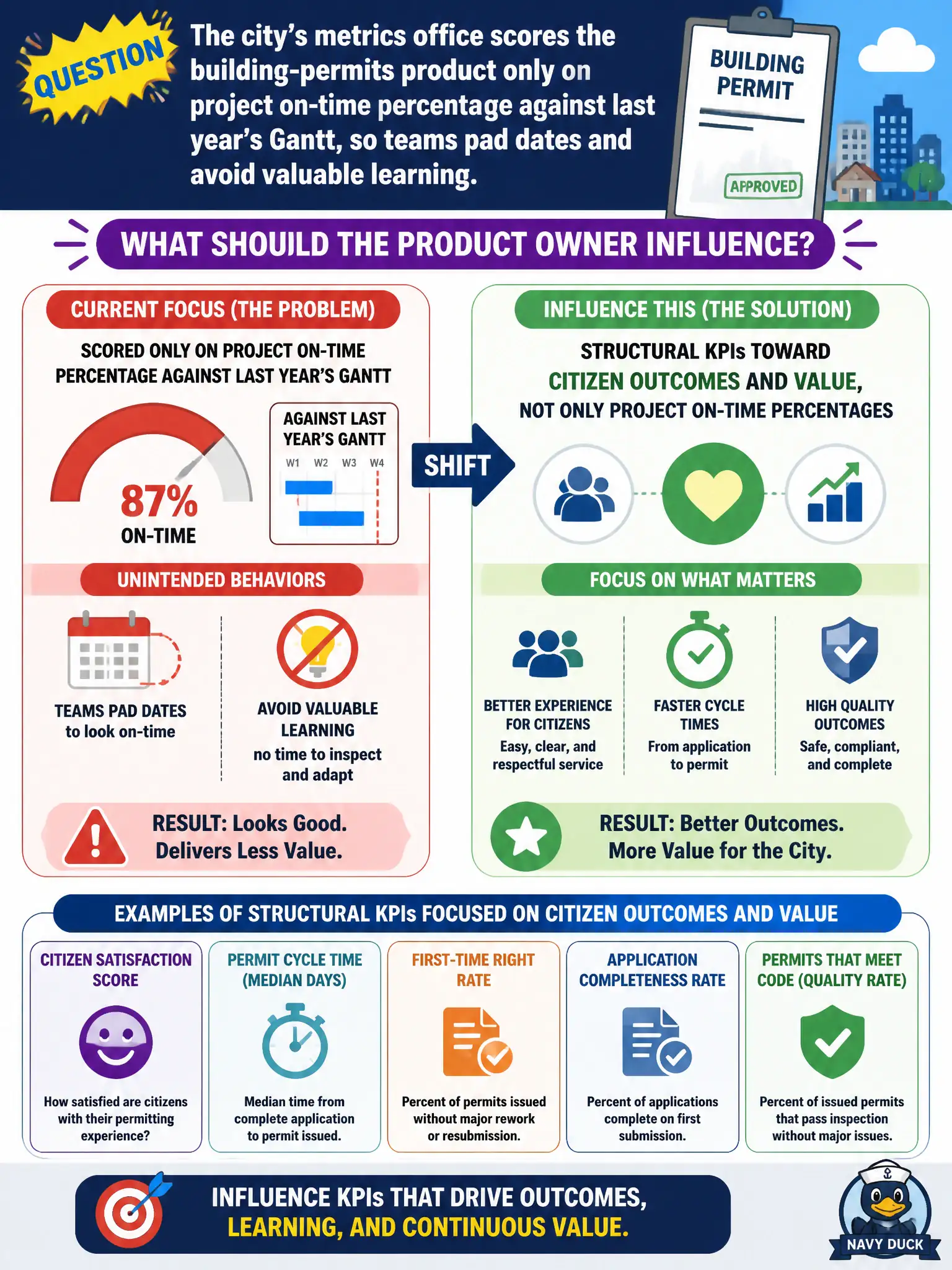
The city’s metrics office scores the building-permits product only on project on-time percentage against last year’s Gantt, so teams pad dates and avoid valuable learning. What should the Product Owner influence?
Select an answer to reveal the explanation.
Short Explanation
What the city scores is what the permits teams will chase. On-time percent against an old Gantt teaches people to pad dates, not to help applicants. Shift the structural KPIs toward citizen outcomes so the scoreboard matches real value.
Full Explanation
Organizational KPIs are part of organizational design because they drive behavior. When the city’s metrics office scores the building-permits product only on project on-time percentage against last year’s Gantt, teams pad dates and avoid valuable learning that might miss a line on the chart. The Product Owner should influence structural KPIs toward citizen outcomes and value—such as cycle time and first-pass completeness—not only project on-time percentages. Removing measures entirely or substituting story points simply installs a different output vanity metric.
Heavier on-time penalties so Gantt compliance becomes the Product Goal fails by punishing empiricism and honesty. Dropping all measures because Scrum forbids metrics fails—Scrum does not forbid outcome measures. Counting story points delivered as the sole citywide success KPI fails because points are output, not permit outcomes applicants actually feel.
Exam caveat: Score civic products on outcomes citizens feel, not only Gantt on-time percent. Operational check: Add permit cycle time and first-pass completeness to the portfolio scorecard beside cost, and stop using last year’s Gantt variance as the primary success definition.