
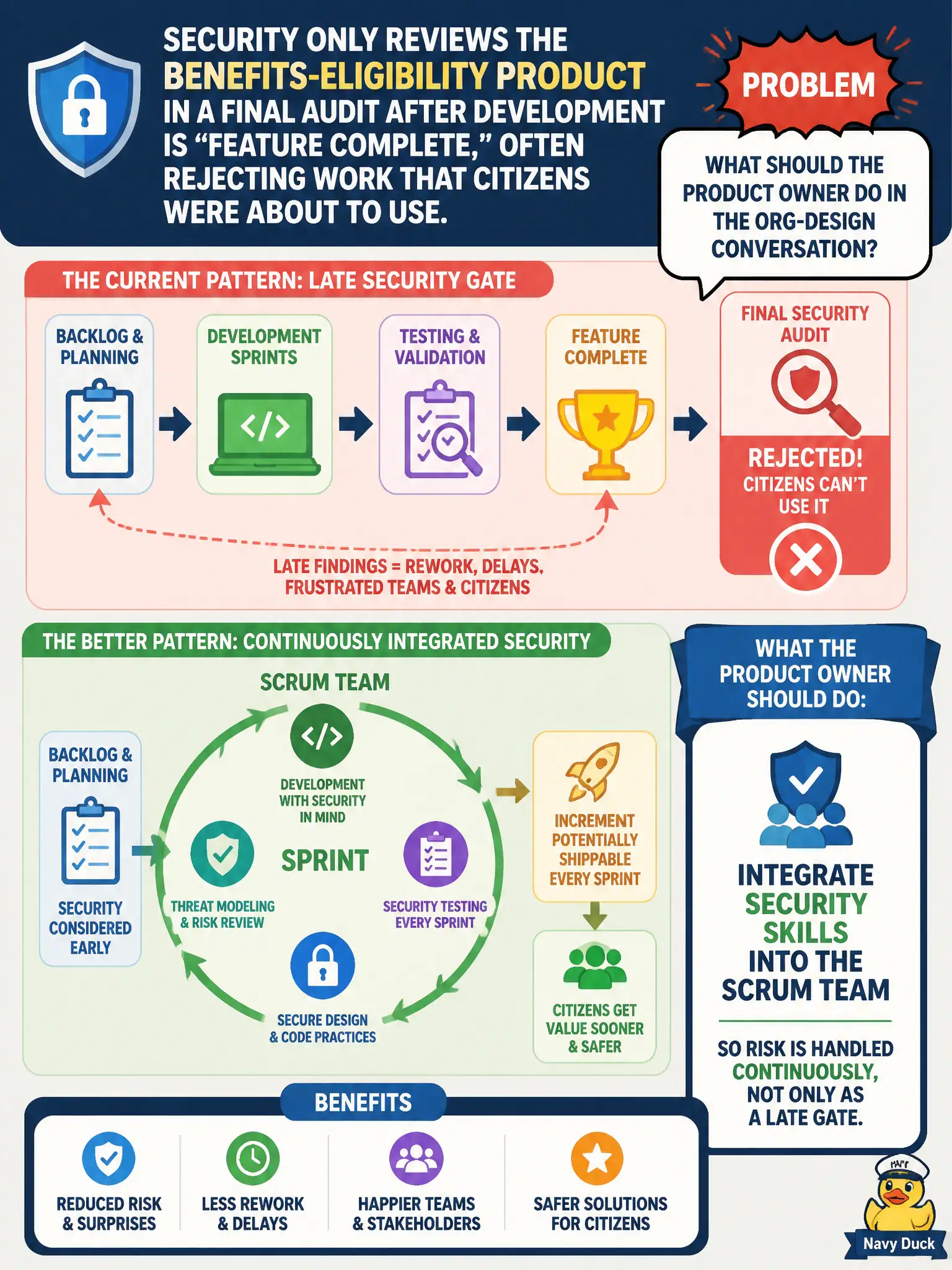
Security only reviews the benefits-eligibility product in a final audit after development is “feature complete,” often rejecting work that citizens were about to use. What should the Product Owner do in the org-design conversation?
Select an answer to reveal the explanation.
Short Explanation
If the locksmith only shows up after the housewarming, you will be moving furniture back out. Put security skill on the team so “Done” includes safe. A last-week audit is just a waterfall stage with a badge.
Full Explanation
Critical cross-functional skills such as security belong in the Scrum Team’s ability to produce a Done Increment of a benefits-eligibility product. When security only reviews in a final audit after “feature complete,” late external audits recreate phase gates, delay Time-to-Market, and turn quality into a surprise that rejects work citizens were about to use. The Product Owner should integrate security skills into the Scrum Team so risk is handled continuously, not only as a late gate. Making security a second Product Owner or parking it after Done merely relocates the gate.
Keeping security outside so Developers are not “slowed” fails because late rejection is slower and costlier than in-Sprint risk work. Scheduling a separate audit Sprint after every release so Done can ignore security fails by inventing a waterfall stage after Done. Asking security to become a second Product Owner for risk items fails by splitting backlog accountability.
Exam caveat: Security belongs in continuous Done, not in a final civic audit surprise. Operational check: Embed or pair security capacity into the eligibility Scrum Team, add security checks to the Definition of Done, and retire the end-only audit as the primary control.