
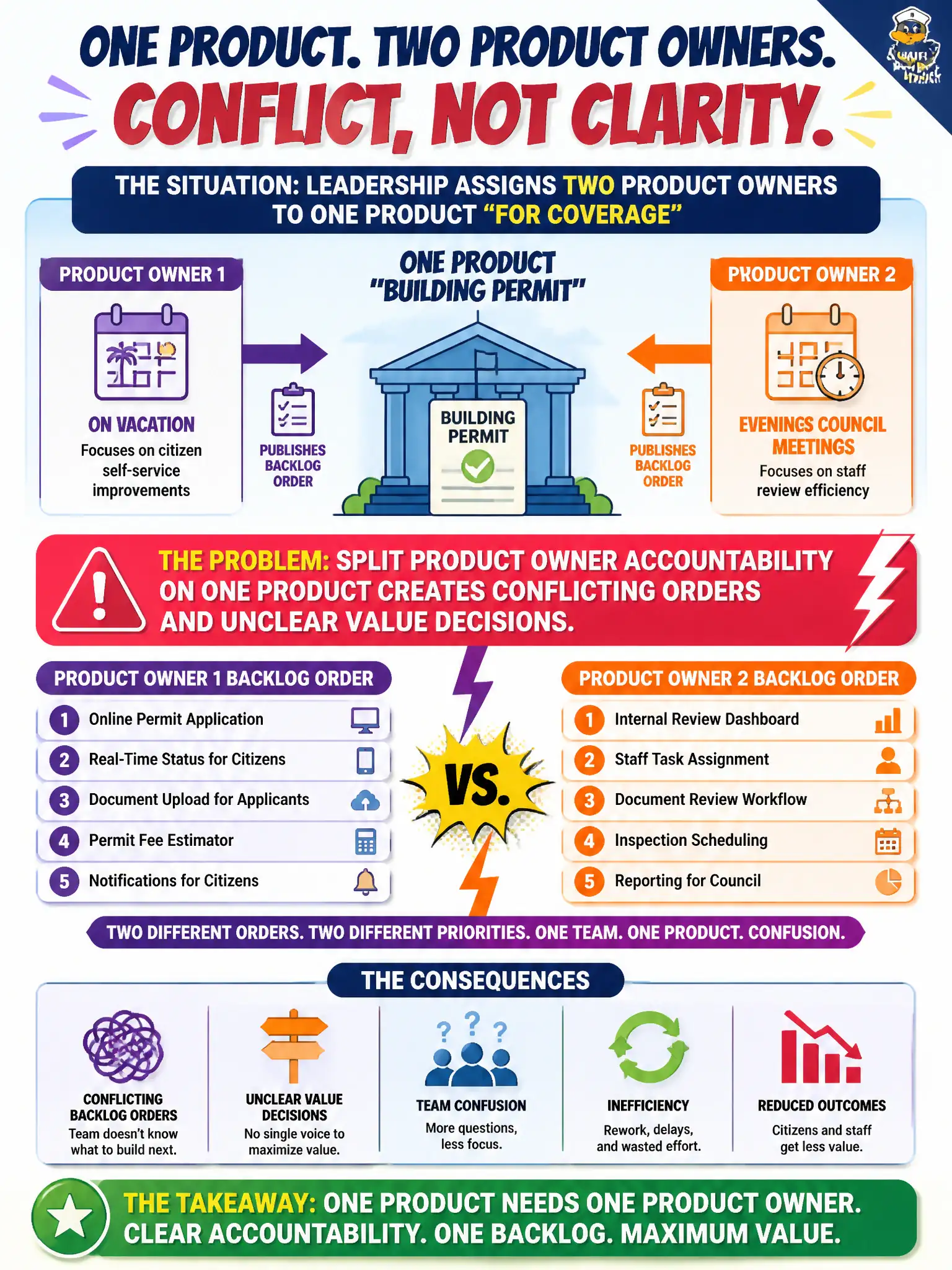
Leadership assigns two Product Owners to the single building-permit product “for coverage” during vacation and evening council meetings. They publish conflicting backlog orders. What problem should the candidate identify?
Select an answer to reveal the explanation.
Short Explanation
Two captains shouting different headings is not “coverage” — it is a collision course. One product gets one Product Owner so the order means something. Vacations need a deputy path, not a second steering wheel.
Full Explanation
Scrum holds one Product Owner accountable for the Product Backlog of a product. When leadership assigns two Product Owners to the single building-permit product “for coverage,” and they publish conflicting backlog orders, value decisions dilute and Developers and stakeholders become confused. Split Product Owner accountability on one product creates conflicting orders and unclear value decisions. Coverage for vacation or evening council meetings should be delegation under a single accountability, not parallel authority.
Claiming two Product Owners are required whenever daytime and evening stakeholders exist fails because Scrum does not multiply Product Owners by stakeholder schedule. Treating conflicting orders as healthy stakeholder choice fails because maximizing value requires coherent order, not competing stacks. Asking the Scrum Master to average the two orders fails by facilitating politics instead of restoring single accountability.
Exam caveat: One product has one Product Owner; coverage is delegation, not dual steering wheels. Operational check: Name a single accountable Product Owner for permits, define a deputy path for absence that cannot publish a competing order, and withdraw the second conflicting backlog ranking.