
A public-works construction bid is still open. The city’s own business-license portal shows the firm’s license expired last month. What is the OSINT finding?
Select an answer to reveal the explanation.
Short Explanation
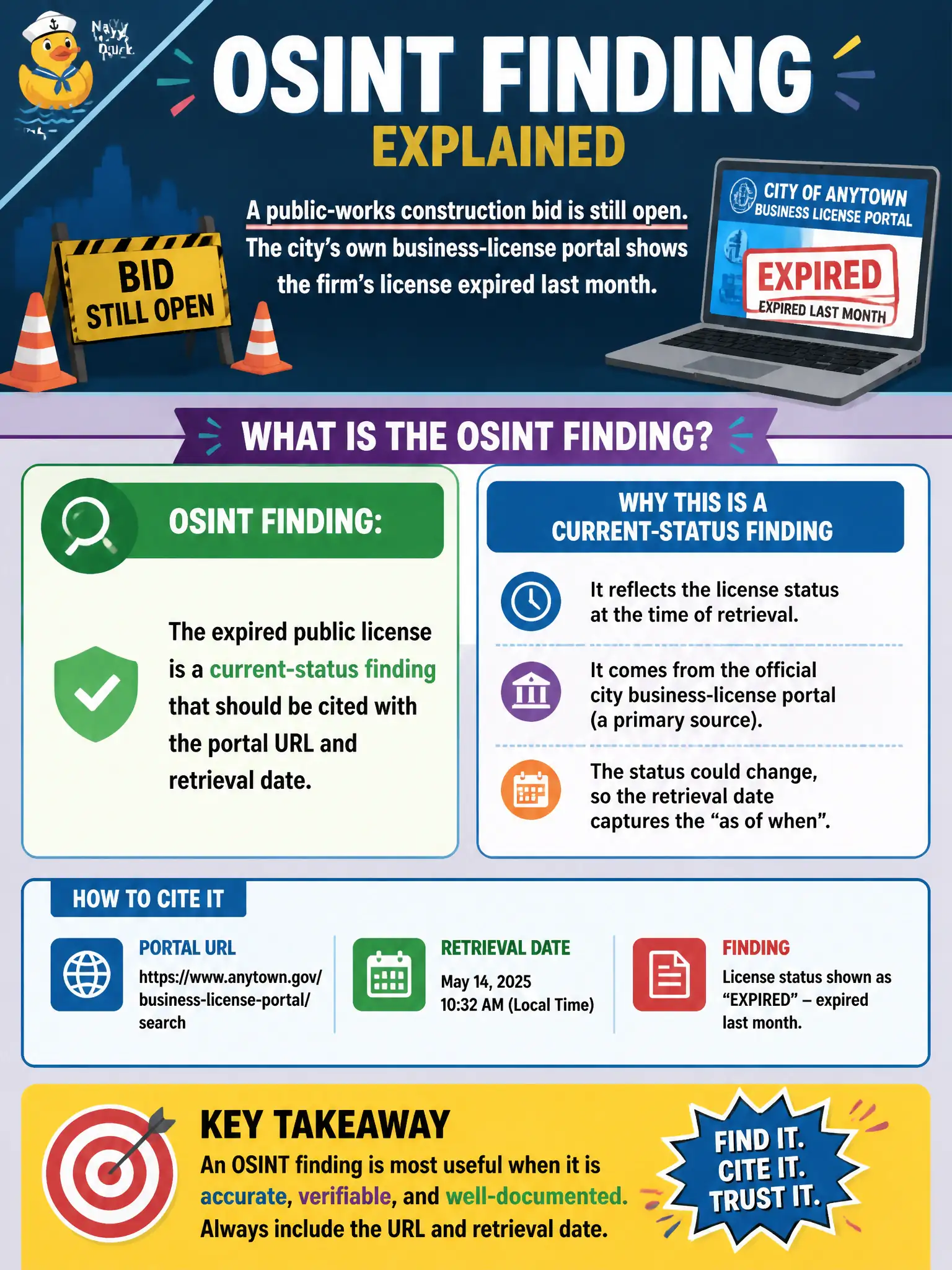
The city’s license clock is hanging right there on the public portal. If it says expired while the bid is live, that is today’s status—not a suggestion to mint a new license or edit the database. Cite the page and the time it was pulled.
Full Explanation
Municipal license portals are first-class business-OSINT sources for current contractor status during open public-works bidding. When the city's own business-license portal shows a firm's license expired last month while the construction bid remains open, the correct finding is a current-status observation cited with the portal URL, observed expiration, and retrieval timestamp so bid compliance staff can act on attributable public data.
Saying license portals always lag so expiration dates can never be used discards a primary civic source; lag is a caveat to document, not a reason to ignore today's displayed status. Issuing a new license from the OSINT desk invents licensing authority the research function does not hold. Changing the expiration date in the licensing database so a screenshot looks current is falsification of a civic system and is never OSINT.
Exam caveat: portals can update asynchronously with back-office renewals; report what the public page showed at retrieval time and allow licensing staff to confirm any pending renewal outside the OSINT product.
Operational check: archive the license portal view, record exact expiration and pull time, attach it to the open-bid context, and route to public-works procurement or licensing—without renewing or editing records from the OSINT role.