
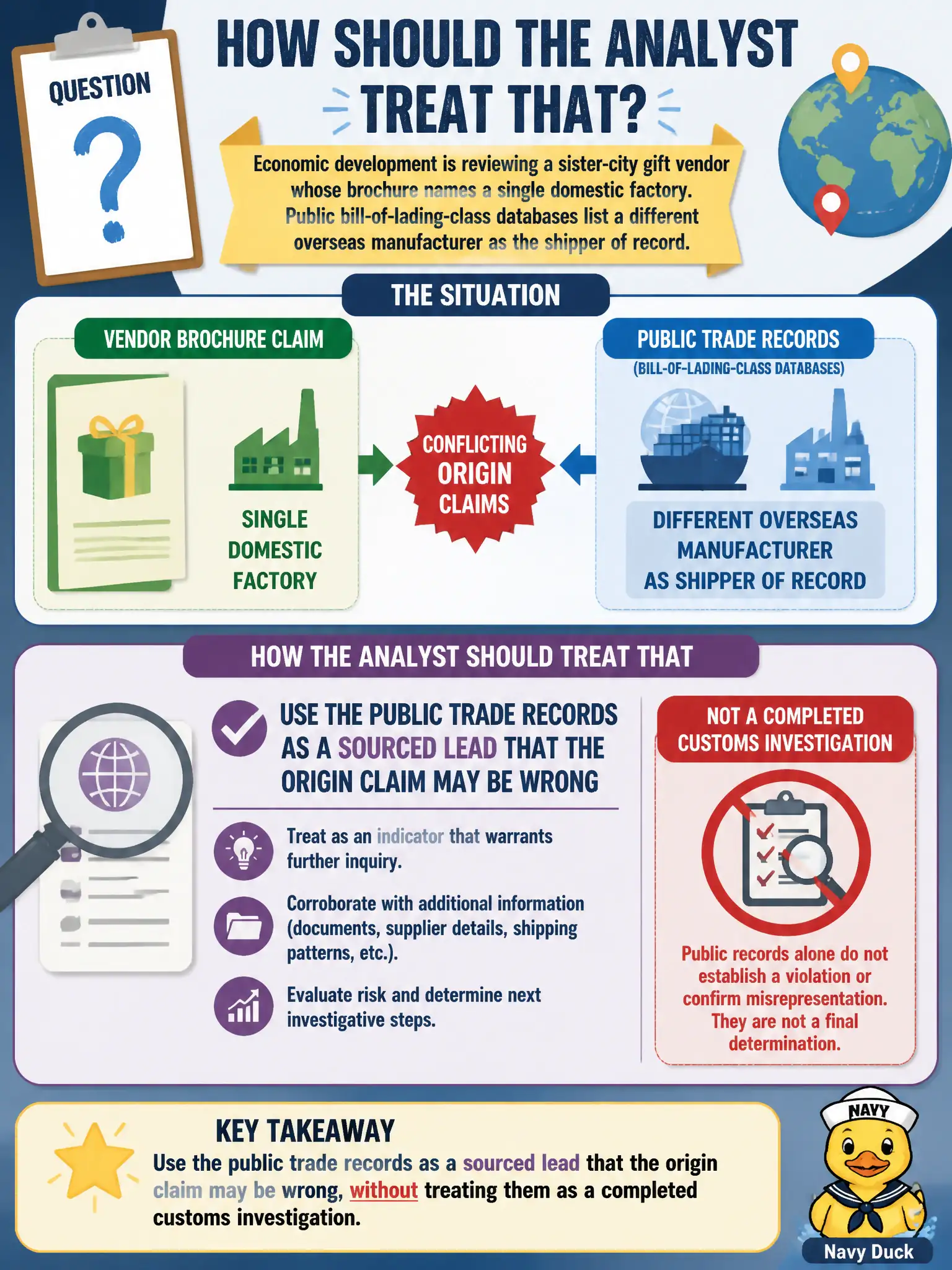
Economic development is reviewing a sister-city gift vendor whose brochure names a single domestic factory. Public bill-of-lading-class databases list a different overseas manufacturer as the shipper of record. How should the analyst treat that?
Select an answer to reveal the explanation.
Short Explanation
Shipping databases are the public packing slip, not a raid warrant. If the brochure says Factory A and the bills of lading say Factory B, that is a lead with a URL. It is not a customs case and it is not a reason to board a container.
Full Explanation
Public bill-of-lading-class trade databases can contradict origin or manufacturer claims in vendor marketing, which matters for sister-city gifts and economic-development due diligence. When a brochure names a single domestic factory but shipment records list a different overseas manufacturer as shipper of record, the analyst should treat those public trade rows as a sourced lead that the origin claim may be wrong—citing shipper, consignee, dates, and claimed origin as published—without converting the memo into a completed customs investigation.
Filing a customs seizure request as if OSINT were an enforcement case file invents authority the research desk does not have. Assuming the brochure is controlling because marketing copy is sworn confuses advertising with verified supply-chain evidence. Intercepting a container at the port to inspect goods is physical enforcement, not public-source collection, and is outside PORP.
Exam caveat: trade databases can be incomplete, delayed, or use intermediary shippers; the product is a documented discrepancy lead, not a finished origin determination or seizure justification.
Operational check: export or screenshot the relevant BOL-class rows with query date, quote the brochure factory claim beside them, and route the sourced discrepancy to economic development for vendor follow-up questions—not to port interception.