
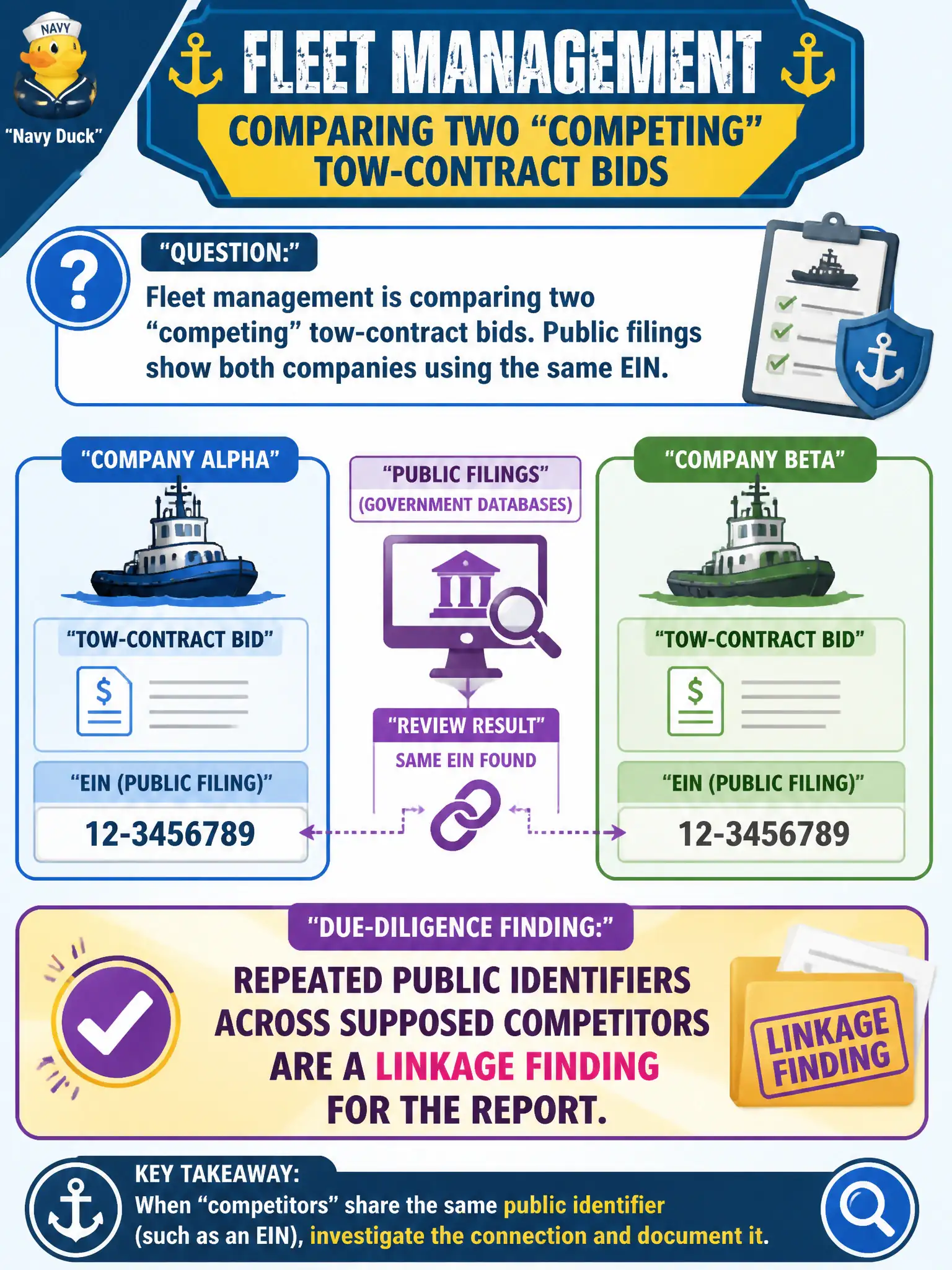
Fleet management is comparing two “competing” tow-contract bids. Public filings show both companies using the same EIN. What is the due-diligence finding?
Select an answer to reveal the explanation.
Short Explanation
Two hats, one tax ID—that is a breadcrumb, not a magic trick. If the EIN is public on both filings, put the shared identifier in the report. Do not phone the IRS for private returns or award the contract from the OSINT desk.
Full Explanation
Shared public identifiers across supposedly independent bidders are classic business-OSINT linkage findings for municipal contracting. When fleet management compares two competing tow-contract bids and public filings show both companies using the same EIN, the report should cite each filing, the repeated identifier, and the retrieval date as a correlation for due diligence. That product helps the city see possible common control or related entities without the OSINT desk substituting for award authority.
Claiming shared EINs are impossible and that both filings must be forged stops documentation prematurely and invents a forgery conclusion the public pages may not support. Calling the IRS for non-public tax returns leaves open-source collection and seeks closed tax data. Merging the two bids into one award because the firms are 'clearly the same company' converts a linkage lead into a contracting decision the analyst is not authorized to make.
Exam caveat: a shared EIN is a strong linkage clue but can involve successors, DBAs, or filing artifacts; report the repetition as observed and let procurement apply conflict and responsibility rules.
Operational check: cite both public filings with URLs and dates, highlight the identical EIN, note the competing-bid context, and deliver the linkage finding to fleet procurement—without IRS outreach or award merging from the research chair.