
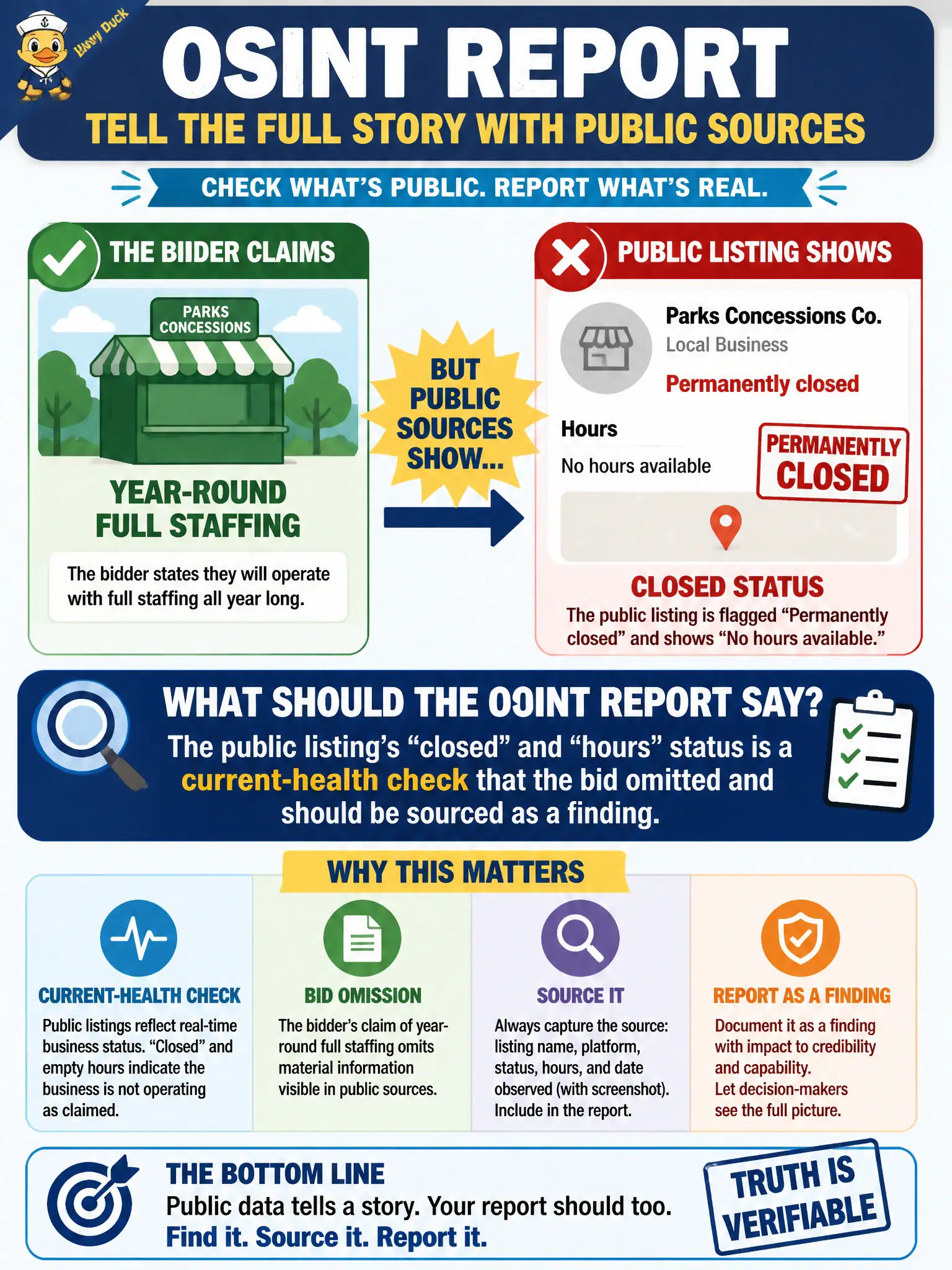
A parks concession bidder claims year-round full staffing. The firm’s public local-business listing is flagged permanently closed and shows empty hours. What should the OSINT report say?
Select an answer to reveal the explanation.
Short Explanation
A storefront that tells the whole internet it is closed is not a secret. If the bid says fully staffed and the public listing says shut, write that contrast down. Guessing the profile password or calling it a crime package is a different job.
Full Explanation
Local-business listings—maps, hours, and open or permanently closed flags—are public health-check surfaces in civic business OSINT. When a parks concession bidder claims year-round full staffing while the firm's public listing shows permanently closed status and empty hours, the report should source that contradiction as a current-health finding the bid omitted: listing URL, observed status, hours fields, and retrieval date. Parks procurement can then weigh the public storefront signal against other evidence instead of treating marketing language as self-proving.
Dismissing closed flags as always vandalism discards a standard public indicator without checking; vandalism is a possible explanation to note, not a license to ignore the listing. Logging into the vendor's business-profile dashboard with guessed credentials is unauthorized access, not OSINT. Treating a closed listing as a finished criminal case file and sending it to police as a charging package over-attributes a commercial status flag into law-enforcement product.
Exam caveat: listings can lag or be contested by the owner; the finding is what the public page showed when retrieved, not a final determination that operations have permanently ceased.
Operational check: save the listing page or archive link, screenshot closed/hours fields, align them beside the bid's staffing claim, and deliver the sourced contrast to parks procurement without attempting account takeover or criminal packaging.