
A housing-rehab vendor's website names a bonding company. What is the sound business-OSINT check?
Select an answer to reveal the explanation.
Short Explanation
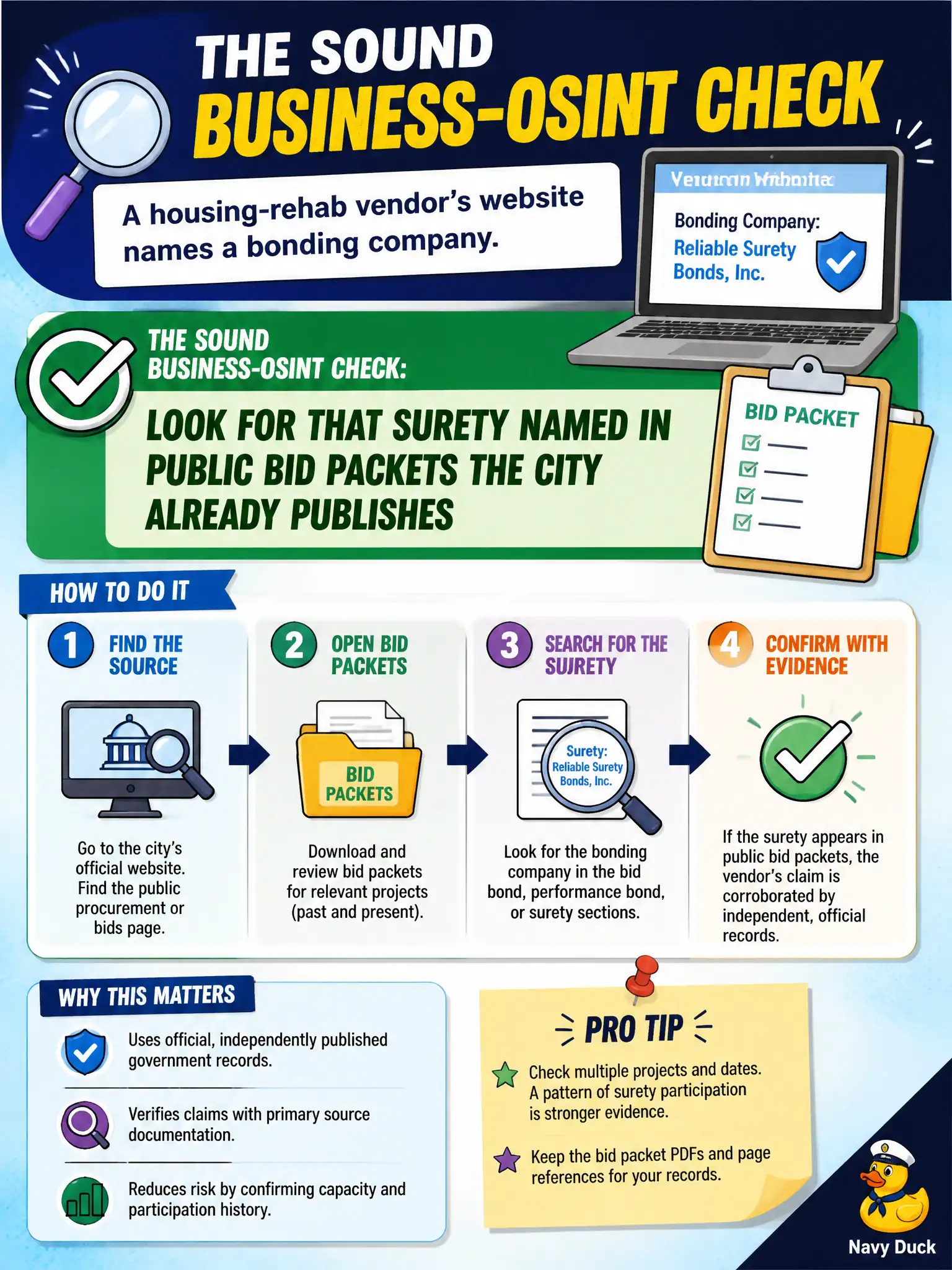
A bonding-company logo on a website is a sticker, not the policy. Check the public bid packets the city already posted and see whether that surety actually appears. Do not invent a rating or phone the surety under a fake title.
Full Explanation
If a housing-rehab vendor’s website names a bonding company, the sound business-OSINT check is to look for that surety named in public bid packets the city already publishes. A logo on a website is a sticker; bid packets show whether the surety actually appears on civic work the municipality can verify. Inventing an A-plus surety rating so the due-diligence file looks complete fails as fabricating evidence. Calling the surety while pretending to be the vendor’s finance officer fails as pretexting outside open-source ethics. Skipping verification because a surety logo on a website is itself a bond fails; logos are not bonds or certificates of insurance. Exam caveat: absence from one packet is not proof the vendor is unbonded forever—check multiple solicitations and ask procurement for required bond evidence through proper channels. Operational check: search published bid tabs and packets for the named surety; record hits and misses with dates; escalate gaps to procurement without pretext phone calls. In municipal practice, record the rationale in the case file so future staff know which control was chosen and which failure modes the rejected options would create for city services. In municipal practice, record the rationale in the case file so future staff know which control was chosen and which failure modes the rejected options would create for city services.