
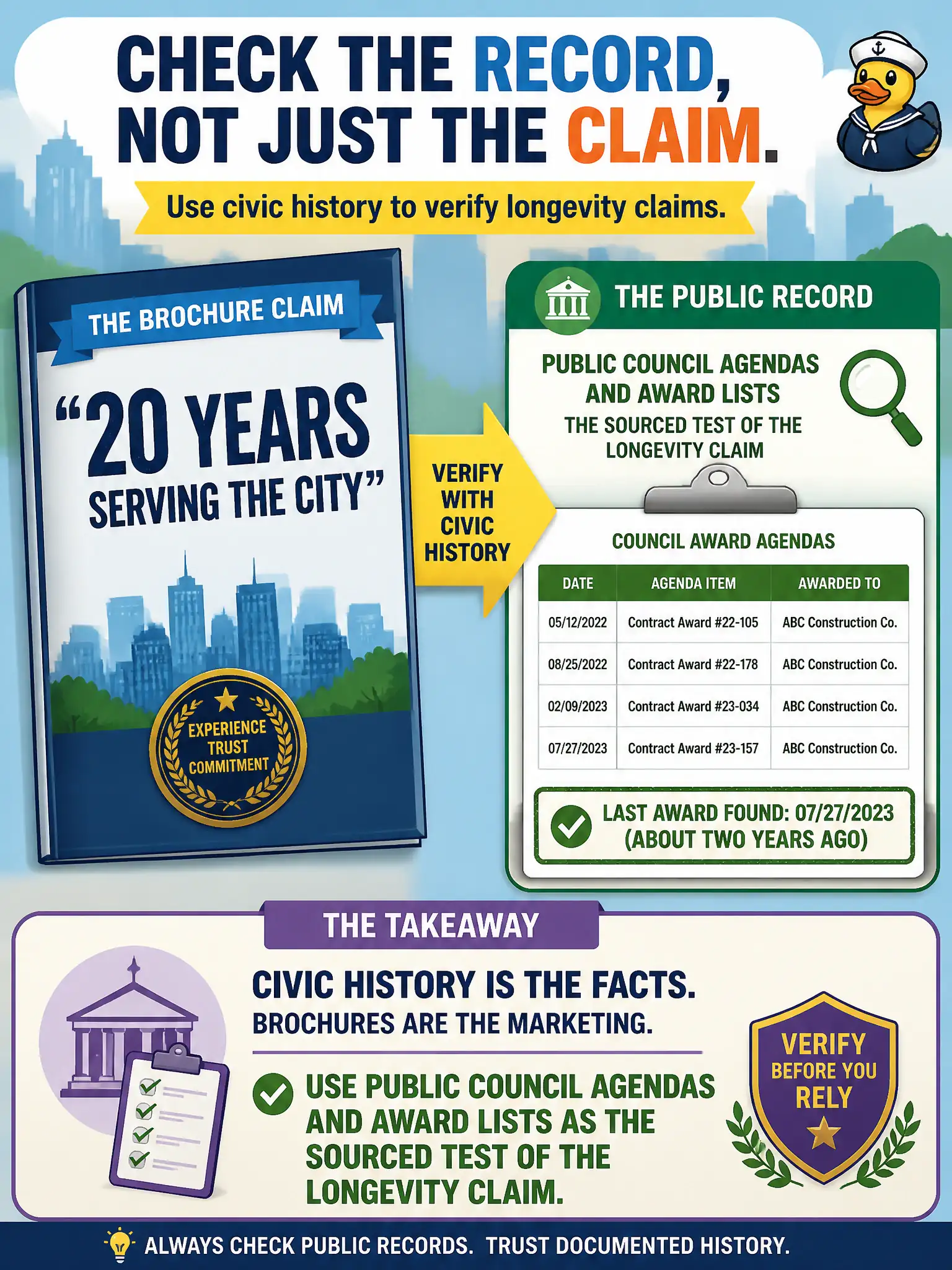
A contractor's brochure claims "20 years serving the city," but public council award agendas only show the firm from two years ago. What should the researcher use as civic history?
Select an answer to reveal the explanation.
Short Explanation
Longevity claims are like trophy-case plaques — check the award records before believing the years. Public council agendas and award lists are the civic history. A brochure or an unsourced hallway story does not beat those packets.
Full Explanation
When a contractor’s brochure claims “20 years serving the city” but public council award agendas only show the firm from two years ago, the researcher should use public council agendas and award lists as the sourced test of the longevity claim. Civic history lives in the award record residents and auditors can inspect, not in the trophy plaque on a brochure. Preferring the brochure because marketing copy outranks agendas when numbers disagree fails; marketing is a claim under review. Using a verbal recollection from a staffer with no citation fails as unsourced hallway memory that cannot be audited. Pulling private city mailbox contents without an authorized records path fails as unauthorized access to non-public communications. Exam caveat: the firm may have subcontracted earlier work under another name—check related entities and prior legal names before alleging pure invention. Operational check: search agendas and award lists across the claimed period; document first sourced appearance; report the longevity claim as unverified or contradicted with citations in the procurement note. In municipal practice, record the rationale in the case file so future staff know which control was chosen and which failure modes the rejected options would create for city services.