
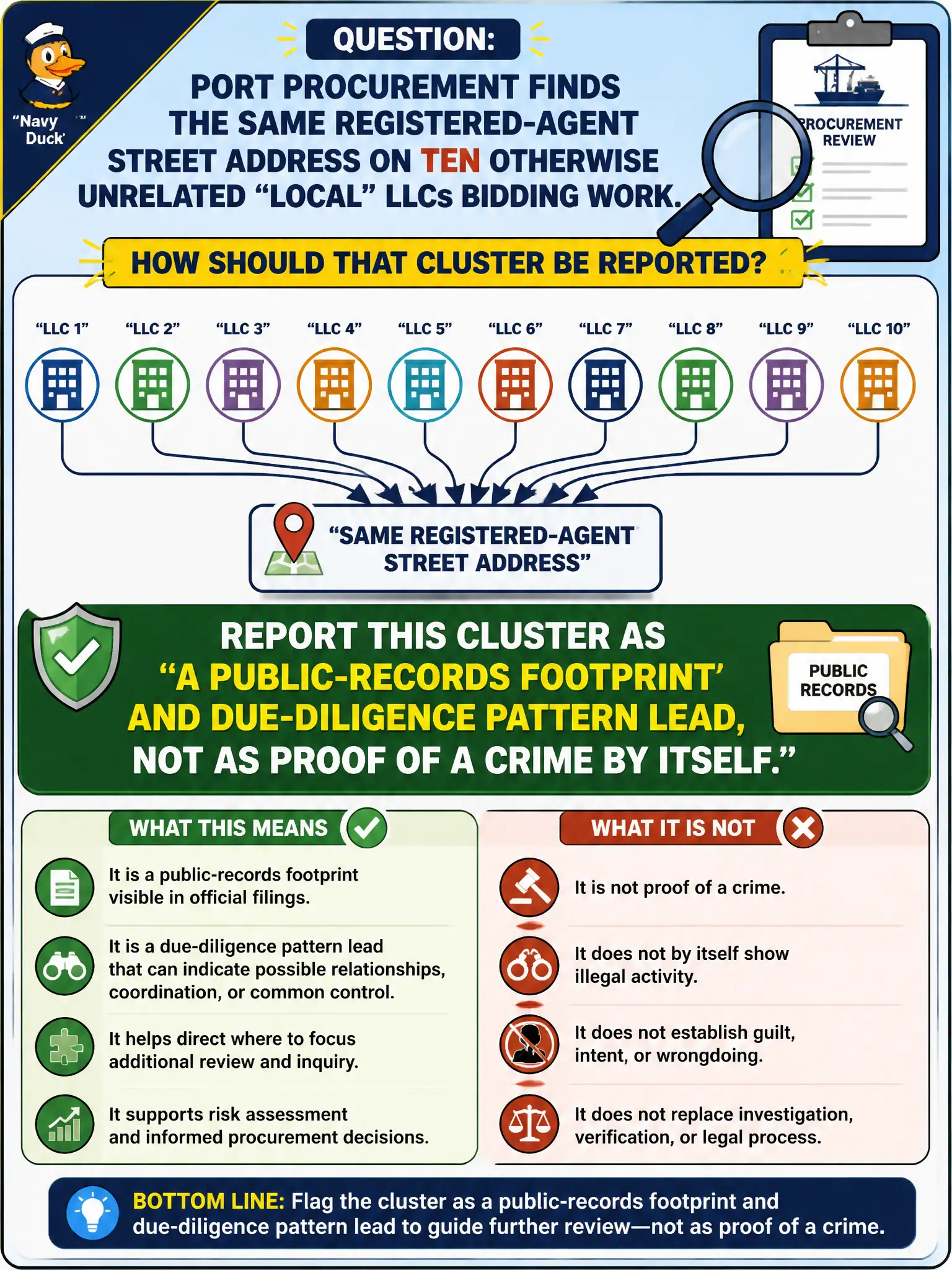
Port procurement finds the same registered-agent street address on ten otherwise unrelated "local" LLCs bidding work. How should that cluster be reported?
Select an answer to reveal the explanation.
Short Explanation
A shared agent address is like ten "local" shops all using the same mailbox store. That clustering is a footprint and a due-diligence lead, not a courtroom verdict. Report the pattern; do not over-claim a crime or dump a home address.
Full Explanation
When port procurement finds the same registered-agent street address on ten otherwise unrelated “local” LLCs bidding work, that cluster should be reported as a public-records footprint and due-diligence pattern lead, not as proof of a crime by itself. Shared agent addresses are common in legitimate registered-agent businesses and also appear in shell patterns—analytic caution protects the city from both under- and over-reaction. Reporting the cluster as conclusive evidence of a criminal conspiracy that needs no further sourcing fails by over-claiming from a single footprint. Publishing the registered agent’s home address in the narrative fails if it is unnecessary personal detail relative to the civic bidding question. Ignoring the pattern because agent addresses never cluster in legitimate filings fails; they do cluster, which is why the finding is a lead rather than automatic noise. Exam caveat: pattern leads invite more public-entity and ownership research within law; they are not instant verdicts for disqualification language. Operational check: table the ten LLCs with shared agent address and filing dates; flag for procurement counsel; avoid crime language until stronger sourced facts exist.