
A snow-salt vendor's bid name returns no hit in the state's business-entity search. What should business OSINT do next?
Select an answer to reveal the explanation.
Short Explanation
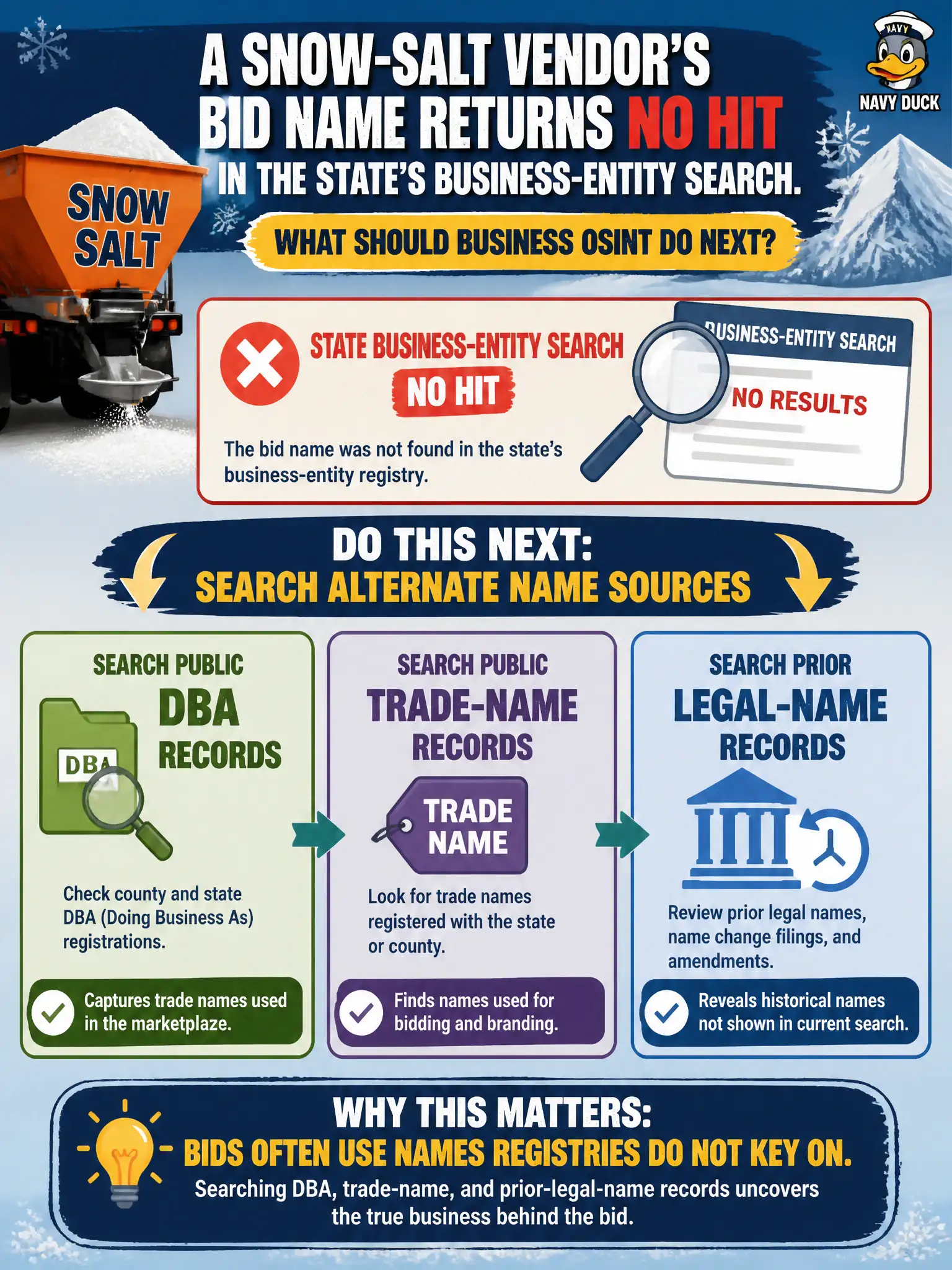
A bid name is often a storefront sign, while the registry files the legal name in the back office. No hit on the trade name is a prompt to hunt DBAs and prior names, not a reason to quit. Public registries key off legal entities.
Full Explanation
If a snow-salt vendor’s bid name returns no hit in the state’s business-entity search, business OSINT should next search public DBA, trade-name, and prior-legal-name records because bids often use names registries do not key on. Storefront bid names frequently differ from the legal entity string filed with the secretary of state, and municipal procurement diligence must chase those aliases before declaring a bidder nonexistent. Stopping and declaring the vendor fictional because the bid name is missing fails by quitting before DBA and prior-name checks that routinely resolve the identity. Creating a new LLC filing in the city’s name so the search will match the bid fails as falsifying public records and is never an OSINT remedy. Probing the secretary-of-state portal for suppressed entity rows that are not public fails as attempting non-public access outside PORP scope. Exam caveat: no hit on the trade name is a prompt for deeper public-name research, not a final “fiction” finding that can justify rejecting a bid without further work. Operational check: search DBA, trade, and prior names; check neighboring jurisdictions if relevant; document all searches with dates and null results for the procurement file.