
A paving firm's state filing lists different officers than the company's LinkedIn page. How should those sources be weighted?
Select an answer to reveal the explanation.
Short Explanation
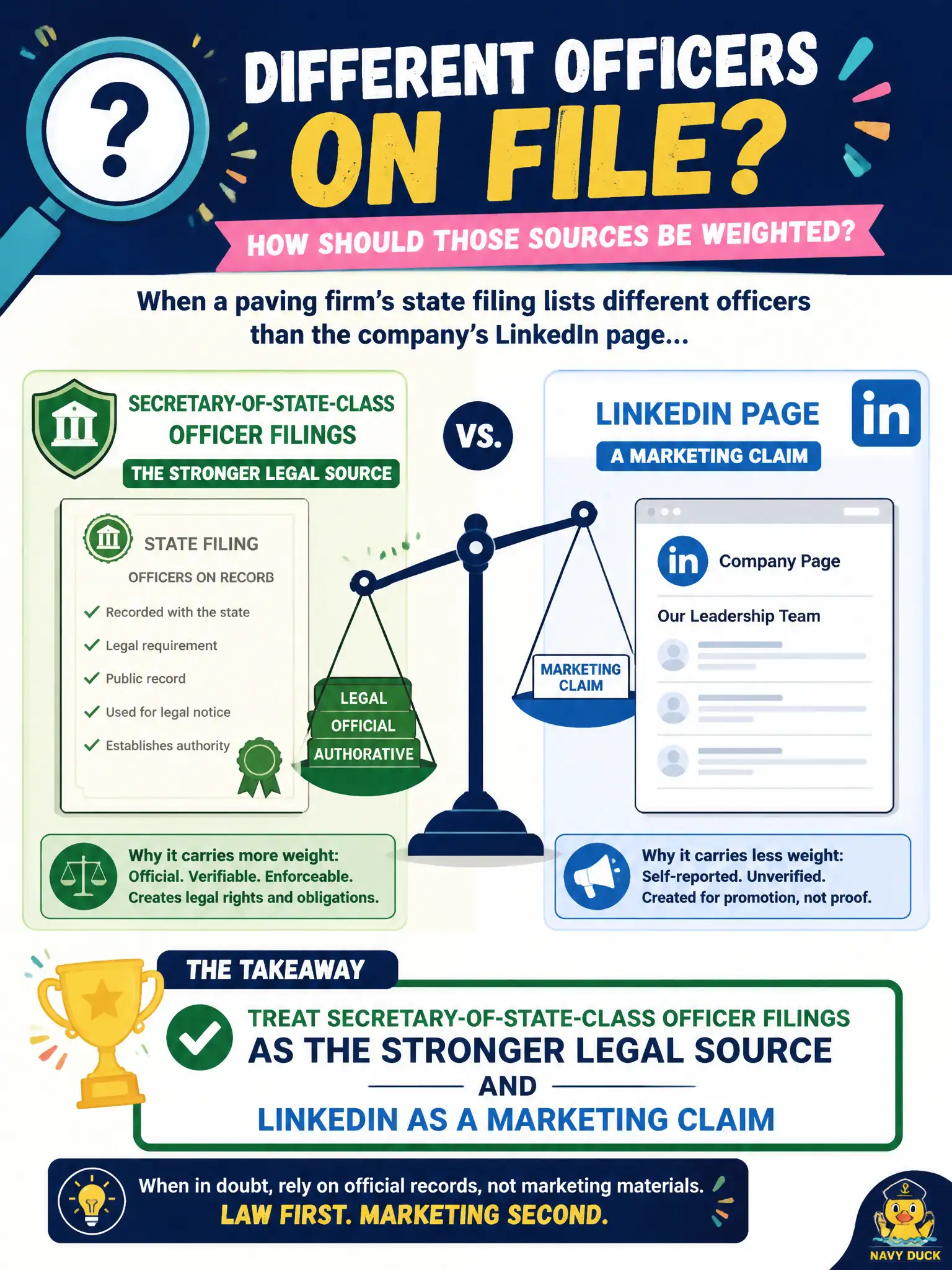
State filings are the roster filed with the league office; LinkedIn is the poster in the locker room. When officers disagree, the filing is the stronger legal-source class. Social is still a claim worth noting, not the winner by freshness.
Full Explanation
When a paving firm’s state filing lists different officers than the company’s LinkedIn page, those sources should be weighted by treating secretary-of-state-class officer filings as the stronger legal source and LinkedIn as a marketing claim. Filings are the roster filed with the state; social pages are promotional posters that can lag or embellish. Treating LinkedIn as the legal officer list because social pages are updated more often fails; freshness does not outrank legal-source class for civic contracting questions. Averaging the two lists into a blended org chart as legal fact fails by inventing a third roster nobody filed or published as such. Ignoring both until the firm emails a private officer spreadsheet fails; public filings already provide a primary source the city can cite. Exam caveat: filings can be stale too—date your retrieval and note amendments or annual reports if present before over-trusting a single snapshot. Operational check: capture filing officers and LinkedIn claims with dates; report the conflict; prefer the filing for legal identity questions while still noting social claims as unverified marketing in the vendor file. In municipal practice, record the rationale in the case file so future staff know which control was chosen and which failure modes the rejected options would create for city services.