
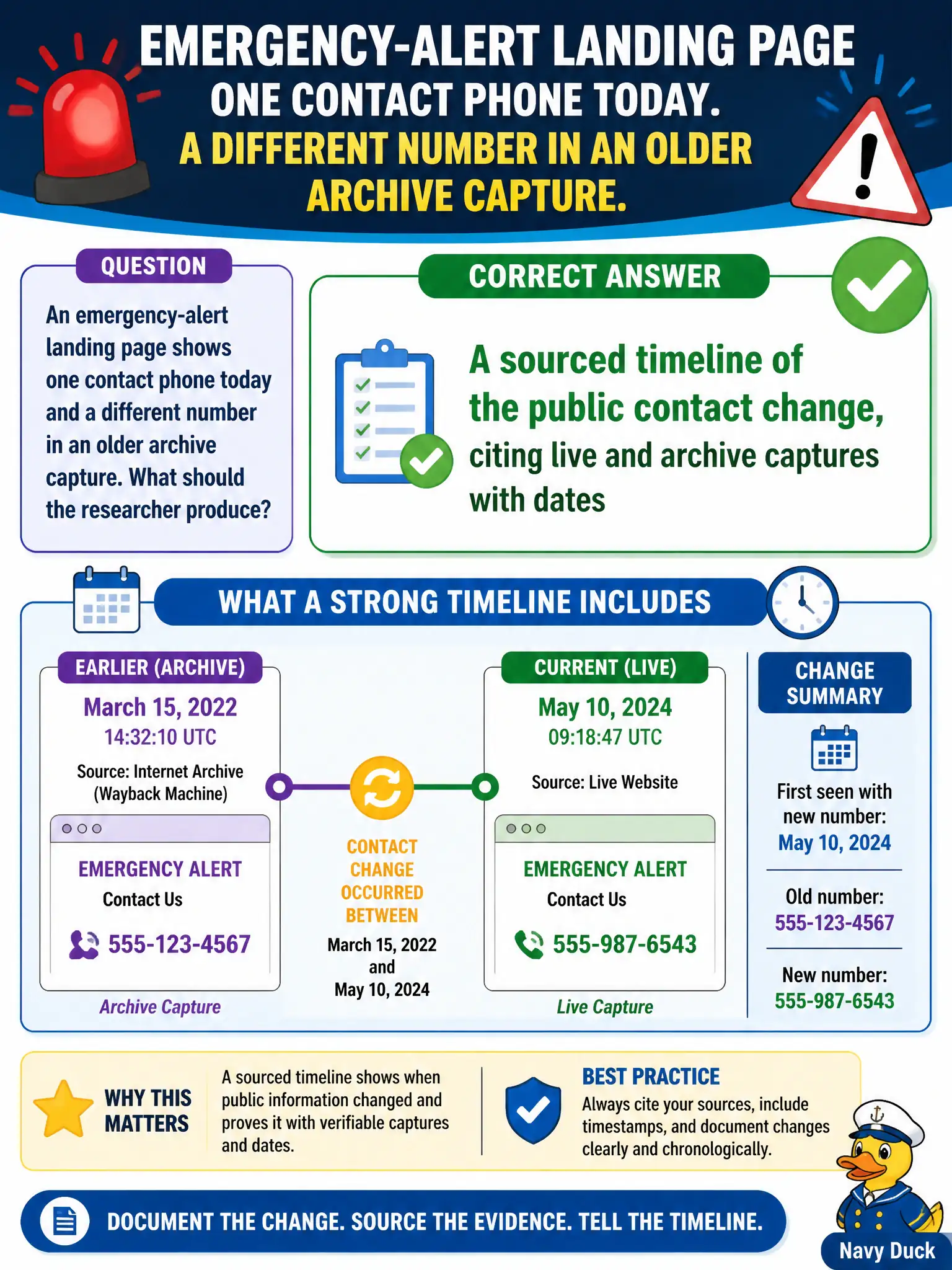
An emergency-alert landing page shows one contact phone today and a different number in an older archive capture. What should the researcher produce?
Select an answer to reveal the explanation.
Short Explanation
Two dated snapshots of the same civic page are like two photos of a bulletin board. Put them in order and you have a timeline of the contact number. Cite both captures; do not spoof calls or erase the archive.
Full Explanation
If an emergency-alert landing page shows one contact phone today and a different number in an older archive capture, the researcher should produce a sourced timeline of the public contact change, citing live and archive captures with dates. Contact drift matters for resident trust and for spotting hijacks. Calling both numbers using a spoofed caller ID to see who answers fails as deceptive telephony outside OSINT. Concluding the current page is fake solely because an archive capture exists fails; legitimate pages change over time. Demanding the archive operator delete the old capture so the timeline disappears fails by destroying useful historical evidence. Exam caveat: a changed number is a finding to verify with the alert program owner, not automatic proof of compromise. Operational check: cite live URL/date and archive URL/capture date; list both numbers; confirm with emergency management which number is authoritative before public messaging. In municipal practice, record the rationale in the case file so future staff know which control was chosen and which failure modes the rejected options would create for city services. Re-validate the finding against current public sources before the next procurement or communications decision.