
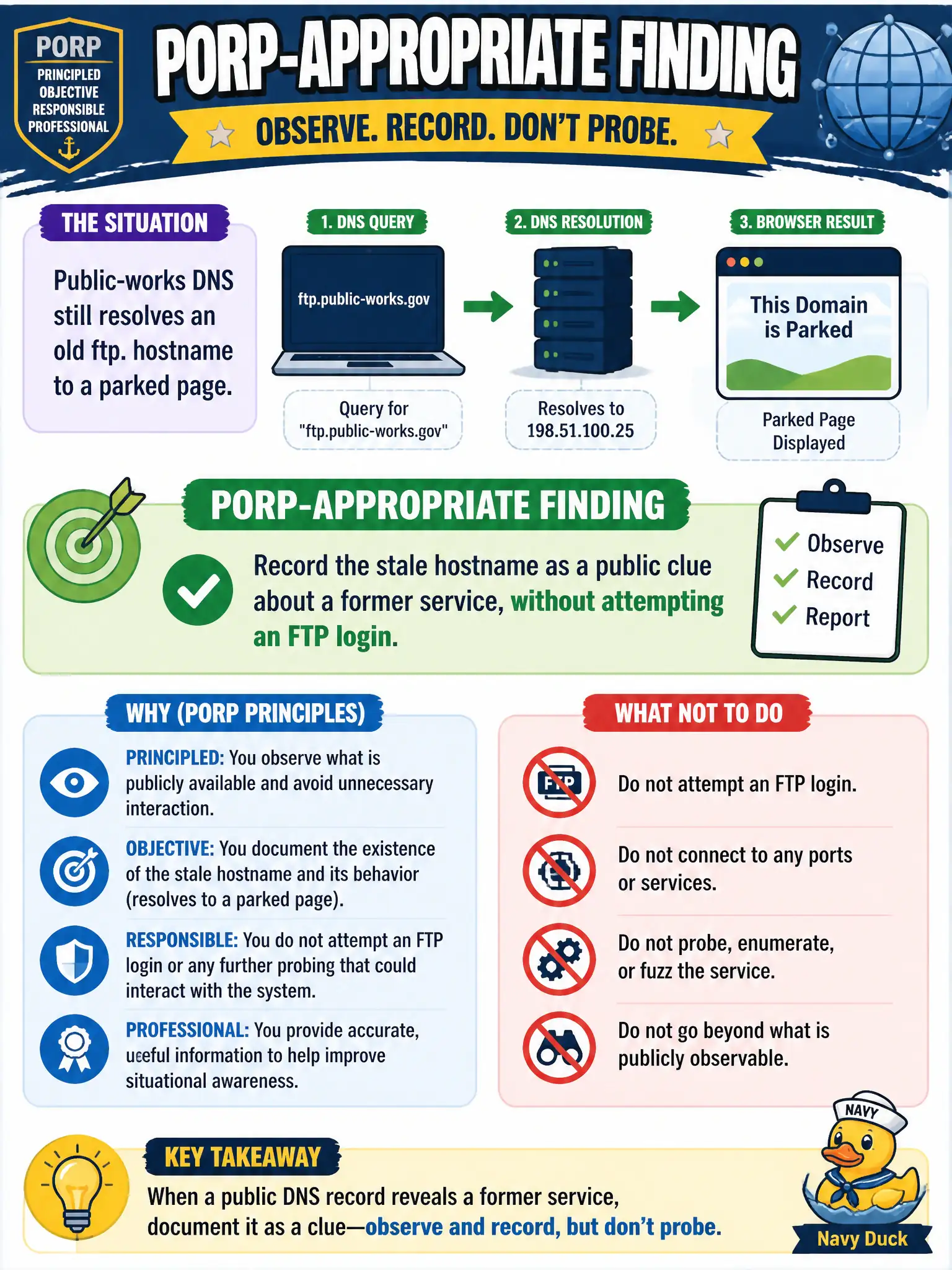
Public-works DNS still resolves an old ftp. hostname to a parked page. What is the PORP-appropriate finding?
Select an answer to reveal the explanation.
Short Explanation
An old FTP hostname still answering is like a boarded-up loading dock with the sign still up — it tells you a former service existed. Write the leftover hostname down. Do not try the lock and do not delete city DNS.
Full Explanation
When public-works DNS still resolves an old ftp. hostname to a parked page, the PORP-appropriate finding is to record the stale hostname as a public clue about a former service, without attempting an FTP login. Leftover hostnames map historical attack surface and service history for civic IT. Brute-forcing FTP credentials on that hostname to see whether files remain fails as unauthorized access. Deleting the DNS record from the city’s production zone as the OSINT task fails; DNS change is an IT operations action, not collection. Ignoring leftover hostnames because only the current www site counts as website OSINT fails; DNS leftovers are in-scope clues. Exam caveat: parked pages may be registrar placeholders—still note the name as historically meaningful. Operational check: resolve and capture the hostname and response; report to public-works IT as a stale record candidate; do not authenticate to FTP. In municipal practice, record the rationale in the case file so future staff know which control was chosen and which failure modes the rejected options would create for city services. Re-validate the finding against current public sources before the next procurement or communications decision.