
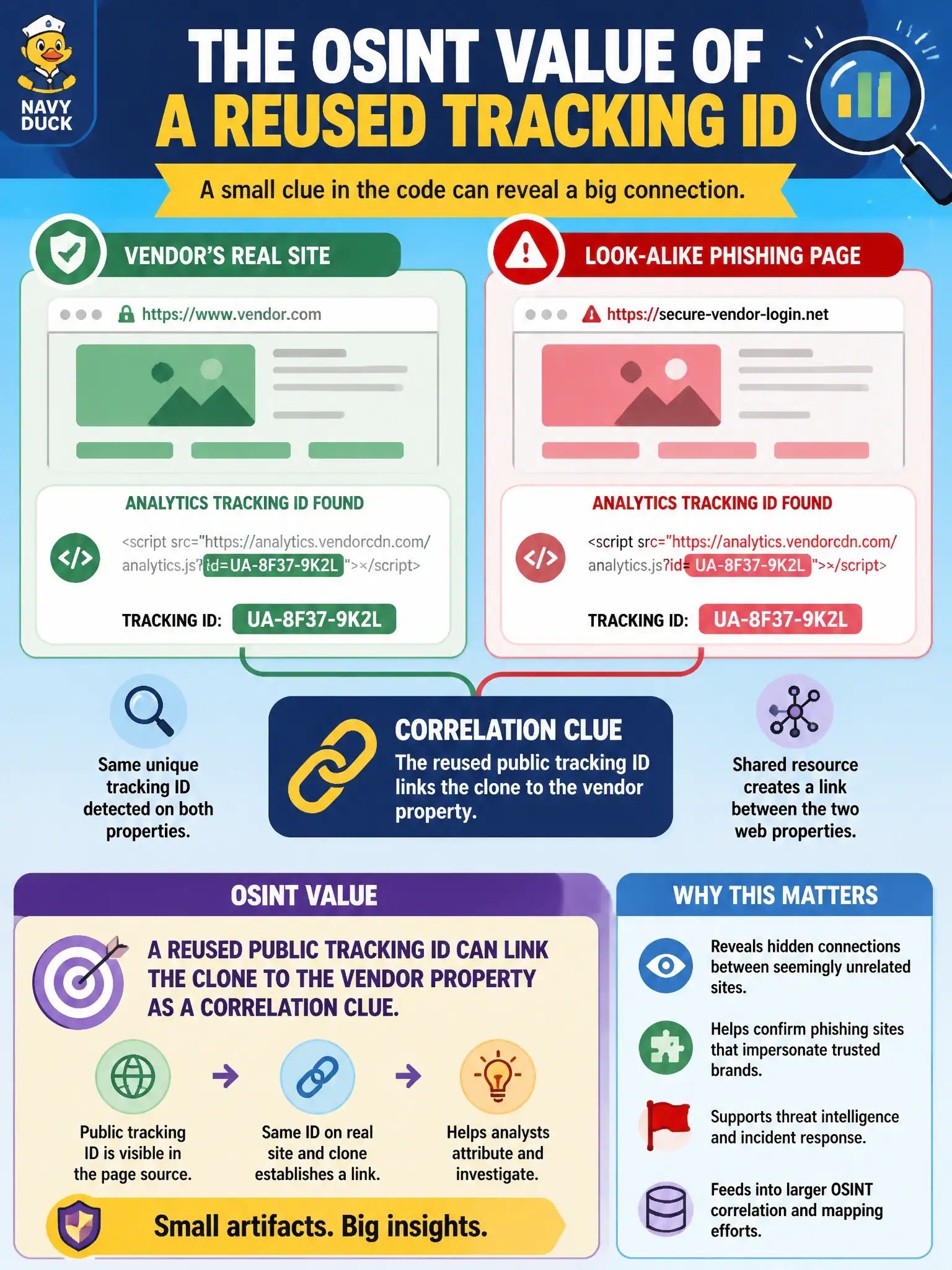
Library IT notices the same unique analytics tracking ID on a vendor's real site and on a look-alike phishing page. What is the OSINT value of that ID?
Select an answer to reveal the explanation.
Short Explanation
A unique tracking ID is like the same serial number stamped on two storefronts. If the clone and the real vendor site share it, that is a public correlation clue. It is not a login, and it does not mean the library should rip out analytics as the finding.
Full Explanation
When library IT notices the same unique analytics tracking ID on a vendor’s real site and on a look-alike phishing page, the OSINT value of that ID is that a reused public tracking ID can link the clone to the vendor property as a correlation clue. Shared trackers are join keys in website OSINT for civic phishing response. Claiming it proves the library should disable all analytics citywide as the OSINT recommendation fails by overgeneralizing a clone clue into a policy mandate. Treating the ID as a password equivalent to log into the vendor admin console fails; tracking IDs are not credentials. Calling the ID meaningless because tracking IDs cannot be copied fails; they are routinely copied onto impostor pages. Exam caveat: shared IDs suggest operational linkage or careless cloning, not automatic proof of who registered the phishing domain. Operational check: capture both pages’ tracker snippets with URLs; document the shared ID; hand the correlation to library IT and the vendor for takedown support. In municipal practice, record the rationale in the case file so future staff know which control was chosen and which failure modes the rejected options would create for city services.