
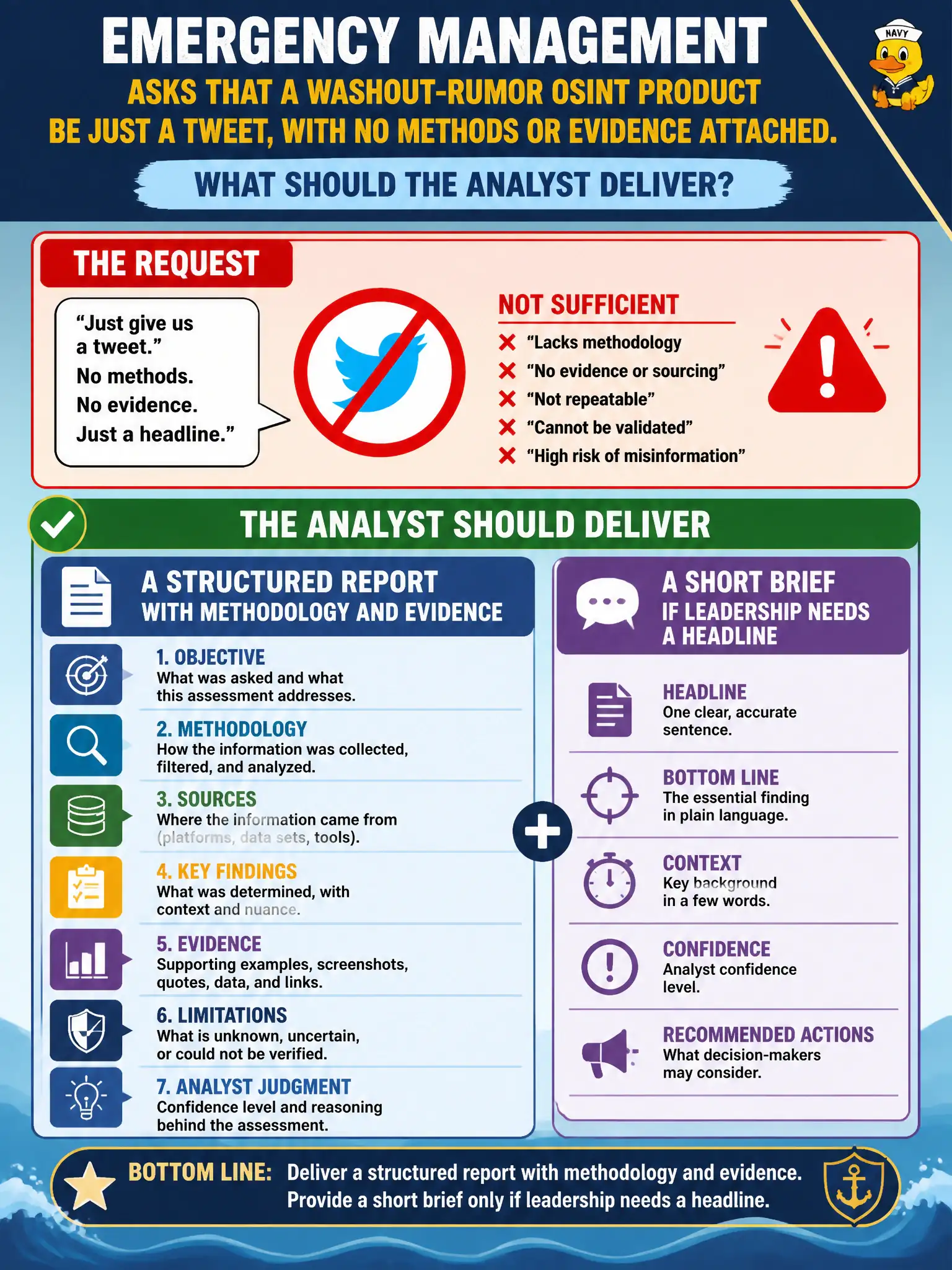
Emergency management asks that a washout-rumor OSINT product be just a tweet, with no methods or evidence attached. What should the analyst deliver?
Select an answer to reveal the explanation.
Short Explanation
A tweet is a doorbell chime, not the house. Leadership can have a short brief, but the work product is still the report with methods and pictures. Promising to write it later is how the evidence evaporates.
Full Explanation
A social-length headline does not replace methodology, citations, and exhibits. When emergency management asks that a washout-rumor OSINT product be just a tweet with no methods or evidence attached, the analyst should deliver a structured report with methodology and evidence, plus a short brief if leadership needs a headline. The durable product must survive audit after the rumor cycle.
A tweet only, because social length is the new professional standard, abandons evidence standards. A tweet that asserts road closures as fact and promises to write it up someday converts analysis into unsourced messaging. Deleting the evidence folder so the tweet cannot be challenged destroys the record.
Exam caveat: a short brief or approved social post may be derived from the report for speed, but only after the structured product exists and claims match the evidence.
Operational check: finish the methods-and-exhibits report first, derive a one-paragraph brief for EM leadership, and refuse tweet-only or evidence-destroying shortcuts. Keep municipal wording calibrated to what public sources actually show, and record retrieval dates so peers can re-perform the work. Civic reviewers expect attributable artifacts, not rhetorical certainty, when the engagement is later audited or handed off.