
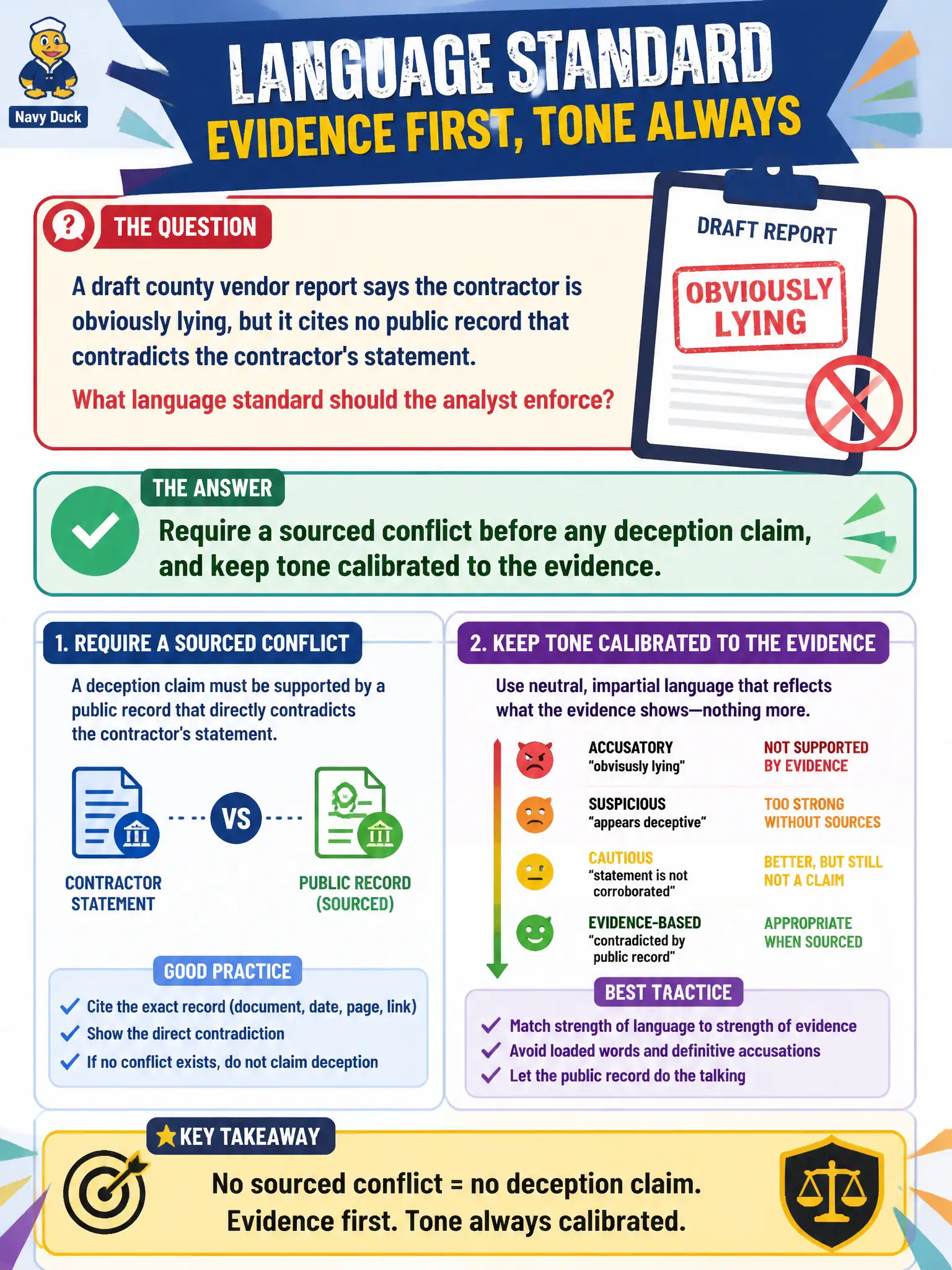
A draft county vendor report says the contractor is obviously lying, but it cites no public record that contradicts the contractor's statement. What language standard should the analyst enforce?
Select an answer to reveal the explanation.
Short Explanation
Calling someone a liar without a contradicting document is like yelling 'the scale is wrong' without looking at it. Professional reports match the volume of the claim to the strength of the source. If two public facts collide, show both; if they do not, do not invent drama.
Full Explanation
Calibrated language is part of OSINT reporting. When a draft county vendor report says the contractor is obviously lying but cites no public record that contradicts the contractor's statement, the analyst should require a sourced conflict before any deception claim and keep tone matched to the evidence. Loaded accusations without contradicting documents damage city credibility.
Keeping the accusation because strong wording makes procurement take OSINT seriously substitutes rhetoric for proof. Upgrading the sentence to a fraud referral with no additional sources escalates without evidence. Replacing the findings section with sarcasm so leadership 'gets the point' abandons professional reporting.
Exam caveat: if two public statements conflict, show both and describe the conflict; reserve words like lying or fraud until the contradiction is documented and appropriately reviewed.
Operational check: remove unsourced deception language, either add the contradicting public record with citation or downgrade to what each source says, and route any fraud theory to counsel only after sourced conflict exists. Keep municipal wording calibrated to what public sources actually show, and record retrieval dates so peers can re-perform the work.