
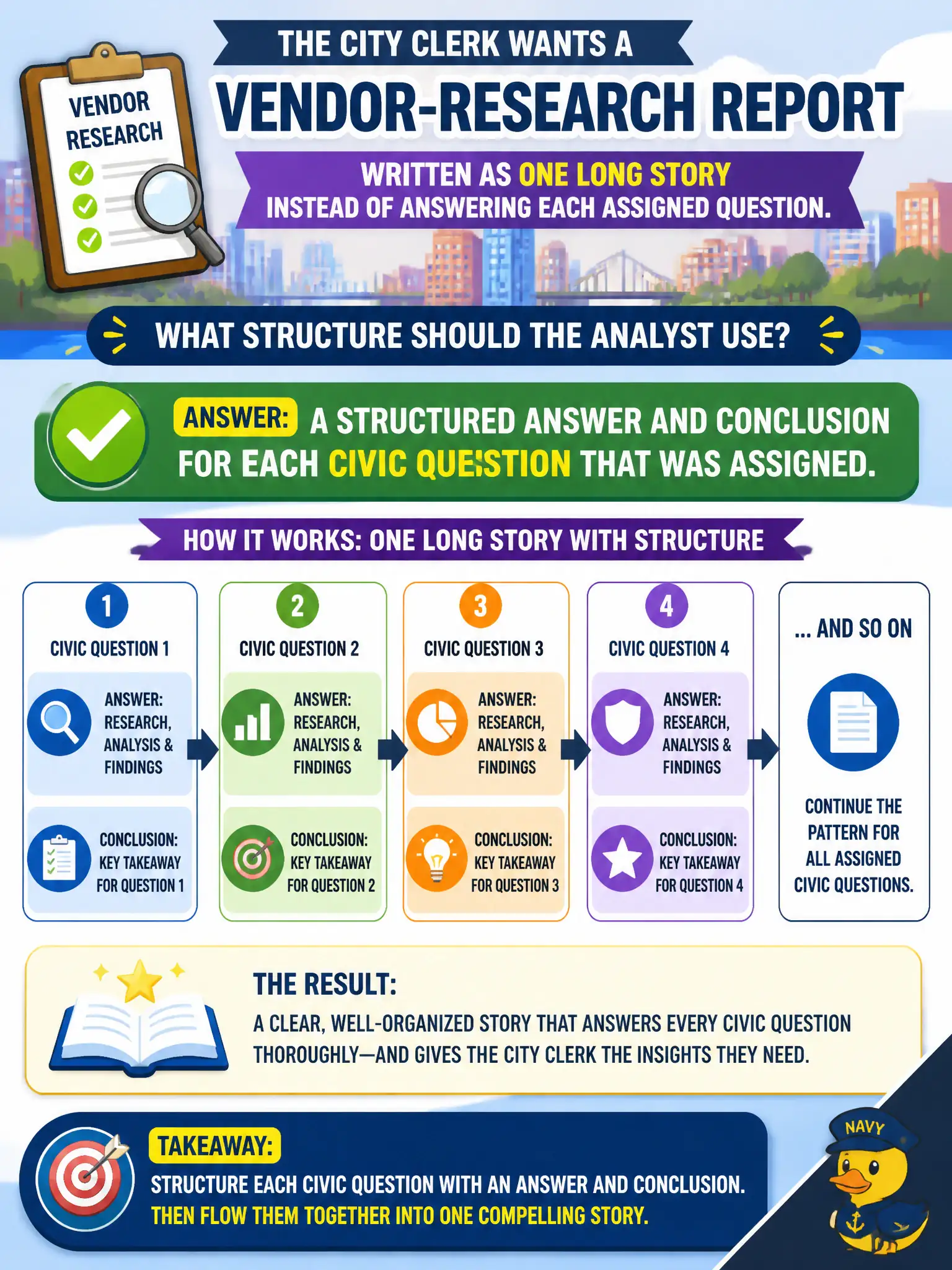
The city clerk wants a vendor-research report written as one long story instead of answering each assigned question. What structure should the analyst use?
Select an answer to reveal the explanation.
Short Explanation
Leadership asked specific questions, not for a novel. One giant story buries the answers the way a mashed casserole hides which vegetable is missing. Give each assigned question its own conclusion so a clerk can score the work.
Full Explanation
Professional OSINT reporting maps each tasked question to a sourced answer and an explicit conclusion. When the city clerk wants a vendor-research report written as one long story instead of answering each assigned question, the analyst should use a structured answer and conclusion for each civic question that was assigned. Per-question structure also makes gaps visible instead of blending them into prose.
A single narrative with no headings buries answers leadership needs to score. A pentest-style residual-risk summary that never answers the asked civic questions imports the wrong report genre. A bullet list of tools used, with conclusions postponed until a later verbal briefing, withholds the actual OSINT product.
Exam caveat: a short overall wrap-up is fine after per-question conclusions; it must not replace them.
Operational check: outline the assigned questions as headings, place sourced findings and a clear conclusion under each, mark unanswered items as gaps, and only then add an optional executive wrap-up. Keep municipal wording calibrated to what public sources actually show, and record retrieval dates so peers can re-perform the work. Civic reviewers expect attributable artifacts, not rhetorical certainty, when the engagement is later audited or handed off.