
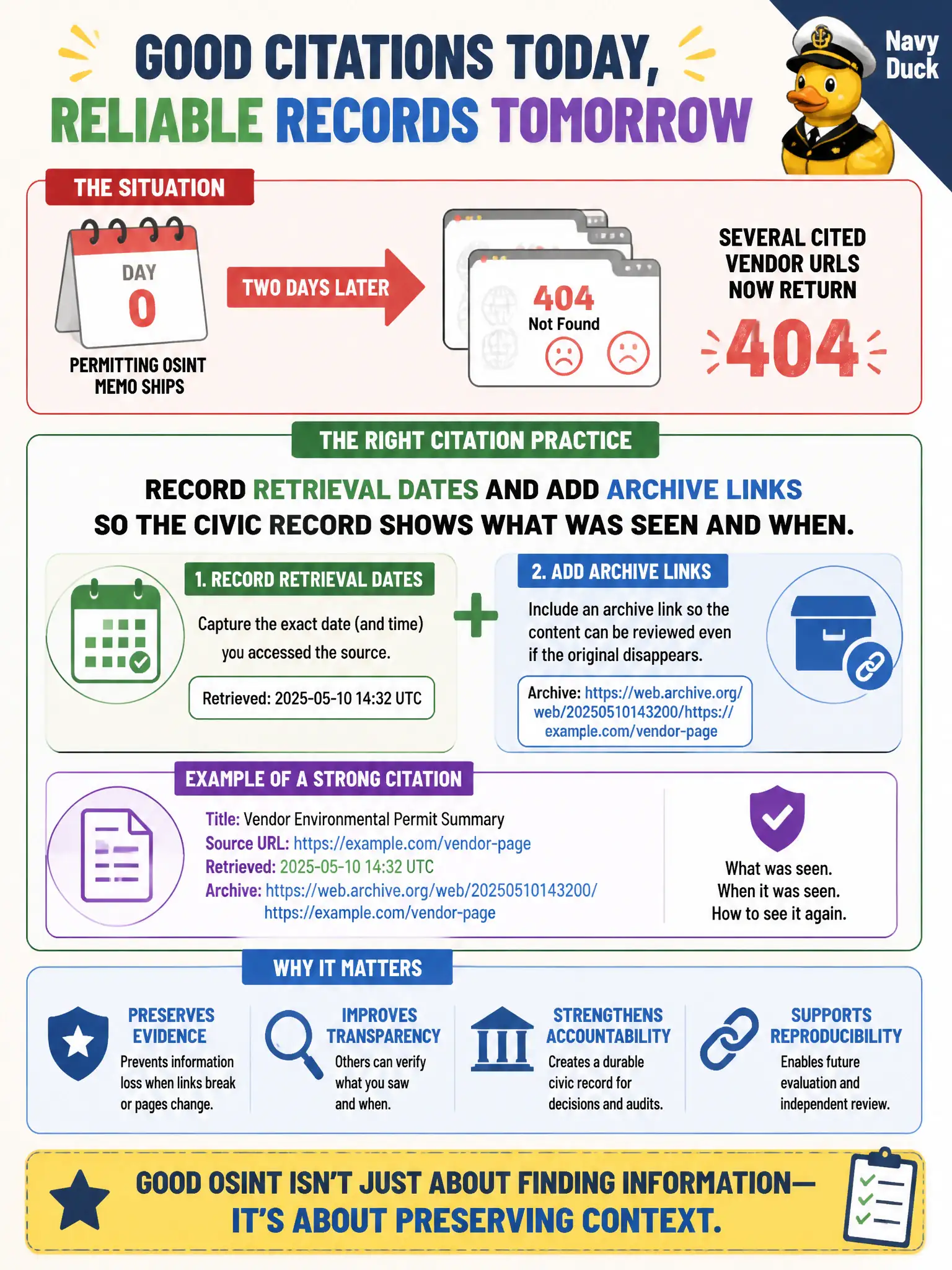
Two days after a permitting OSINT memo ships, several cited vendor URLs return 404. What citation practice should have been in the report?
Select an answer to reveal the explanation.
Short Explanation
Web pages move like sandwich boards on a windy street. If you do not write down when you looked and stash an archive copy, the sign is gone and so is your proof. Dates plus archives keep a permitting memo honest after the live link dies.
Full Explanation
Public web sources are perishable. Durable civic citations include the URL, the retrieval date, and an archive or saved capture when the record must last. When two days after a permitting OSINT memo ships several cited vendor URLs return 404, the practice that should have been in the report is recording retrieval dates and adding archive links so the civic record shows what was seen and when.
Citing only the vendor homepage forever, because inner pages always move, loses the specific evidence page. Omitting URLs entirely so broken links can never embarrass the city removes verifiability. Re-citing pages as still live after they vanish and never mentioning the view date falsifies currency.
Exam caveat: archives themselves can lag or fail; keep local captures as backup and still stamp the live retrieval time used in analysis.
Operational check: for each critical vendor page, store URL + retrieval datetime + archive/local capture in the memo; when 404s appear later, point reviewers to those dated artifacts. Keep municipal wording calibrated to what public sources actually show, and record retrieval dates so peers can re-perform the work. Civic reviewers expect attributable artifacts, not rhetorical certainty, when the engagement is later audited or handed off.