
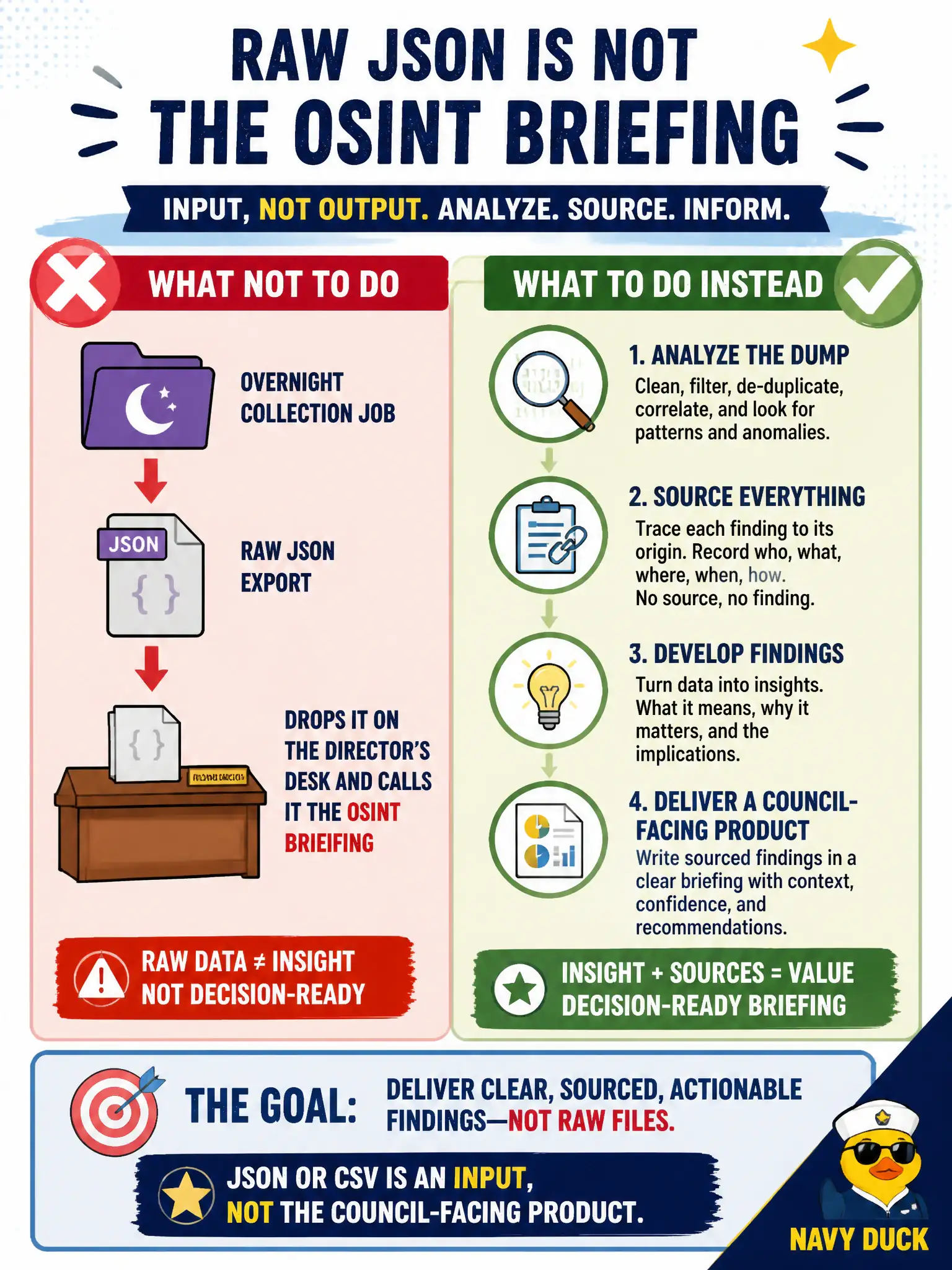
After an overnight collection job, an intern drops a raw JSON export on the housing director's desk and calls it the OSINT briefing. What should the analyst do instead?
Select an answer to reveal the explanation.
Short Explanation
Handing leadership a JSON file is like dumping a crate of receipts on the table and calling it the budget. Somebody still has to read the slips, check them, and write the story. Automation collects; the report is the product.
Full Explanation
Automated exports are working files, not council-facing products. When after an overnight collection job an intern drops a raw JSON export on the housing director's desk and calls it the OSINT briefing, the analyst should analyze the dump and write sourced findings—JSON or CSV is an input. Somebody still has to verify rows, select relevant facts, cite sources, and state conclusions a non-technical reader can use.
Forwarding the JSON to council with no narrative because machine output is more objective than writing confuses volume with clarity. Deleting the JSON so leadership never sees messy collection destroys supporting material. Pasting the entire dump onto slides, one key per slide, treats serialization as analysis.
Exam caveat: attach or retain the JSON as an appendix when useful, but the primary deliverable remains a structured written finding mapped to the tasked questions.
Operational check: review the export, verify key rows against live sources, write a short housing briefing with citations, and keep the JSON as supporting material—not the briefing itself. Keep municipal wording calibrated to what public sources actually show, and record retrieval dates so peers can re-perform the work.