
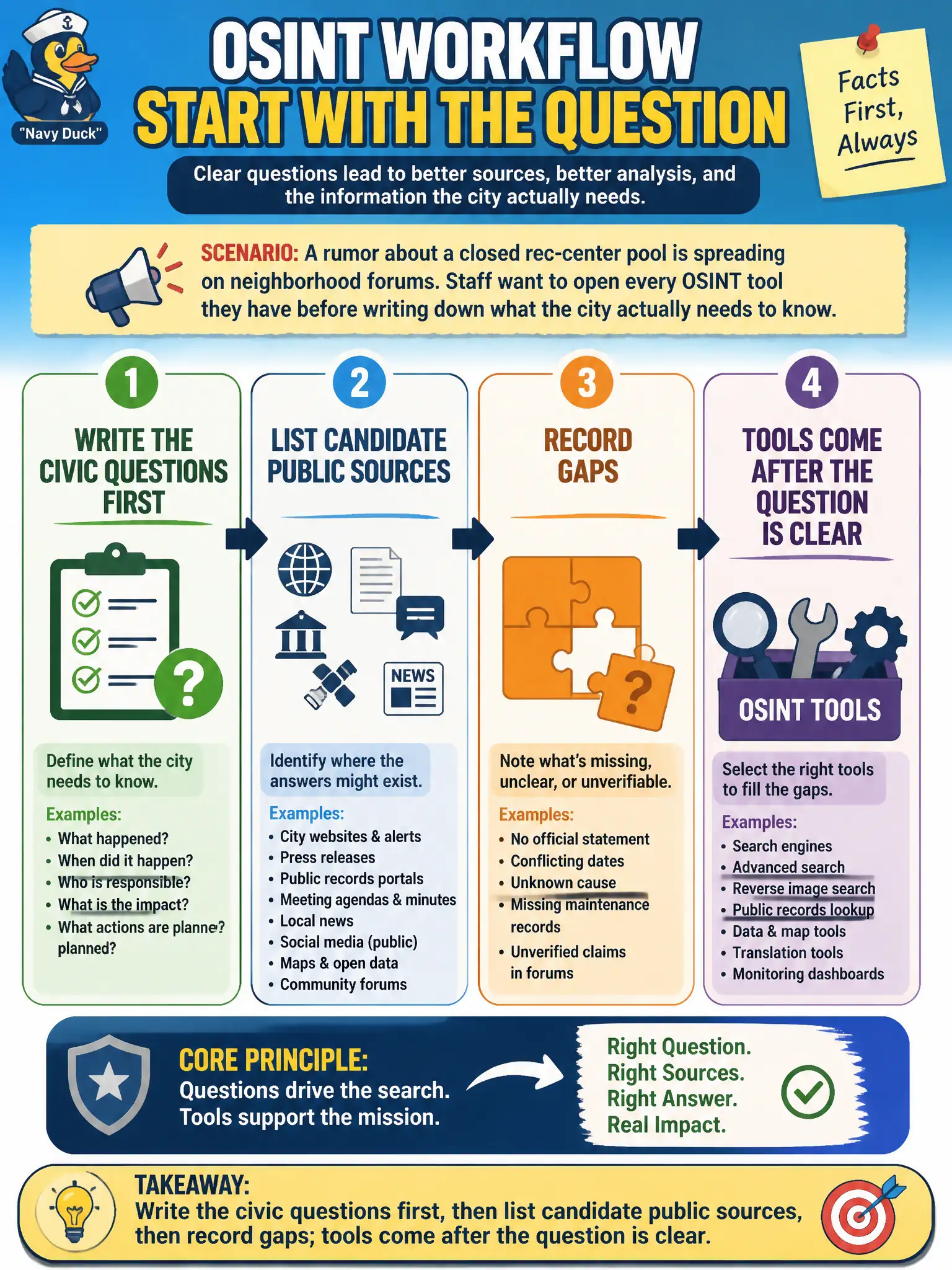
A rumor about a closed rec-center pool is spreading on neighborhood forums. Staff want to open every OSINT tool they have before writing down what the city actually needs to know. What workflow should the analyst require?
Select an answer to reveal the explanation.
Short Explanation
Grabbing every tool before the question is like opening every kitchen drawer before deciding you wanted soup. Write what the city must know, then pick sources, then notice the holes. Gadgets come after the grocery list.
Full Explanation
Requirements-driven OSINT starts with the civic questions the report must answer, then candidate public sources, then documented gaps. When a rumor about a closed rec-center pool spreads on neighborhood forums and staff want to open every OSINT tool before writing down what the city actually needs to know, the analyst should require writing the civic questions first, listing candidate public sources next, then recording gaps—with tools selected only after the question is clear.
Running the full tool stack first and inventing questions that fit whatever comes back reverses the workflow into a fishing trip. Posting a rebuttal from the parks account then collecting only if someone complains substitutes messaging for research. Treating the rumor as confirmed and skipping source listing accepts unsourced forum noise as fact.
Exam caveat: forums can be leads, but they are not self-authenticating; the question list might include 'what official sources say about pool status' rather than 'prove the rumor true.'
Operational check: draft 2–4 concrete questions (status, dates, official notices), list candidate sources (parks site, agendas, archives, posts), note gaps, then pick tools—and only then collect.