
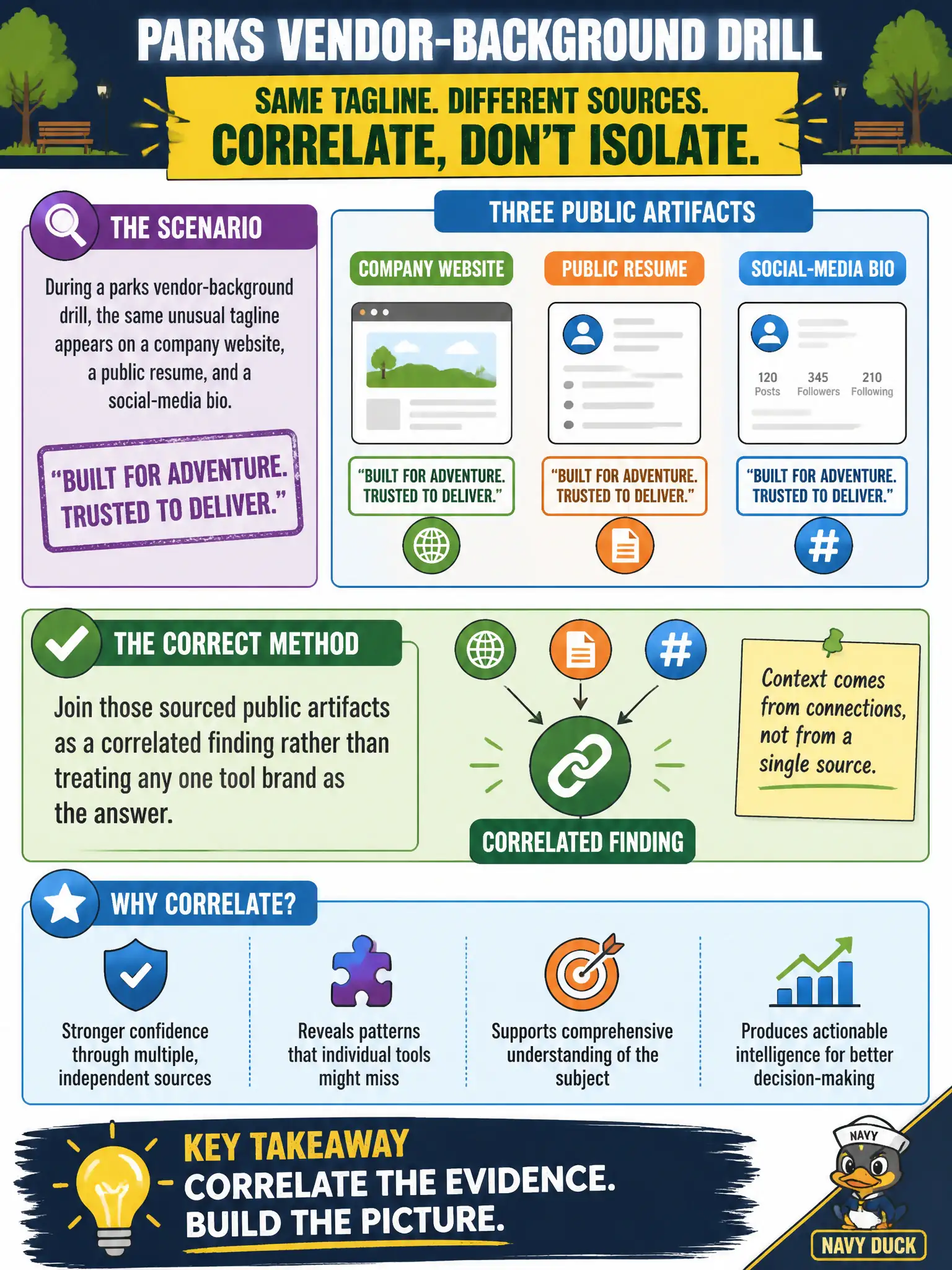
During a parks vendor-background drill, the same unusual tagline appears on a company website, a public resume, and a social-media bio. What method should the analyst use?
Select an answer to reveal the explanation.
Short Explanation
A unique phrase repeating in three public places is like the same uncommon nickname on a mailbox, a resume, and a shop window—you connect the signs, you do not wait for a brand-name gadget to bless them. Challenge thinking is joining sourced facts. The tool logo is not the finding.
Full Explanation
Course-challenge methodology is correlation of public artifacts, not loyalty to a product. When during a parks vendor-background drill the same unusual tagline appears on a company website, a public resume, and a social-media bio, the analyst should join those sourced public artifacts as a correlated finding rather than treating any one tool brand as the answer. Capture each source, record locators and times, and state the overlap.
Treating the matching tagline as irrelevant unless a commercial tool brand flags it as confirmed identity outsources judgment to a logo. Ignoring two of the three hits so the report stays tied to a favorite username scanner hides evidence. Asking a generative model to invent a biography that explains the tagline without capturing the pages replaces collection with fiction.
Exam caveat: a distinctive shared string is a strong linkage lead, not automatic proof that one legal person owns every account; keep language at correlated public appearances unless more identifiers corroborate.
Operational check: screenshot/archive the website, resume, and bio with URLs and times; write the tagline overlap as a sourced correlation; and refuse brand-gated or model-invented substitutes for those captures.