
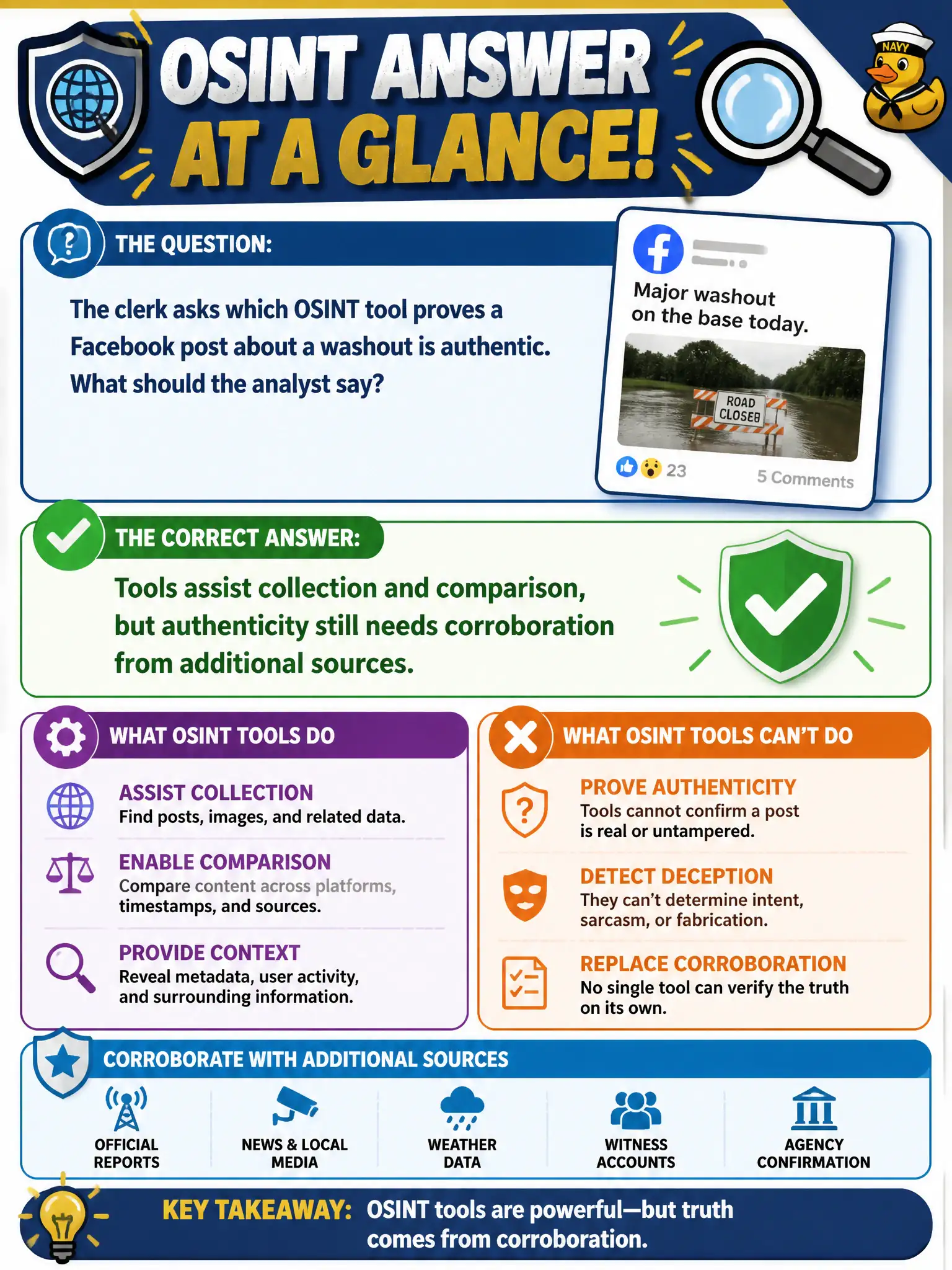
The clerk asks which OSINT tool proves a Facebook post about a washout is authentic. What should the analyst say?
Select an answer to reveal the explanation.
Short Explanation
No widget is a truth stamp. Tools help you collect and compare, but one Facebook post still needs backup. Treat authenticity as a corroboration problem, not a button.
Full Explanation
OSINT tools do not certify truth. They retrieve, compare, and display public artifacts. When the clerk asks which tool proves a Facebook post about a washout is authentic, the analyst should say that tools assist collection and comparison, but authenticity still needs corroboration from additional independent sources, platform context, and consistent details.
Claiming any reverse-image widget issues a legal authenticity certificate oversells software into a courtroom oracle. Treating a graph-UI stamp as sufficient proof for the council packet confuses visualization with verification. Treating platform likes as proof of both identity and truth mistakes engagement metrics for authorship and accuracy.
Exam caveat: even corroborated posts can be wrong about road conditions; OSINT can support situational awareness but operational closure decisions still belong to field/emergency units.
Operational check: collect the post with URL and time, run supportive comparisons (e.g., reverse image), seek independent public sources (DOT cameras, other posts, official notices), and report confidence with caveats—not a tool-issued authenticity certificate. In municipal practice, keep the wording tied to public artifacts, retrieval dates, and the authorized civic question so peers can re-perform the work without guessing intent.