
Library IT bookmarks twenty trial people-finder SaaS products to research one public handle from the staff directory. What should the analyst do instead of tool sprawl?
Select an answer to reveal the explanation.
Short Explanation
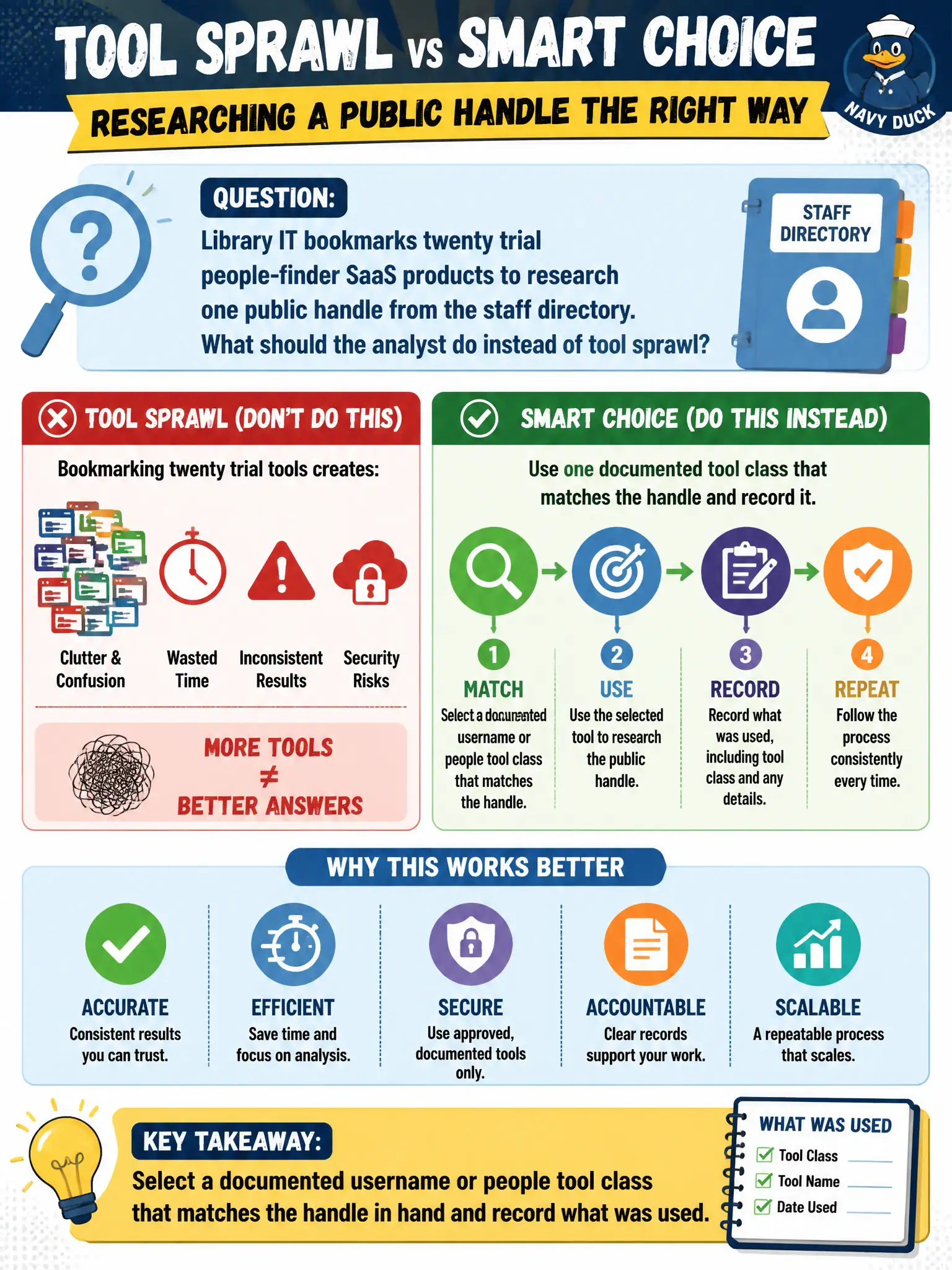
Twenty bookmarks are not twenty findings. Pick the class that fits the handle you have, use it, and write down what you did. Extra trial logos do not make the research better.
Full Explanation
Fit-to-task beats tool sprawl. When library IT bookmarks twenty trial people-finder SaaS products to research one public handle from the staff directory, the analyst should select a documented username or people tool class that matches the handle in hand, use it, and record what was used. Extra trial logos add OPSEC, terms, and billing risk without improving evidence quality.
Enabling every trial SKU so the report can name as many vendors as possible confuses product marketing with methodology. Replacing public OSINT with a dump of library-card PINs from the ILS uses closed patron data and is not OSINT. Skipping tools and inventing a biography from the handle alone fabricates findings.
Exam caveat: multiple tools in the same class can be used for corroboration, but that is deliberate overlap on one identifier—not indiscriminate sprawl across unused trials.
Operational check: pick one or two documented username/people methods, capture public hits with URLs and dates, name the methods in the report, and disable unused trials that are not part of the collection. In municipal practice, keep the wording tied to public artifacts, retrieval dates, and the authorized civic question so peers can re-perform the work without guessing intent.