
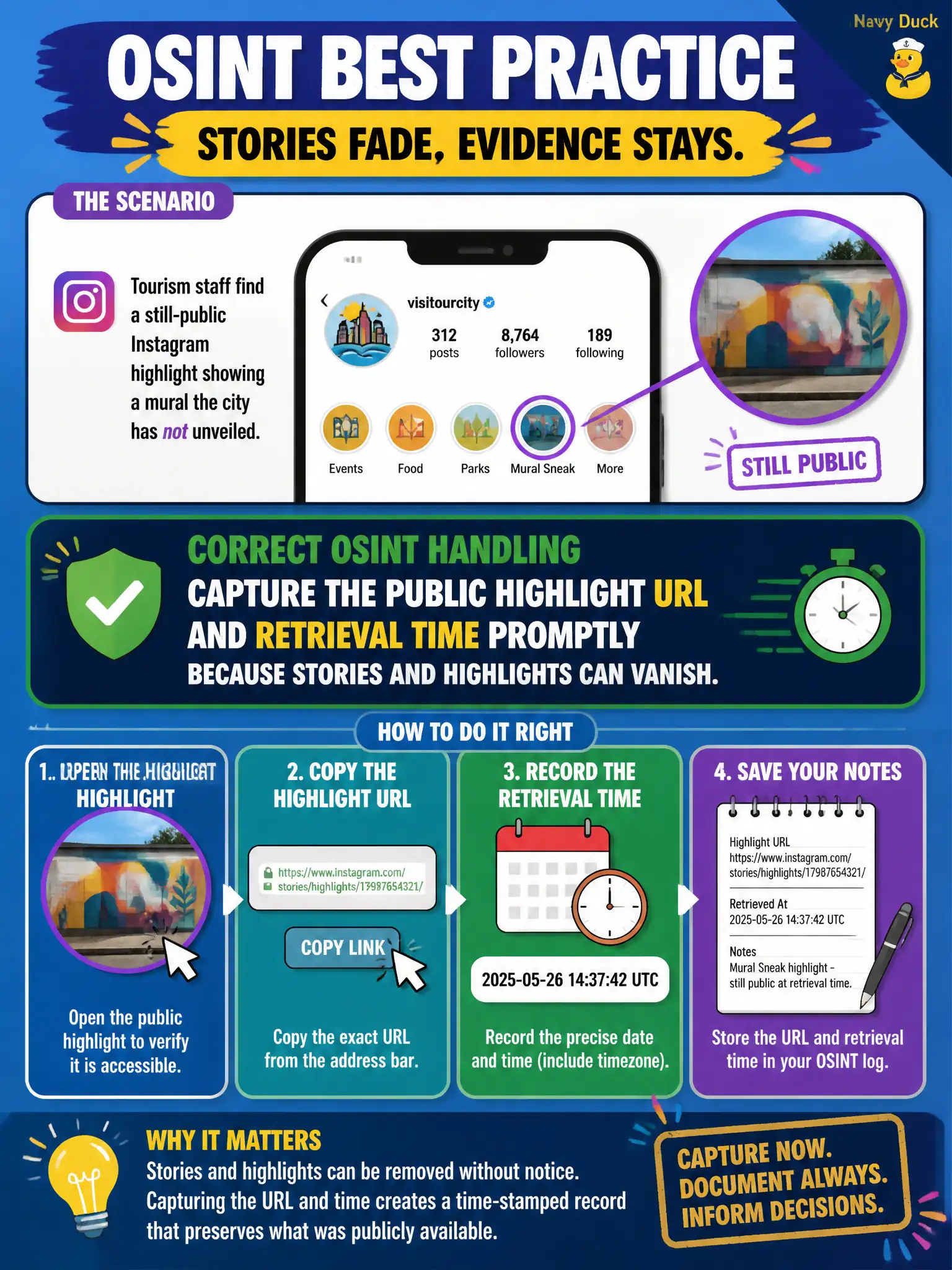
Tourism staff find a still-public Instagram highlight showing a mural the city has not unveiled. What is the correct OSINT handling of that highlight?
Select an answer to reveal the explanation.
Short Explanation
Instagram stories are like sidewalk chalk: public for a moment, then gone unless someone photographs them. A highlight that is still public is your chance to save the URL and the time you saw it. Waiting, DMing from a real staff account, or pretending it lives forever all miss that window.
Full Explanation
If tourism staff find a still-public Instagram highlight showing a mural the city has not unveiled, the correct OSINT handling is to capture the public highlight URL and retrieval time promptly because stories and highlights can vanish. Ephemeral civic-adjacent content is a race against deletion, and municipal communications may need the artifact to manage premature disclosure. Waiting until the story expires so a later capture is “more authentic” fails because expiration removes the public primary rather than improving authenticity. Direct-messaging the artist from a personal staff account for the original file fails as OPSEC-mixing personal identity with civic research and as unnecessary if the highlight is already public. Treating the highlight as a permanent city archive equivalent to the official photo set fails; Instagram highlights are platform-controlled and can disappear without municipal records retention. Exam caveat: capture does not authorize public republication of unreleased art—collection and internal briefing differ from release. Operational check: save URL, time, and screenshots or archive methods allowed by policy; notify the PIO or arts program of premature public exposure; keep the file labeled as social capture, not the official unveil set.