
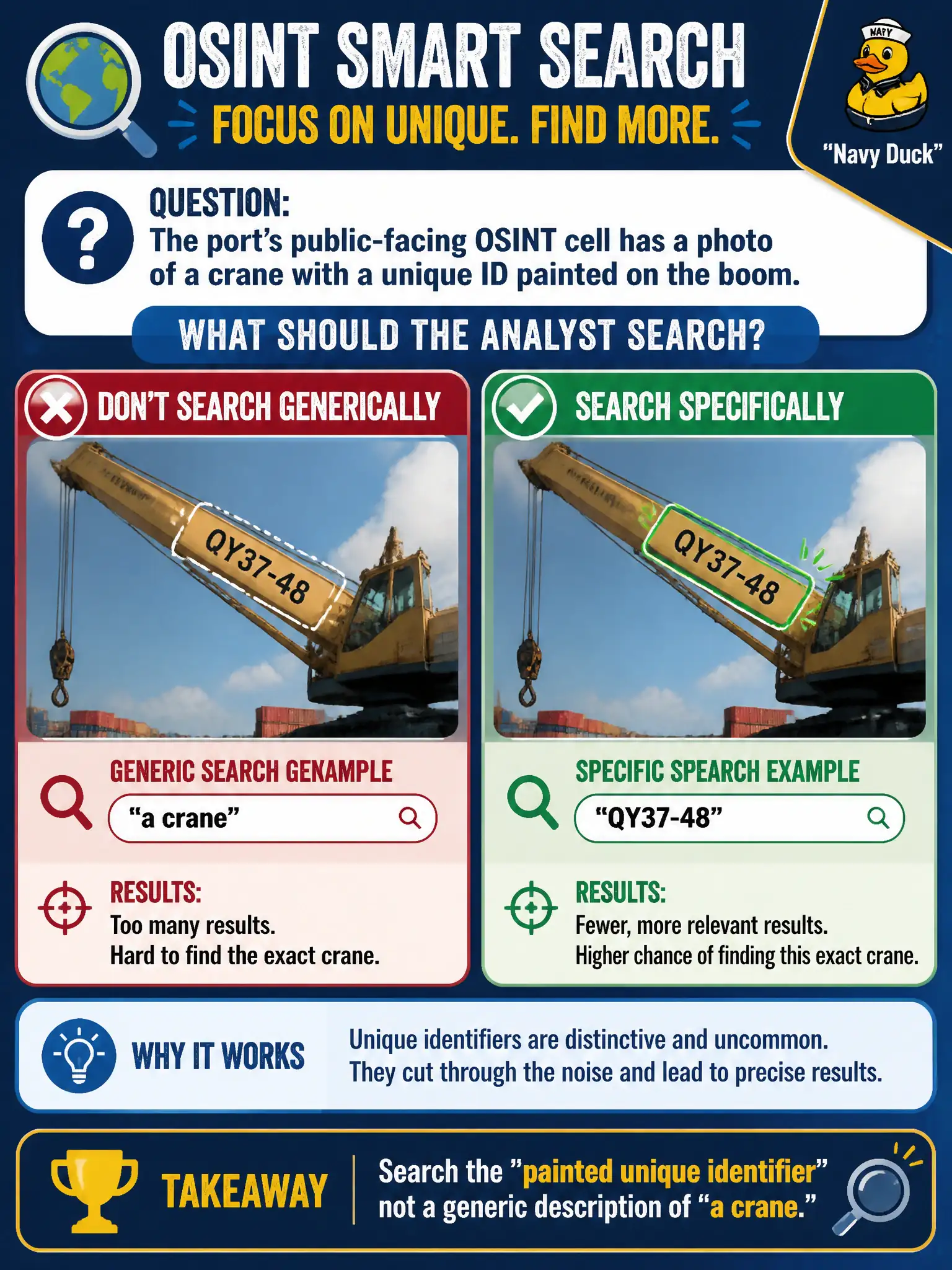
The port’s public-facing OSINT cell has a photo of a crane with a unique ID painted on the boom. What should the analyst search?
Select an answer to reveal the explanation.
Short Explanation
Searching “crane” is searching “tree.” The painted boom number is the barcode. Unique IDs beat generic object words in both reverse image and text search.
Full Explanation
Unique painted identifiers on industrial and port assets—crane boom numbers, fleet unit codes, spreader IDs, and similar marks—are high-value exact-search tokens for public OSINT. A port public-facing OSINT cell should search the painted unique ID rather than generic phrases such as “crane” plus the city name, which return overwhelming noise and slow situational awareness. Claiming painted IDs are merely decorative and never cataloged is often false: ports, insurers, manufacturers, and vendors publish equipment lists, sale notices, and photos that index those strings. Jumping immediately to a closed-circuit feed request before using the visible ID skips open-source collection and may require legal authorities that OSINT alone does not provide. Stopping after a vague keyword search leaves the strongest pivot unused. Exact-token discipline is a core PORP search skill in civic industrial settings. Exam caveat: PORP emphasizes searching unique civic and industrial markings visible in public photos before escalating beyond open sources. Operational check: transcribe the boom ID exactly including punctuation and spacing, search the token across the open web and port publications, reverse-search the photo, correlate hits with dates, and escalate to non-OSINT channels only if the public path is exhausted and properly authorized.