
The convention bureau’s hero image reverse-matches a photographer’s portfolio labeled as another city. What should staff do before reprinting it?
Select an answer to reveal the explanation.
Short Explanation
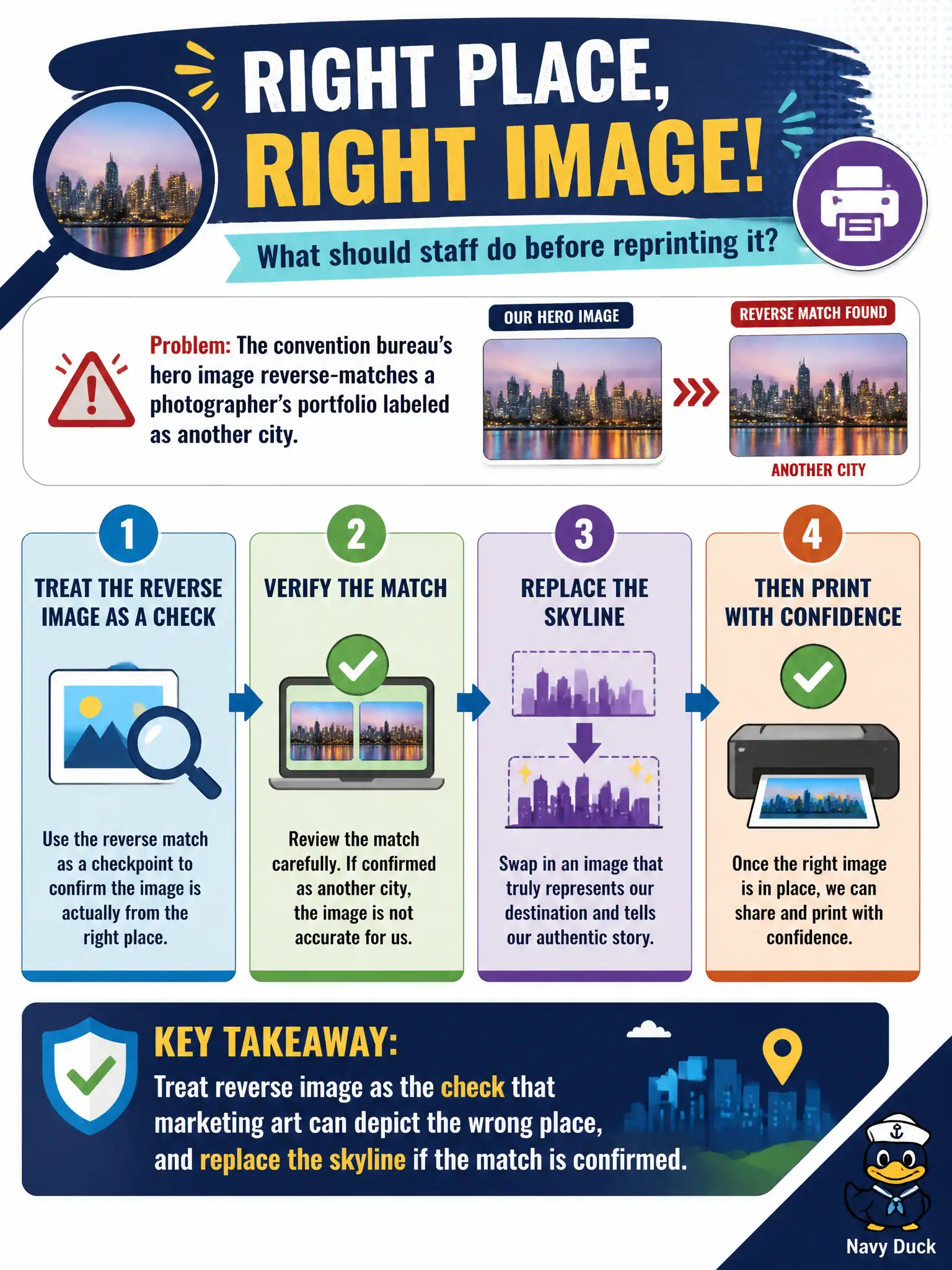
Tourism sites borrow skylines the way restaurants borrow food photos—pretty, and sometimes from the wrong town. Reverse image is how you catch a “our city” banner that is actually someone else’s waterfront. Confirm the match, then swap the art.
Full Explanation
Convention-bureau and tourism hero images sometimes reverse-match photographer portfolios explicitly labeled as another city. That mismatch is a location and brand-integrity finding: staff should treat reverse image as the professional check that marketing art can depict the wrong skyline and replace the asset if the portfolio match is confirmed through dates, captions, and visual identity. Keeping the image because a bureau caption supposedly overrides portfolio evidence privileges messaging over provenance and risks reprinting another city’s waterfront as local. Assuming without documentary review that the photographer stole the bureau’s original skips the timeline work reverse image supports—earlier publication, license terms, and portfolio metadata may show the opposite flow. Converting the hero image to grayscale or otherwise manipulating it to defeat reverse image is concealment rather than due diligence and does not fix a wrong-place depiction. Civic communications teams owe the public accurate place representation in taxpayer-funded marketing. Exam caveat: PORP tests whether candidates use reverse image to catch misattributed civic imagery before reprinting, not whether captions win by assertion. Operational check: reverse-search the hero file at full resolution, compare portfolio city labels and capture dates, verify licensing with the photographer or stock source, substitute a verified local skyline before the next print run, and record the finding in the communications due-diligence file.