
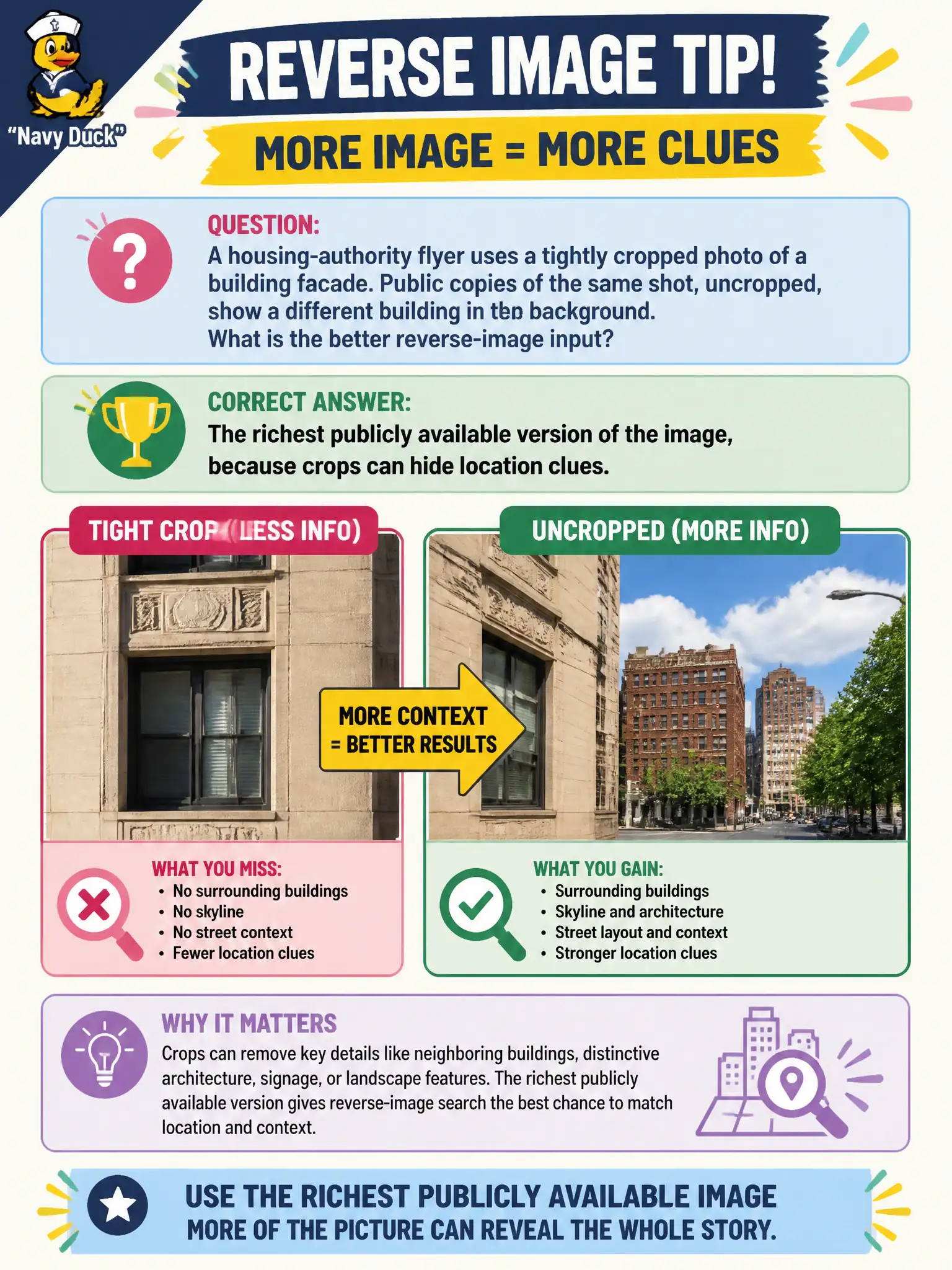
A housing-authority flyer uses a tightly cropped photo of a building facade. Public copies of the same shot, uncropped, show a different building in the background. What is the better reverse-image input?
Select an answer to reveal the explanation.
Short Explanation
A crop is like showing someone a close-up of a door and asking which city it is in—you threw away the street. If a fuller public copy exists, that is the better reverse-image input. Extra background is extra clues.
Full Explanation
Reverse-image search indexes visual features across public copies of a picture. Distinctive neighboring structures, signage, terrain, and skyline fragments are high-value pivots for locating a civic scene; a flyer crop that keeps only a generic facade strips those clues and often returns only similar-looking buildings. When a housing-authority publication uses a tight crop, the analyst should locate the richest publicly available version of the same shot—agency galleries, news reuse, contractor portfolios, or other uncropped public mirrors—and run reverse image on that fuller file before concluding what the background shows. Official publication status does not make a crop the best visual query; civic authenticity and visual completeness are separate questions. Searching only the cropped flyer fails the method because the crop may hide the very landmarks that would distinguish one streetscape from another. Capturing caption text alone is not reverse-image work: OCR or caption search is a different lane and does not substitute for matching the photograph. A blank sky crop discards foreground and background content that indexes actually use, so it cannot improve geolocation. Exam caveat: PORP expects analysts to prefer the most informative public image copy for reverse search and to treat crops as a common failure mode, not as privileged evidence. Operational check: side-by-side the flyer crop with any uncropped public twin, note newly visible structures, reverse-search the richer file, and document both source URLs and dates in the civic case notes before asserting a location.