
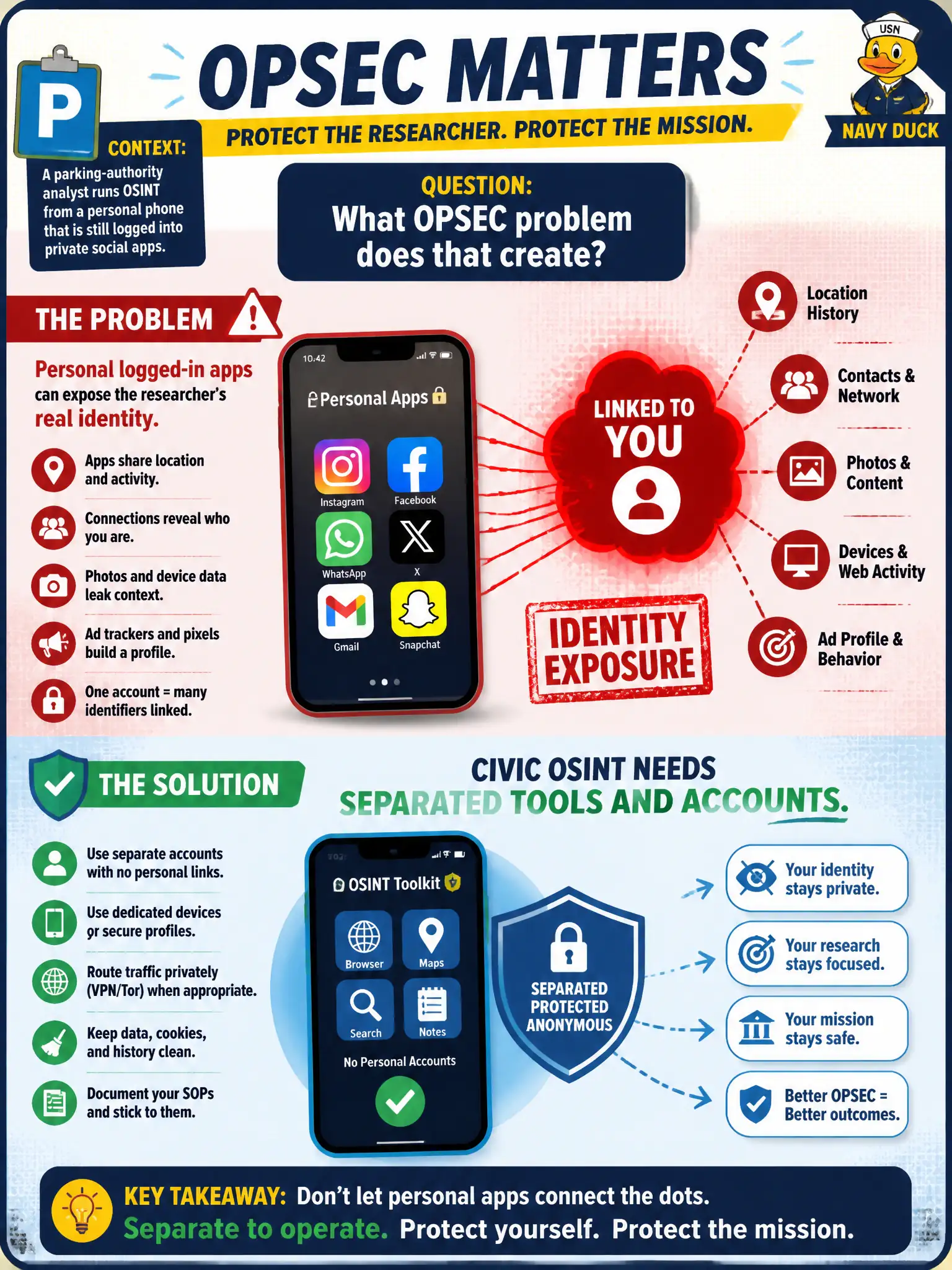
A parking-authority analyst runs OSINT from a personal phone that is still logged into private social apps. What OPSEC problem does that create?
Select an answer to reveal the explanation.
Short Explanation
Doing city research on the same phone that is still logged into personal social apps is like wearing a nametag to a stakeout. Those apps already know who is holding the device, and so can the sites being visited. Split the device or the accounts so the real person is not riding along.
Full Explanation
Running civic OSINT from a personal phone that remains logged into private social apps risks exposing the researcher's real identity to target sites, trackers, and accidental posts. Parking-authority work needs separated tools and accounts so personal sessions do not ride along with investigative browsing. Claiming phones cannot leak identity if screen brightness is low confuses display settings with account and network identifiers. Treating the issue as only battery life ignores session cookies and app identity. Assuming the city network automatically masks personal accounts on a BYO phone is usually false. Exam caveat: MDM-managed research devices can help, but personal app logins must still be excluded from the research workspace. Operational check: use a dedicated research device or profile with no personal social sessions before the next collection block, and confirm personal apps are logged out or absent from that workspace. Keep the civic purpose, method limits, and exhibit labels aligned so reviewers can see what was public-source work versus other authorities. Document residual uncertainty explicitly rather than implying completeness. Prefer reversible public methods and preserve exhibits that a second analyst can reopen without guessing.