
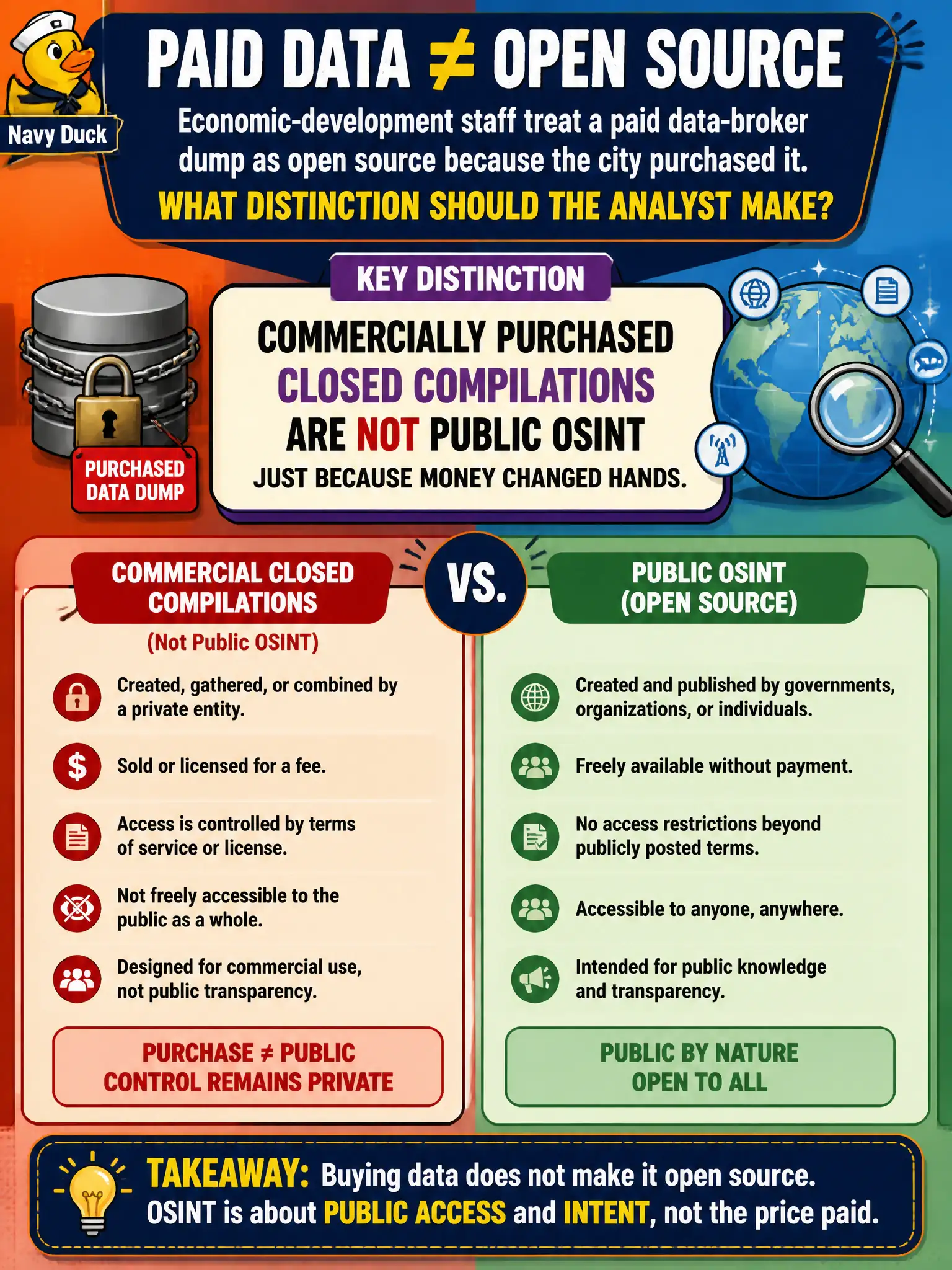
Economic-development staff treat a paid data-broker dump as open source because the city purchased it. What distinction should the analyst make?
Select an answer to reveal the explanation.
Short Explanation
Buying a private membership list is not the same as reading the free bulletin board. A paid broker dump can be useful, but purchase does not make it public. OSINT is about open availability, not the city's credit card.
Full Explanation
Open source means the information is publicly available, not that an agency spent money. Commercially purchased closed data-broker compilations remain closed products even after the invoice is paid; purchase does not equal public release for economic-development research. Treating any purchased file as automatically OSINT collapses licensing and public-availability concepts and can violate contract terms when the dump is recirculated as open source. Claiming broker dumps become OSINT after payment merely because money moved is the same error with a finance stamp. Calling paid broker data classified SIGINT and banning any mention is a different category mistake—commercial closed data is not SIGINT by purchase alone, though contract and privacy rules may still restrict use and citation. Exam caveat: some broker products aggregate public records; the analyst must still honor license terms and distinguish truly public underlying records from the proprietary compilation layer. Operational check: ask whether a member of the public could obtain the same dataset without the city's broker contract; if not, keep it out of the OSINT label and handle it under procurement or licensed-data rules.