
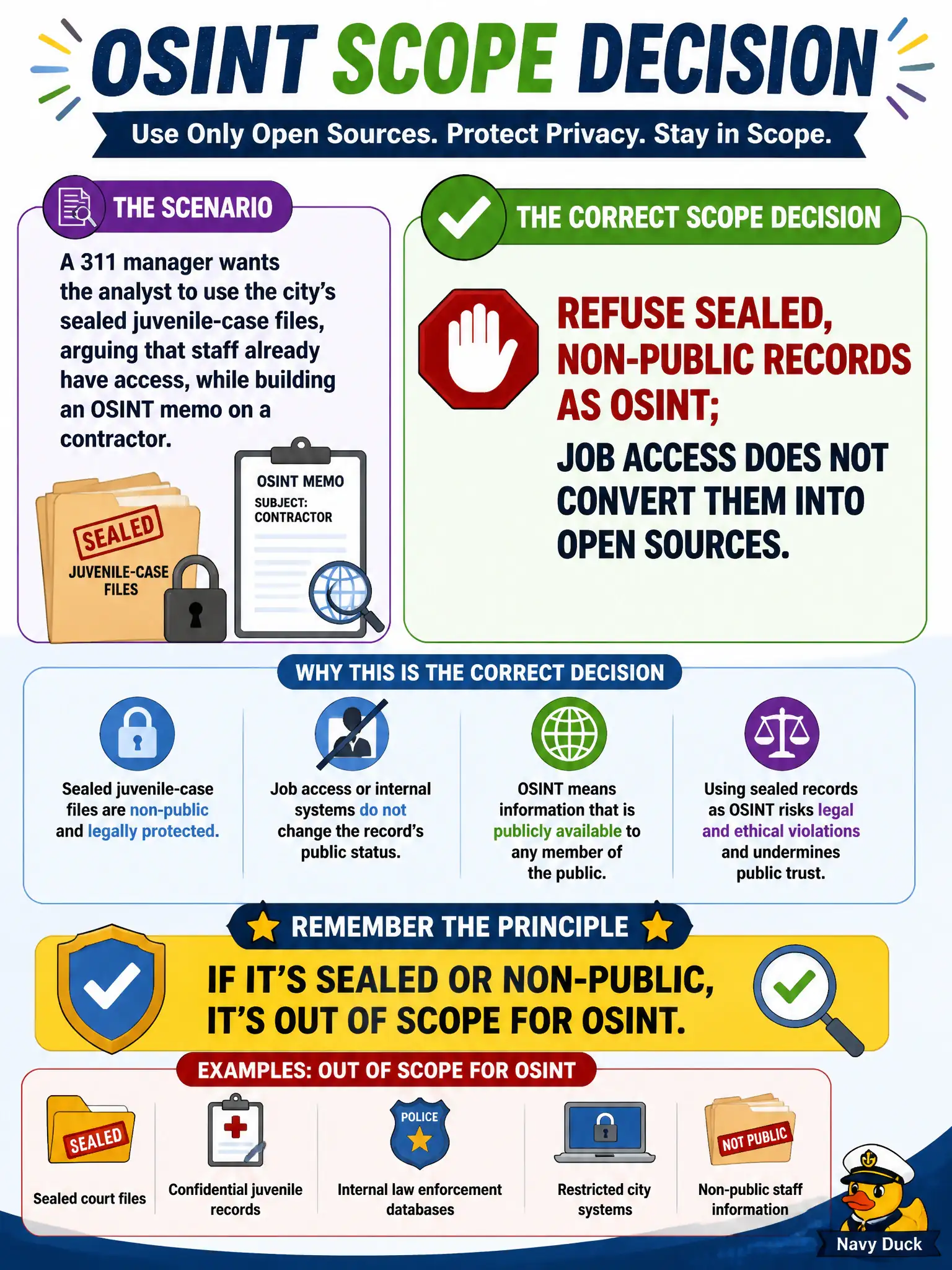
A 311 manager wants the analyst to use the city's sealed juvenile-case files, arguing that staff already have access, while building an OSINT memo on a contractor. What is the correct scope decision?
Select an answer to reveal the explanation.
Short Explanation
A badge that opens the records vault is not a library card. Sealed juvenile files stay sealed, even for city staff. Employment access is not OSINT and does not belong in this memo.
Full Explanation
Sealed or otherwise non-public records are outside OSINT scope. Workplace access to sealed juvenile-case files does not convert them into open sources for a contractor memo, and labeling them internal OSINT is a contradiction that endangers privacy and legal compliance. Unsealing by posting them to an open-data portal is not an analyst self-help step and may be unlawful regardless of the contractor-review motive. Using sealed files with initials substituted still relies on non-public content and does not create public availability for OSINT purposes. The correct scope decision is to refuse sealed records as OSINT and keep the contractor review inside lawful public sources such as business filings, news, and other openly obtainable artifacts. Exam caveat: separate legal processes may authorize use of sealed materials for narrowly defined purposes; those uses remain non-OSINT and strictly policy-bound. Operational check: if access depends on internal case-management privileges rather than a public portal, exclude the record from the OSINT memo and note the limitation for whoever tasked the work. Keep the civic purpose, method limits, and exhibit labels aligned so reviewers can see what was public-source work versus other authorities.