
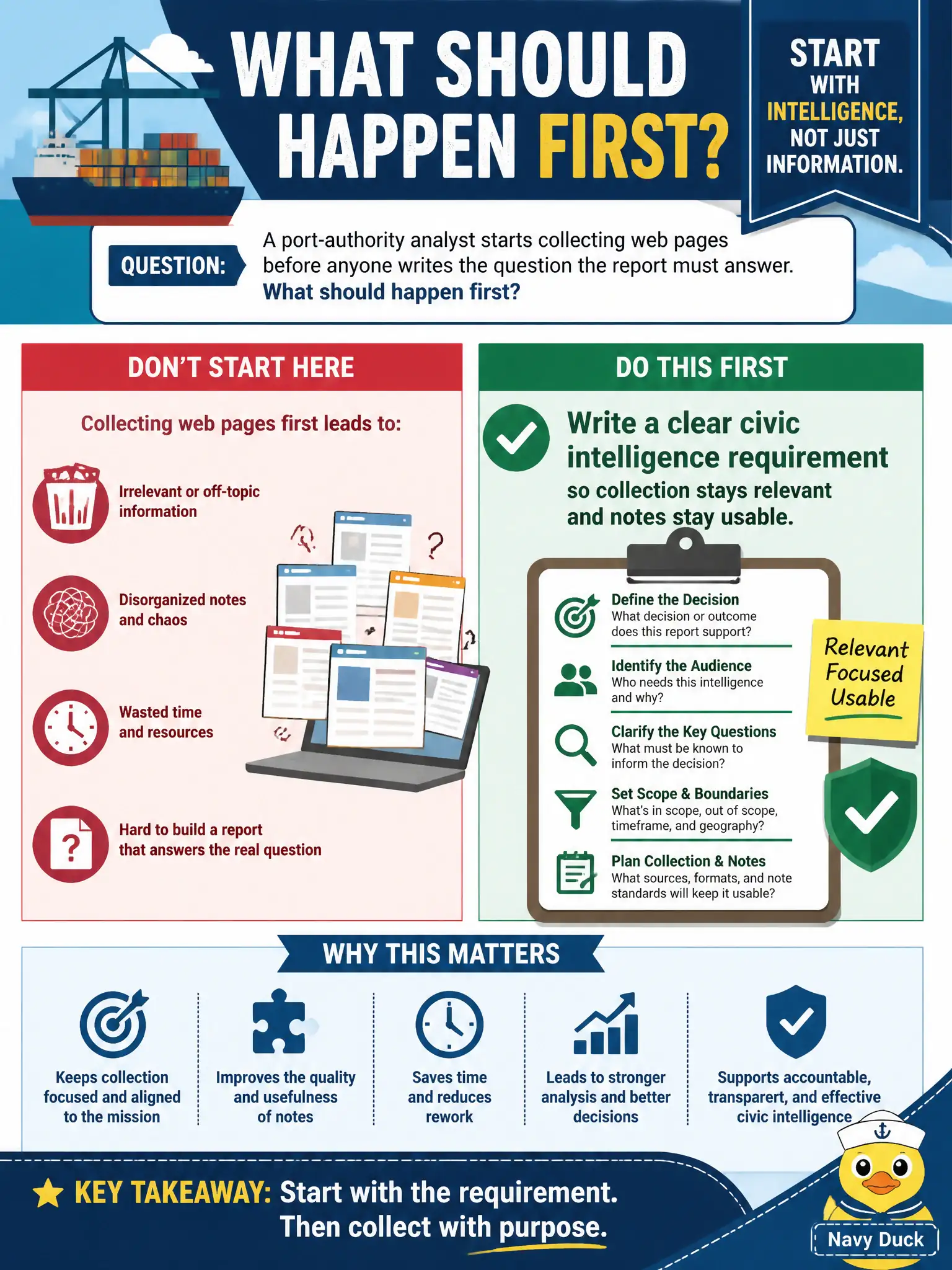
A port-authority analyst starts collecting web pages before anyone writes the question the report must answer. What should happen first?
Select an answer to reveal the explanation.
Short Explanation
Leaving the house without a shopping list is how the cart fills with snacks and misses dinner. Collection without a question produces a pile nobody can brief. Write the civic requirement first, then hunt.
Full Explanation
Intelligence-lifecycle discipline at PORP depth starts with direction: write a clear civic intelligence requirement before bulk collection so notes stay relevant and usable for the eventual report. A port-authority analyst who archives pages first and invents the question later produces an unfocused pile that is expensive to sort and hard to defend to leadership. Collecting as much as possible so the question can be invented afterward inverts priority and invites scope creep across unrelated port topics. Archiving the entire port website and then picking a theme that fits the screenshots is post-hoc rationalization, not requirements-driven research. Skipping written requirements because OSINT is exploratory by definition mistakes useful pivoting for the absence of a governing question. Exam caveat: limited exploratory probes can inform how a requirement is worded, but the formal collection and report still need a stated civic question that bounds relevance. Operational check: before saving the second wave of captures, write one sentence stating the decision the report must support and reject any artifact that cannot be mapped to that sentence. Keep the civic purpose, method limits, and exhibit labels aligned so reviewers can see what was public-source work versus other authorities.