
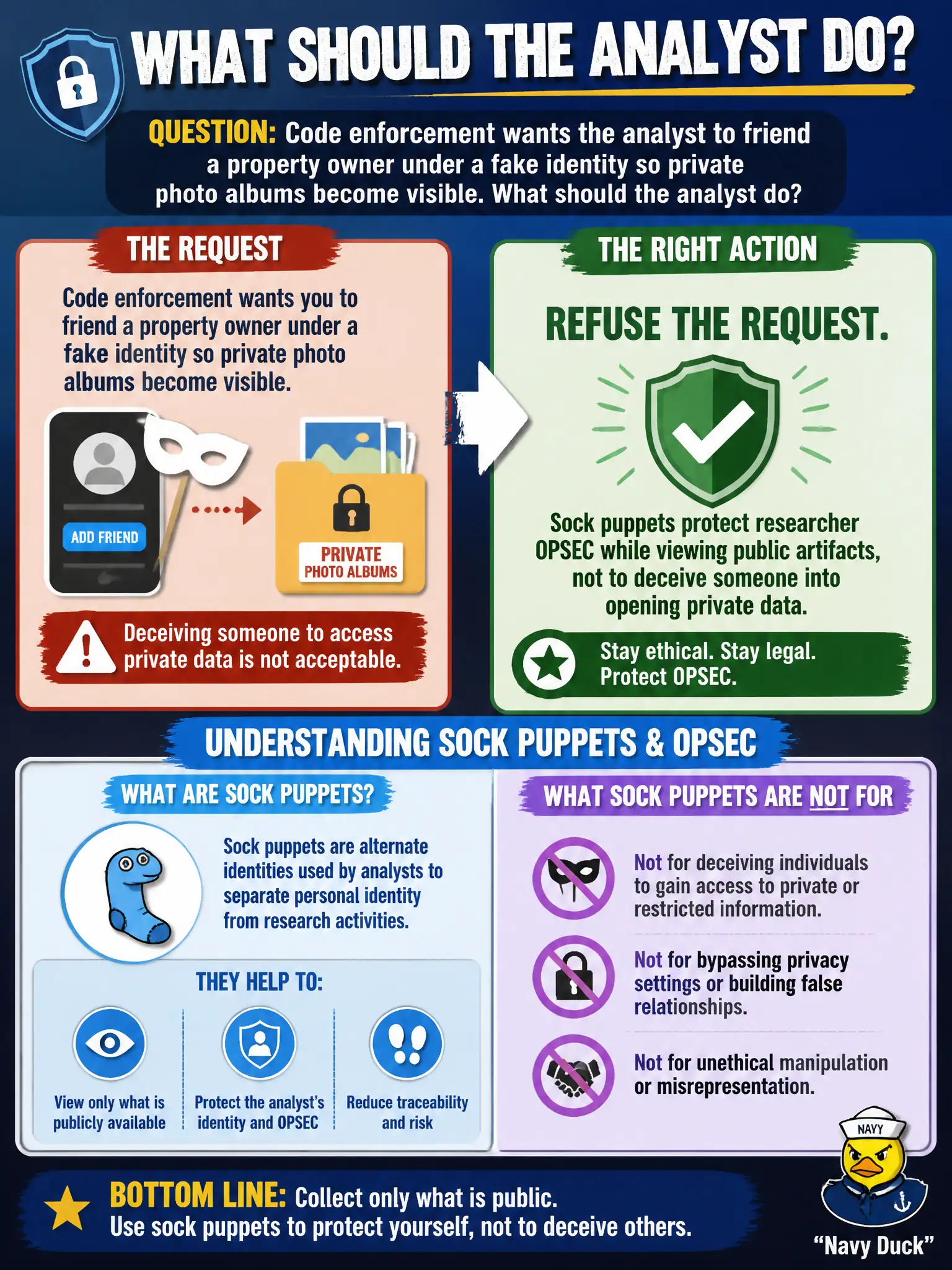
Code enforcement wants the analyst to friend a property owner under a fake identity so private photo albums become visible. What should the analyst do?
Select an answer to reveal the explanation.
Short Explanation
A research disguise is a pair of sunglasses, not a fake key to someone else's house. Sock puppets keep the analyst's real identity off the trail while looking at public posts. They are not a license to trick an owner into opening private albums.
Full Explanation
Sock-puppet accounts support researcher OPSEC while viewing public artifacts; they do not authorize deception to unlock private photo albums or other non-public content. Code enforcement asking an analyst to friend a property owner under a fake identity to expose private albums is social engineering, not PORP-aligned OSINT. Sending the friend request because sock puppets exist to unlock private content inverts the tool's purpose and converts a research persona into an access-bypass device. Friending from a personal account to make the deception more honest still seeks non-public access through false pretense and contaminates the researcher's real identity. Demanding that the platform hand over private messages by claiming a municipal emergency bypasses lawful process and misuses emergency framing. Exam caveat: some jurisdictions tightly regulate online undercover techniques even for government actors; when private content is truly required, use lawful process rather than persona tricks. Operational check: if the needed artifact is not visible without a connection accept, treat it as out of OSINT scope and document the gap instead of attempting to socially engineer access. Keep the civic purpose, method limits, and exhibit labels aligned so reviewers can see what was public-source work versus other authorities.