
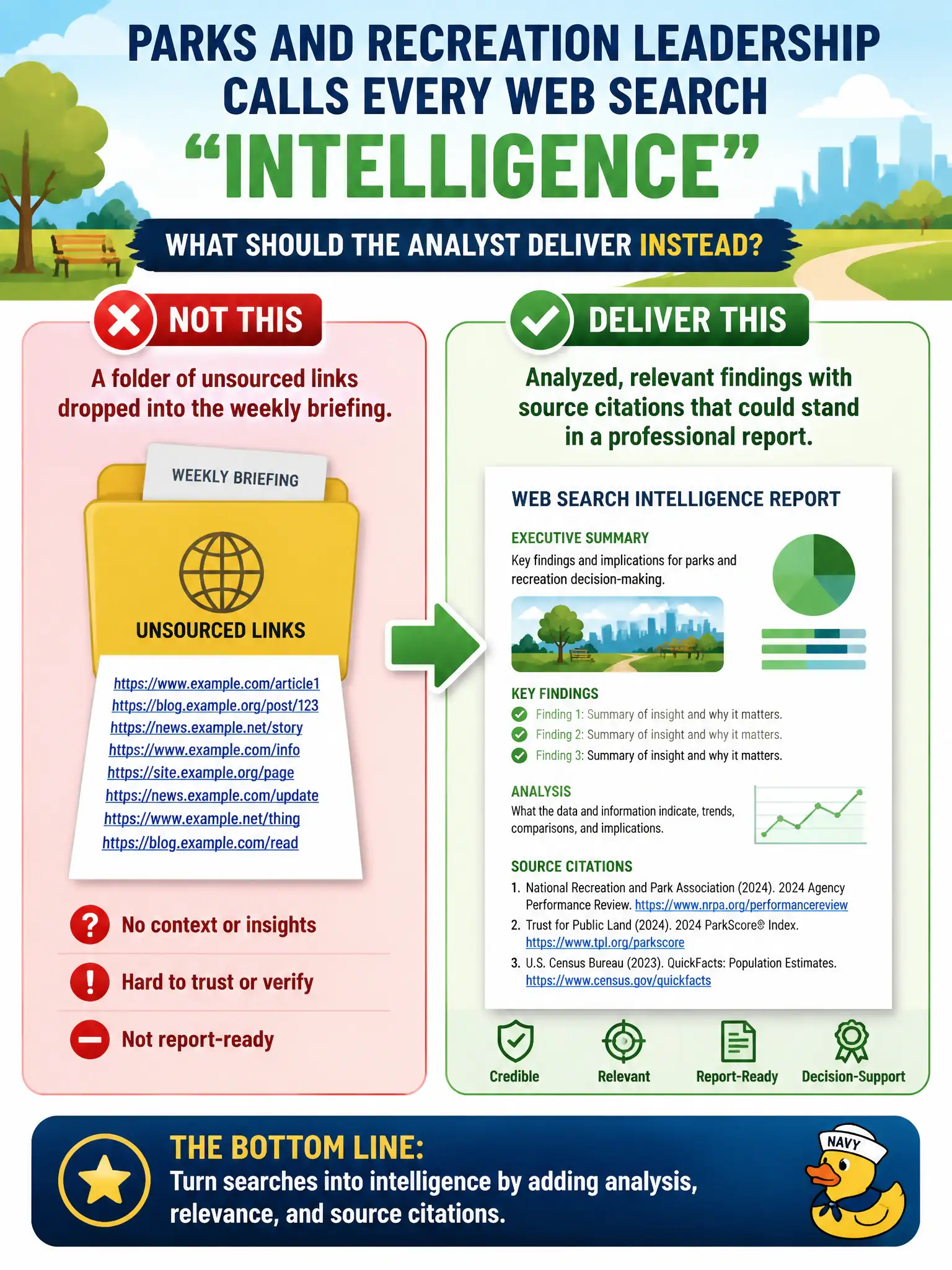
Parks and recreation leadership calls every web search intelligence and wants a folder of unsourced links dropped into the weekly briefing. What should the analyst deliver instead?
Select an answer to reveal the explanation.
Short Explanation
A grocery bag of random printouts is not a meal, and a pile of links is not intelligence. Collection is just gathering. Intelligence is the sourced, relevant story those pages actually support.
Full Explanation
Intelligence is analyzed, relevant insight drawn from publicly available sources, not raw search activity. Parks and recreation leadership needs findings that could stand in a professional report: claims tied to cited locators, relevance to the civic question, and a clear separation between evidence and interpretation. A longer bookmark list without commentary remains collection debris and forces decision makers to redo the analysis without shared criteria. A single screenshot of the first search-results page documents a query moment, not a defended finding, and cannot support briefing conclusions about programs, vendors, or site conditions. An unsourced summary written from memory after the browser closes destroys retrievability and auditability and invites undetectable error. The analyst should distill what matters to the parks question, attach locators, and state confidence where sources conflict. Exam caveat: exploratory browsing is a normal early step, but the delivered product must graduate from collection to sourced analysis before it is labeled intelligence for leadership. Operational check: for each claim in the weekly briefing, require a URL or equivalent locator, a retrieved-on date, and one sentence stating why the artifact answers the parks question; reject any paragraph that fails that triad.