
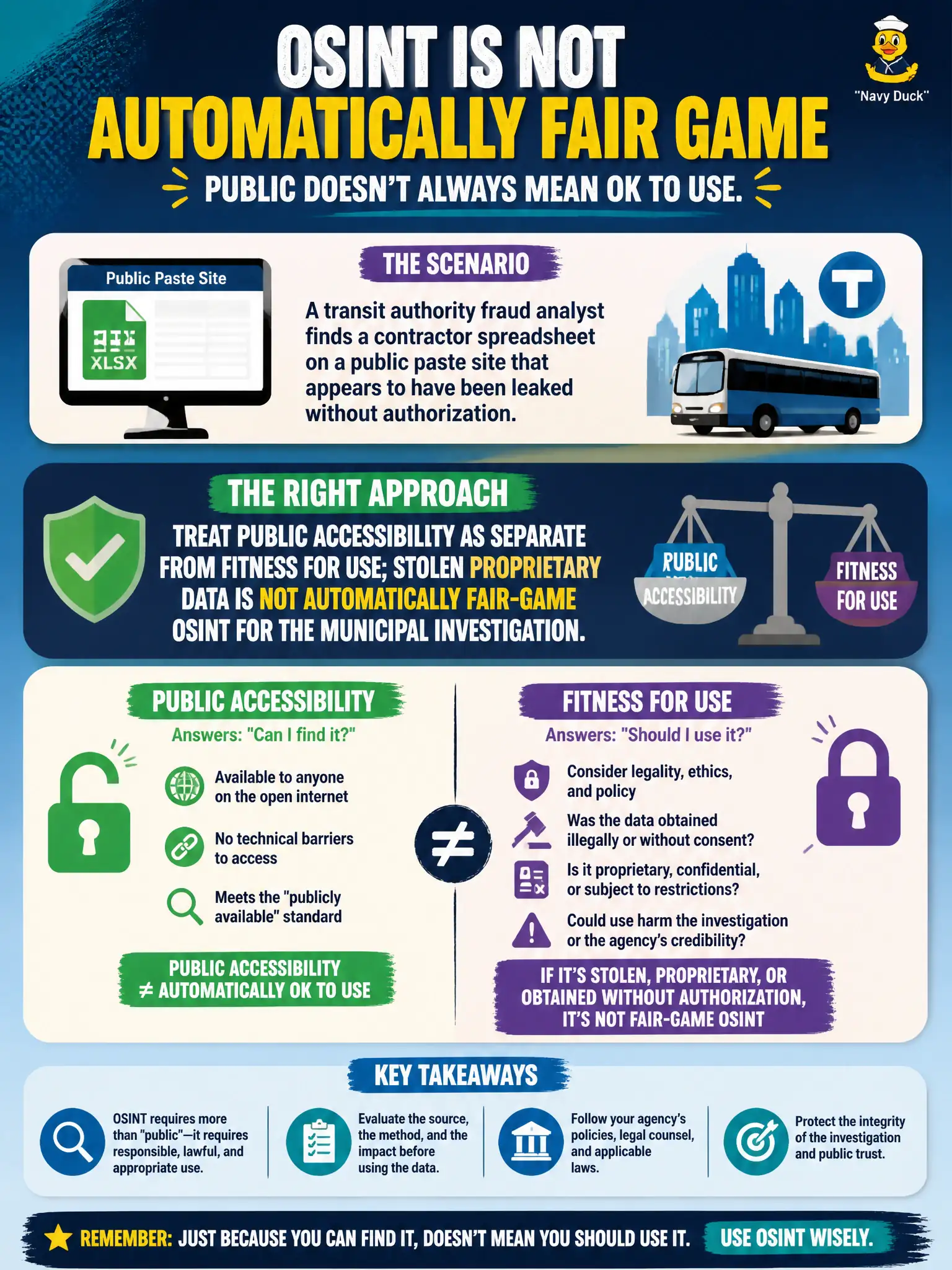
A transit authority fraud analyst finds a contractor spreadsheet on a public paste site that appears to have been leaked without authorization. How should the analyst treat that file when deciding what counts as OSINT?
Select an answer to reveal the explanation.
Short Explanation
Finding a box on the sidewalk does not make the contents yours to use in a city case file. A paste URL can be public and still be stolen proprietary data. OSINT judgment separates "it is reachable" from "it is fit and lawful to rely on."
Full Explanation
Public reachability is necessary for open-source status but is not by itself ethical or legal fitness for a municipal investigation. A contractor spreadsheet on a paste site may load without a login and still be unauthorized proprietary data that was leaked without authorization. Treating every reachable dump as core OSINT because the URL works today conflates accessibility with fitness for use and can contaminate a civic case file with stolen internals. Re-uploading the file to the authority's open-data portal does not sanitize provenance or create a lawful public release; it can worsen mishandling. Labeling the file classified SIGINT because it once left a private network is a category error—SIGINT is a different intelligence discipline, and leak status does not automatically create that classification. PORP-style civic research stays with lawful public methods and channels unauthorized exposures through proper reporting rather than folding them into the OSINT product as ordinary public records. Exam caveat: discovery of apparent stolen data may trigger mandatory internal reporting even when the analyst does not use the content as evidence. Operational check: separate three questions in the notes—Is it reachable without privileged access? Is use authorized for this civic purpose? Who must be notified?—and only promote material that clears the fitness test into the report's OSINT findings.