
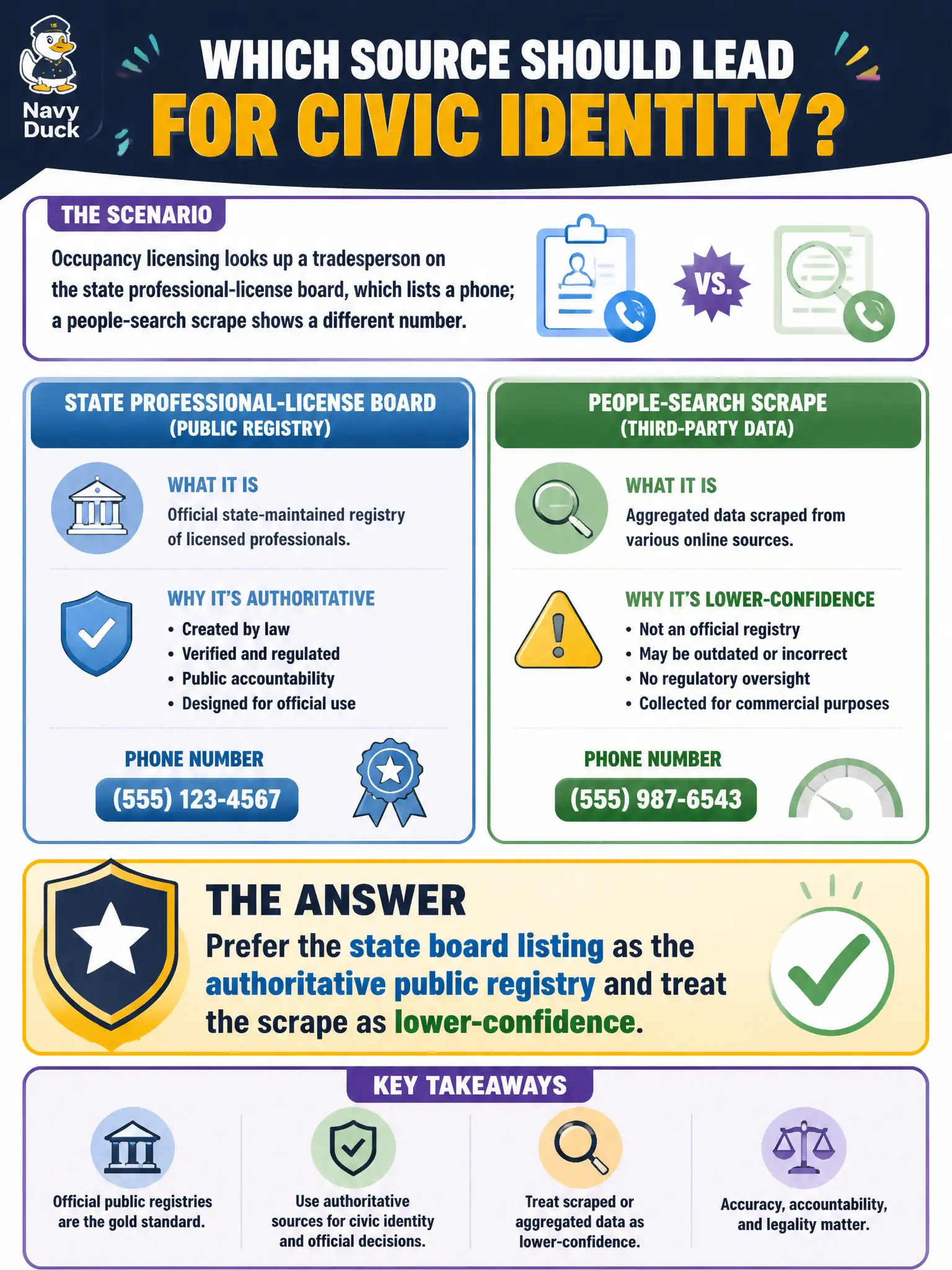
Occupancy licensing looks up a tradesperson on the state professional-license board, which lists a phone; a people-search scrape shows a different number. Which source should lead for civic identity?
Select an answer to reveal the explanation.
Short Explanation
The state board is the official roster; the people-search scrape is a rummage bin. For a tradesperson’s civic identity, start with the license listing and treat aggregator phones as maybe. A bio with no license number does not win.
Full Explanation
For civic identity of a tradesperson, occupancy licensing should prefer the state professional-license board listing as the authoritative public registry and treat a people-search scrape showing a different phone as lower-confidence. Official boards exist to publish licensed identity and contact fields that municipalities rely on. Preferring the scrape because aggregators “always” beat official boards inverts source hierarchy and imports stale or fused phones. Claiming neither source is citable because phones on licenses are “never” usable discards the board’s published contact channel. Elevating a social-media bio that has no license number over the board listing ignores the credential the licensing task actually cares about. Exam caveat: PORP ranks official public license registries above aggregator scrapes and uncredentialed bios for tradesperson civic identity. Operational check: cite the board URL, license number, and listed phone with date; record the aggregator phone as unconfirmed alternate; seek reconciliation through other public business pages if needed; and keep the board listing as the lead contact in the occupancy file unless stronger official updates appear. Occupancy files should show the board phone as primary and the scrape phone as alternate-unconfirmed until a newer official filing updates the contact.