
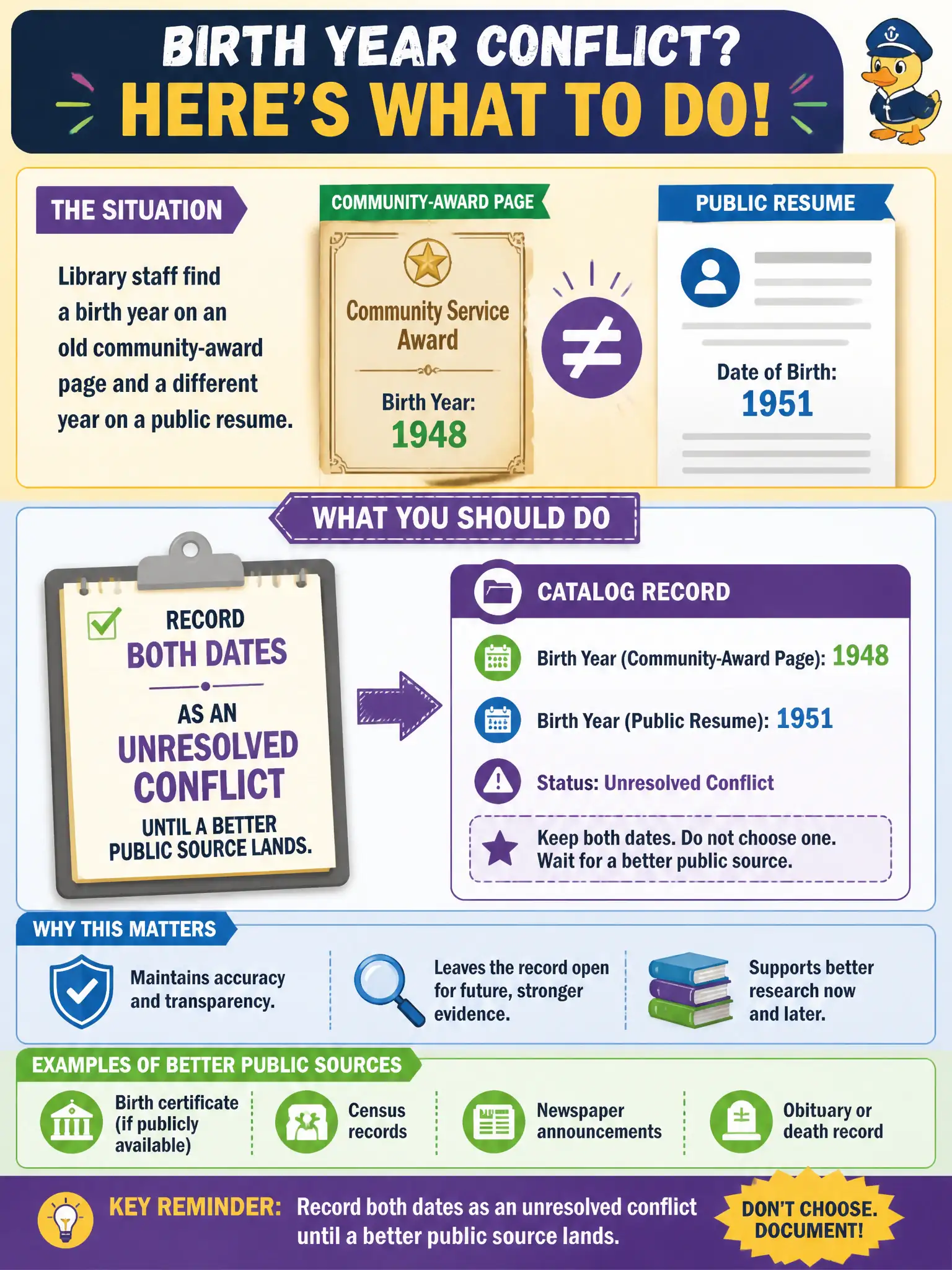
Library staff find a birth year on an old community-award page and a different year on a public resume. What should they do with the dates?
Select an answer to reveal the explanation.
Short Explanation
Two clocks showing different years means you keep both clocks on the table. Do not pick the convenient number, split the difference, or raid the sealed-records vault. Note the conflict and wait for a stronger public source.
Full Explanation
When library staff find a birth year on an old community-award page and a different year on a public resume, they should record both dates as an unresolved conflict until a better public source lands. Parallel public dates that disagree are a documentation problem, not a license for sealed records or invented compromises. Picking the year that makes the speaker look more experienced biases the file toward flattering résumé inflation. Averaging the two years and publishing a blended date creates a third false number that no source published. Demanding a sealed vital-records certificate as routine OSINT leaves the public-source lane for restricted vital records. Exam caveat: PORP preserves conflicting public dates rather than forcing false precision in people files. Operational check: archive both sources with retrieval dates, enter both years with conflict flags, continue seeking higher-quality public sources such as later bios or directories, brief library stakeholders that the year remains unresolved, and avoid sealed vital-records pulls unless a separate lawful process authorizes them. Library research quality rises when conflict flags remain visible to readers instead of being silently resolved into a convenient single year.