
A unique display name appears in a municipal team-chat archive that was accidentally published on the city’s open-data portal. How should the analyst handle that handle?
Select an answer to reveal the explanation.
Short Explanation
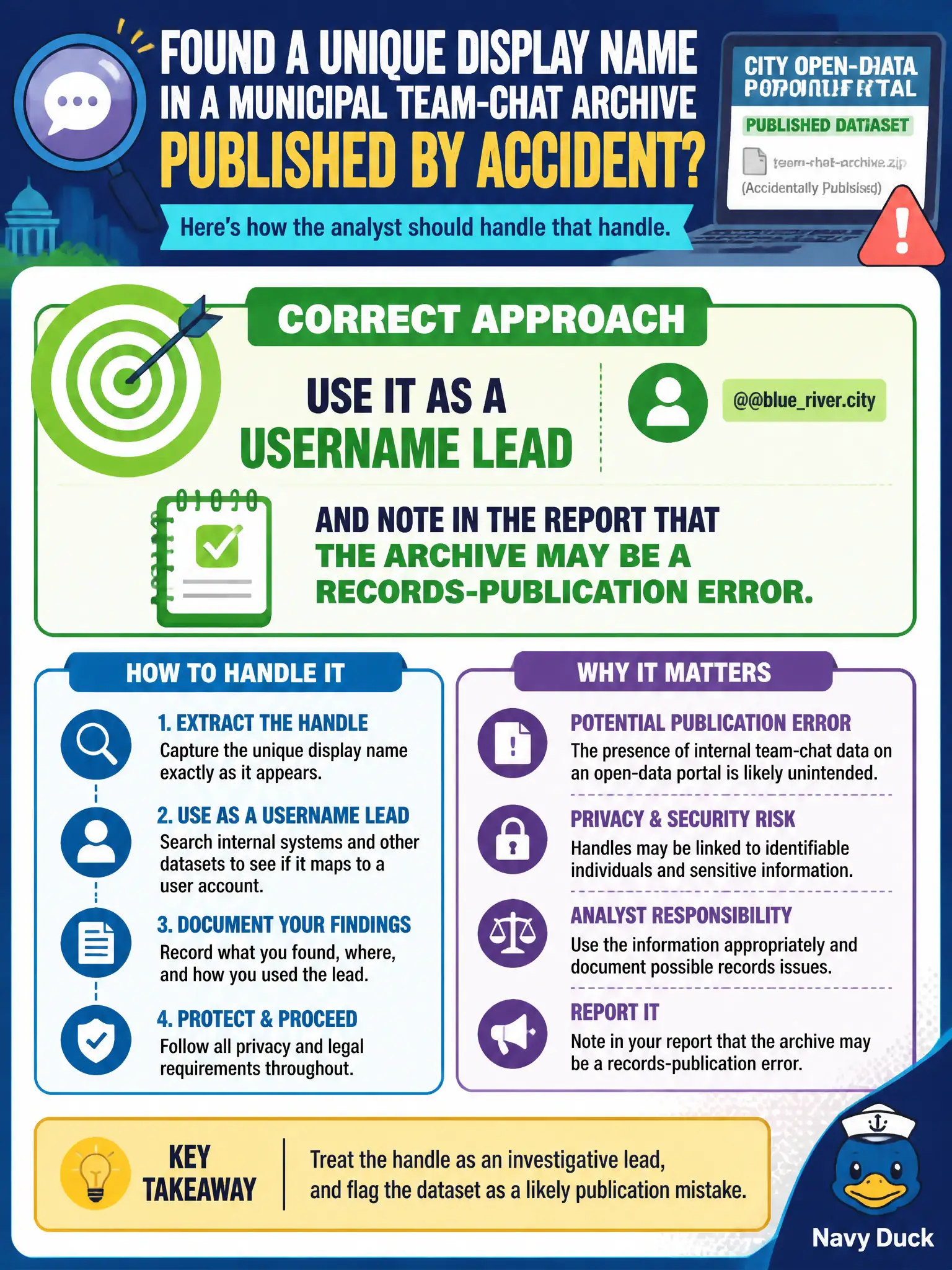
Once it sits on the open-data portal, the handle is in the public square—even if someone left the door unlocked by mistake. Use it as a username lead, and also flag that the city may have published more than it meant to. That flag is part of professional notes, not a free pass into private chat.
Full Explanation
When a unique display name appears in a municipal team-chat archive that was accidentally published on the city’s open-data portal, the analyst should use it as a username lead and note in the report that the archive may be a records-publication error. Once on the open-data portal, the handle is publicly observable, but professionalism still requires flagging possible over-publication. Treating the export as a license to harvest still-private messages from the live workspace confuses a static public dump with ongoing access to non-public systems. Ignoring the handle because accidental publications are “never” public sources invents a doctrine that erases clearly published civic data. Using the archive to attempt login to the live municipal chat system turns a records spill into unauthorized access. Exam caveat: PORP allows use of accidentally published public artifacts as leads while requiring analysts to note possible records errors and forbid live-system abuse. Operational check: archive the open-data URL and handle string, hunt the username on other public platforms, notify records or IT about possible over-publication, and refuse any login or private-channel scraping against the live workspace.