
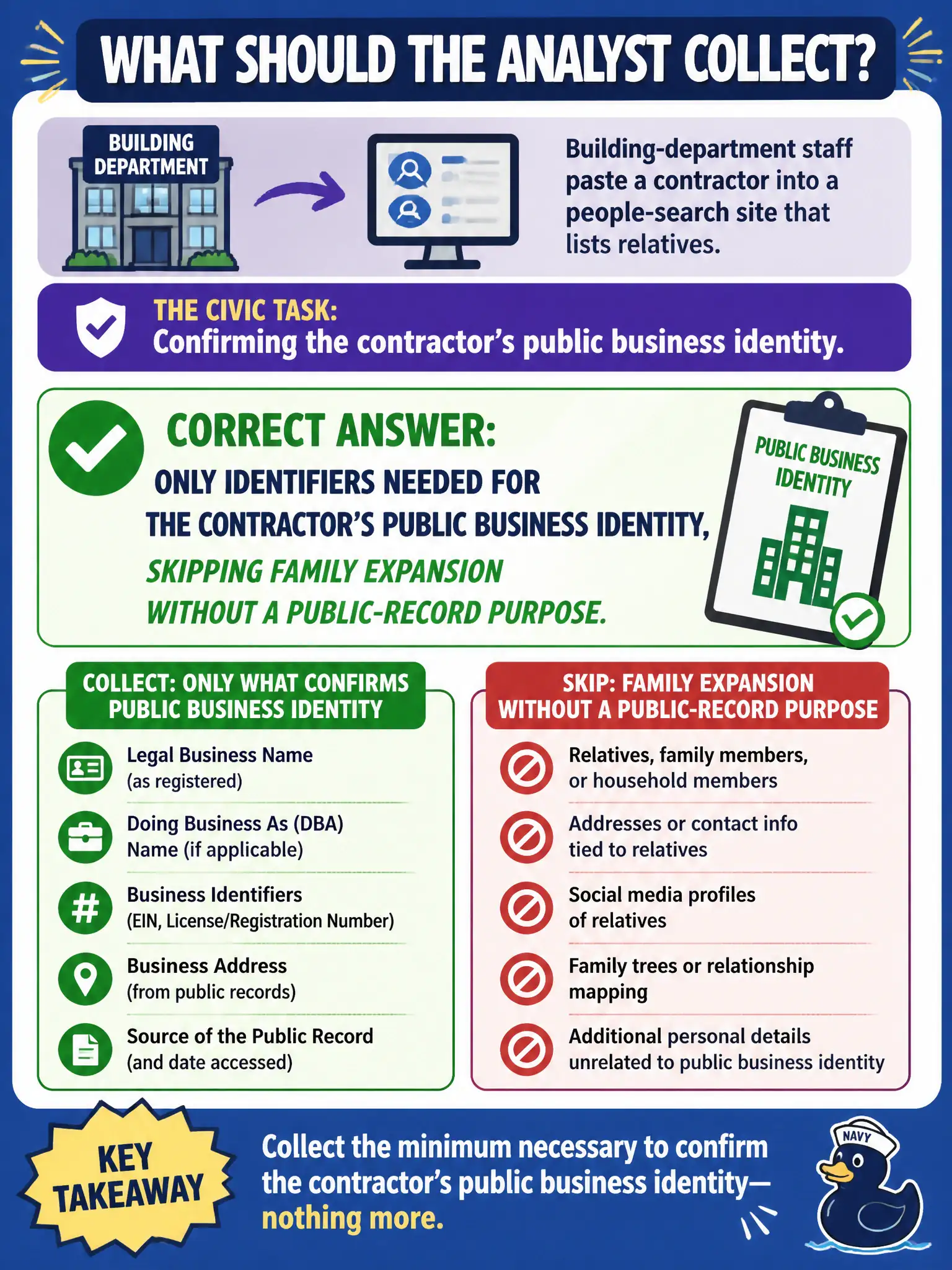
Building-department staff paste a contractor into a people-search site that lists relatives. The civic task is confirming the contractor’s public business identity. What should the analyst collect?
Select an answer to reveal the explanation.
Short Explanation
People-search sites love to unroll a family reunion you did not ask for. The building desk needs the contractor’s public business identity, not the cousins. Collect what answers the civic question and leave the relatives alone unless a public-record task actually requires them.
Full Explanation
When building-department staff paste a contractor into a people-search site that lists relatives, and the civic task is confirming the contractor’s public business identity, the analyst should collect only identifiers needed for that business identity and skip family expansion without a public-record purpose. Scope discipline protects uninvolved relatives and keeps the file aligned with the building desk’s question. Collecting every relative’s social profile to map the full household expands into personal surveillance unrelated to contractor licensing or permits. Pulling school records of the contractor’s children as collateral identity is both non-public in many jurisdictions and ethically off-mission. Building a complete family tree for “completeness” with no civic need documents curiosity, not due diligence. Exam caveat: PORP limits people-search use to identifiers that answer the authorized civic question and rejects household sprawl as default practice. Operational check: extract contractor name, business phone, license number, and public addresses relevant to the permit; ignore relative widgets unless a separate lawful public-record task requires them; document the refused family expansion; and return a business-identity brief to the building department.