
Open-meeting minutes list a speaker as Jonathan M. Hale, while public social usernames use JonnyH. What is the sound identity move?
Select an answer to reveal the explanation.
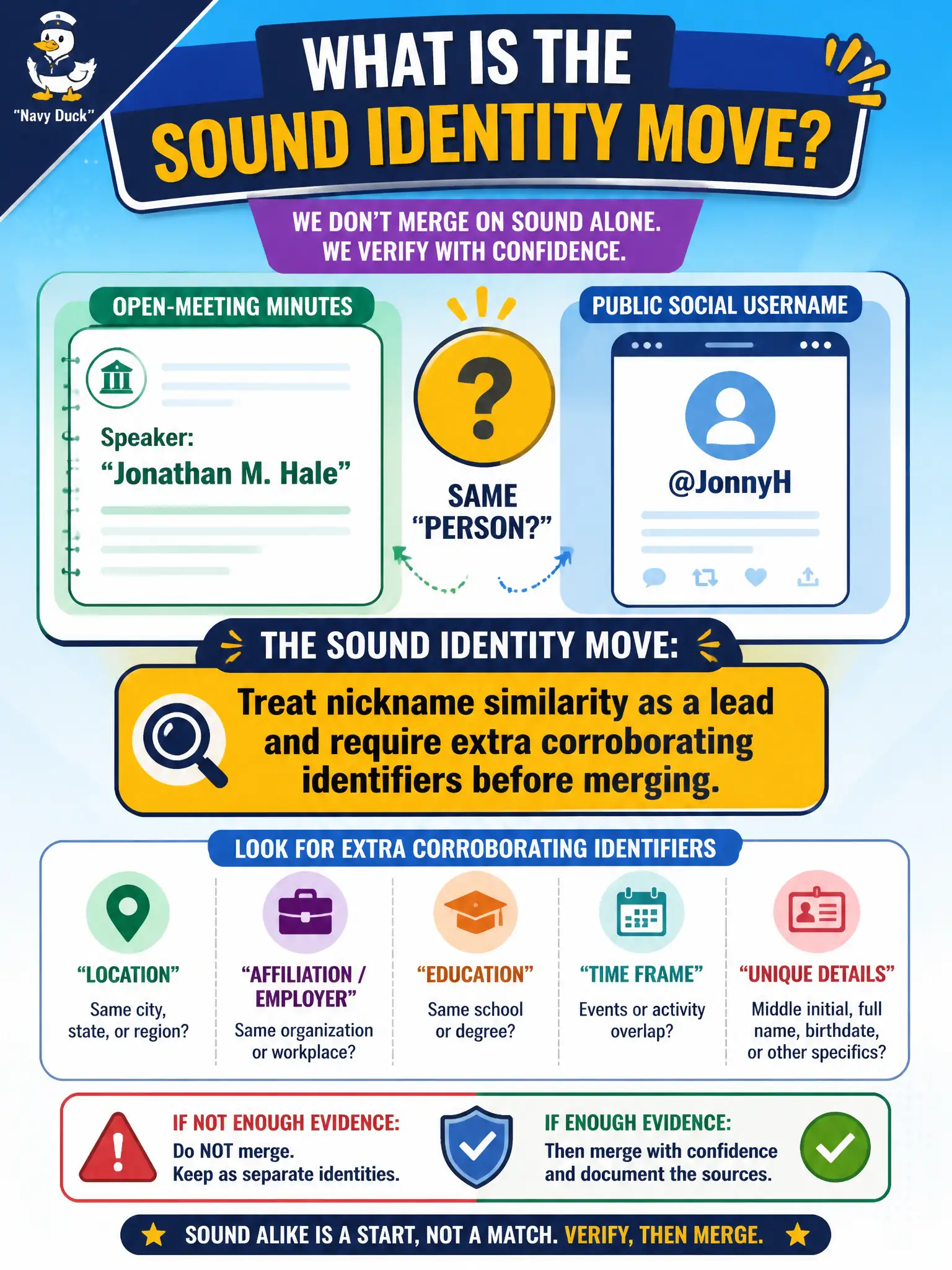
Short Explanation
Jonny can be Jonathan—or a different person with a short handle. Nickname overlap is a sticky note that says “check this,” not a wedding of two identities. Wait for another public identifier before you merge.
Full Explanation
When open-meeting minutes list a speaker as Jonathan M. Hale while public social usernames use JonnyH, the sound identity move is to treat nickname similarity as a lead and require extra corroborating identifiers before merging. Nicknames often map to legal names but also collide across unrelated people. Merging the records immediately because nicknames always equal legal names creates false attribution between a public-meeting speaker and a social account. Discarding the social accounts because nicknames are never useful leads throws away a legitimate soft pivot that can be confirmed with email, unique phrases, or linked sites. Asking the clerk to rewrite the minutes so the legal name matches the social handle tampers with an official civic record to force an OSINT convenience. Exam caveat: PORP scores nickname overlap as a lead requiring independent corroboration, never as automatic identity or a reason to alter minutes. Operational check: keep separate records for Jonathan M. Hale (minutes) and JonnyH (social), compare available public pivots, merge only on strong multi-signal overlap, and leave official minutes unchanged while documenting the nickname lead in the case notebook.