
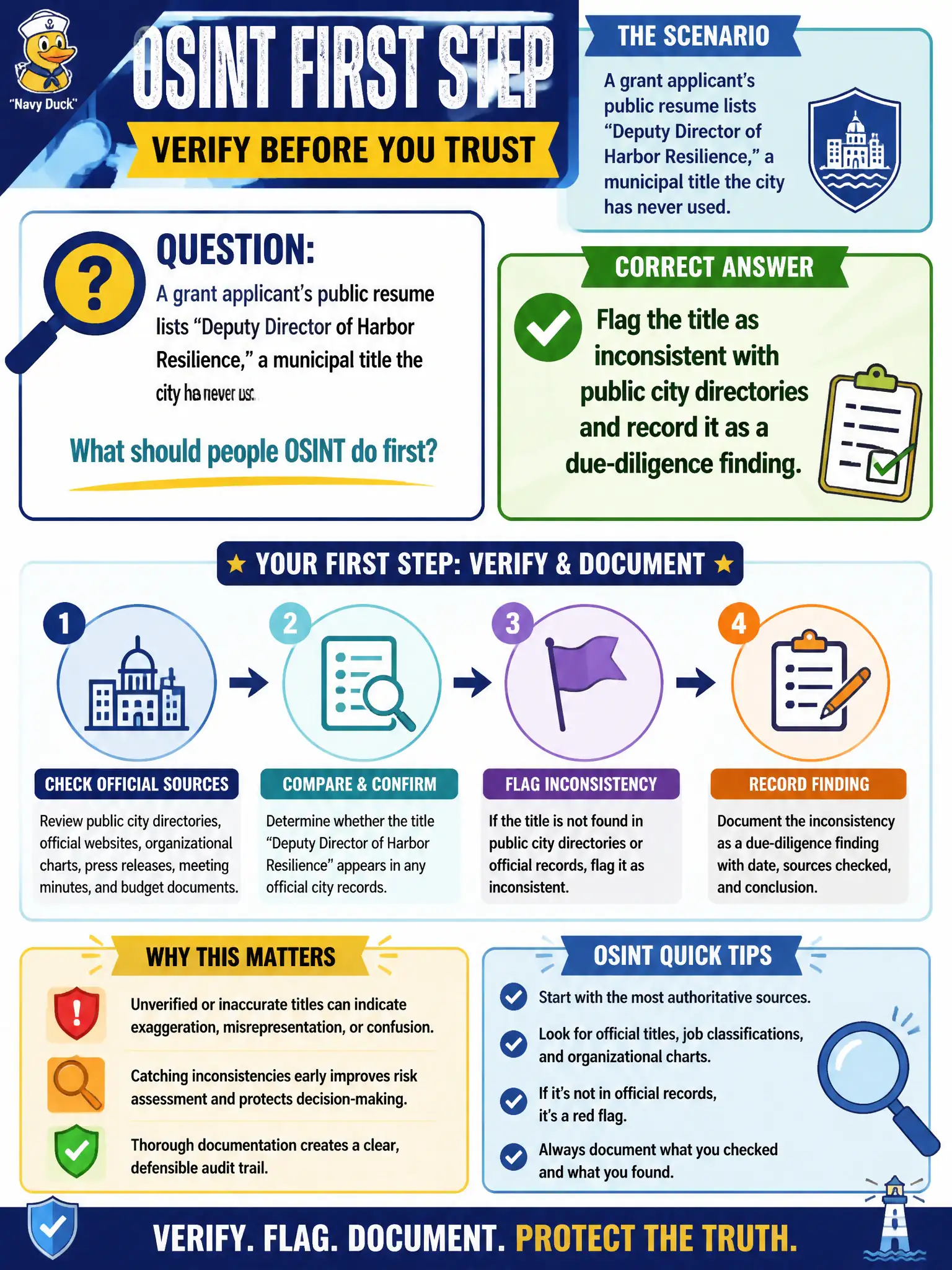
A grant applicant’s public resume lists “Deputy Director of Harbor Resilience,” a municipal title the city has never used. What should people OSINT do first?
Select an answer to reveal the explanation.
Short Explanation
A resume is a sales flyer, not the city’s org chart. If the title never existed in public directories, that mismatch is the finding—not a secret department hiding in the harbor. Cite the resume, cite the official roster, and let the grant desk see the gap.
Full Explanation
When a grant applicant’s public resume lists “Deputy Director of Harbor Resilience,” a municipal title the city has never used, people OSINT should first flag the title as inconsistent with public city directories and record it as a due-diligence finding. Resumes are self-published claims; inventing or inflating titles is a classic integrity signal for grant desks. Treating the resume as proof that a classified harbor unit exists off the public org chart invents secret structure from marketing language. Promoting the applicant internally because the invented title sounds senior rewards unverified prestige and can corrupt hiring or grant decisions. Deleting the resume from notes because unofficial titles “cannot be cited” hides the very inconsistency that matters. Exam caveat: PORP treats public title claims that conflict with official directories as reportable findings, not as proof of hidden units or as uncitable noise. Operational check: cite the resume URL and quoted title, cite the official public org chart or directory showing the absence of that title, date both sources, brief the grant desk on the mismatch without alleging crimes beyond the evidence, and retain both artifacts in the file.