
In one shared tenant, a hospital engineer can edit application policies but cannot see the other hospital's assets, cases, or issues. What does that split mean?
Select an answer to reveal the explanation.
Short Explanation
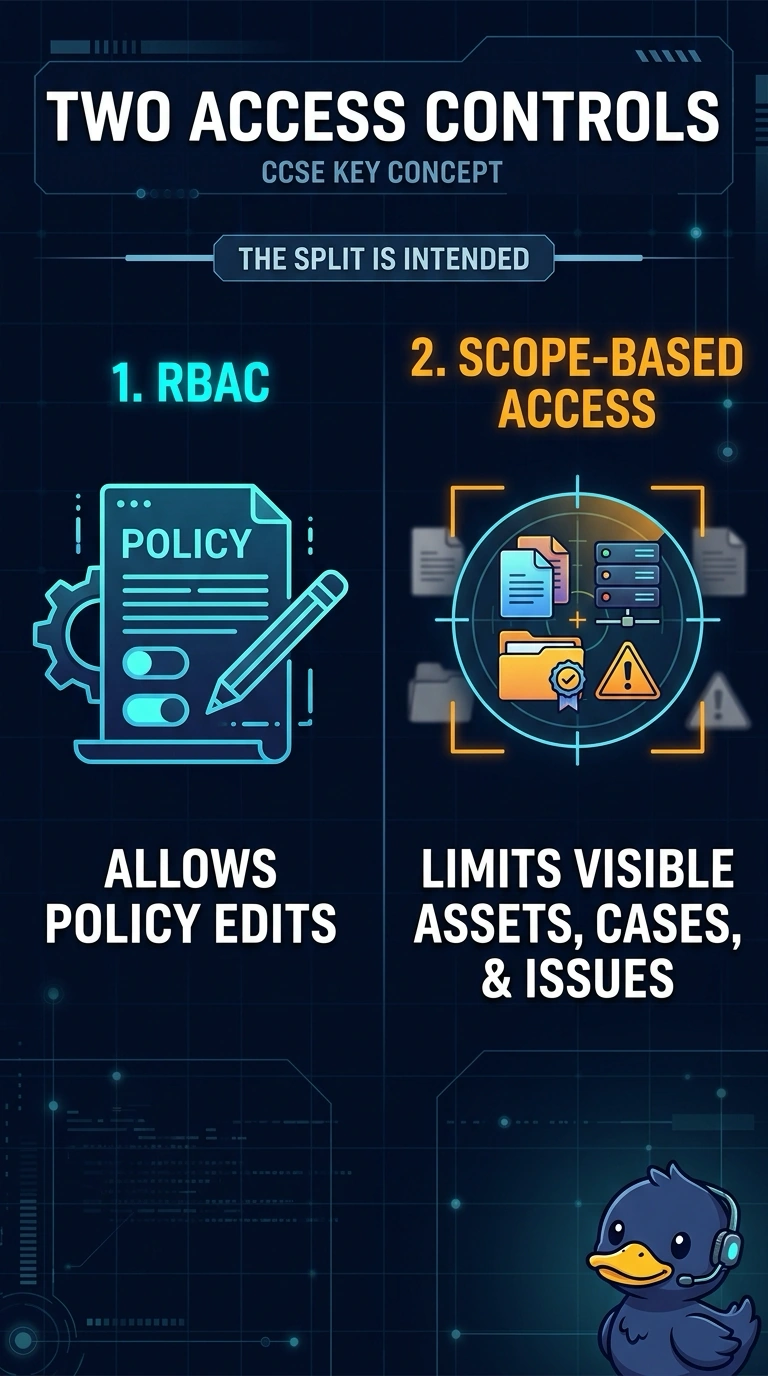
Two wings can share a building and still keep separate badges. You can edit policy because your role allows that action, while scope limits which hospital’s assets, cases, and issues you can see. The connector and password explanations don’t fit this intended access split.
Full Explanation
RBAC determines which actions your role may take; because you can edit application policies, that permission is present. Scope-based access determines which assets, cases, and issues you may see, and your scope is limited to this hospital. The other hospital staying invisible is the intended split, not a failure. A missing RBAC permission would block the policy edit; it would not explain why you can edit while assets remain hidden. An offline connector would affect the cluster resource feed for everyone allowed to see that cluster, not only you, and assets that are not Kubernetes workloads would not disappear because a connector stopped. An API key carries a role; it is not a shared user password. Switching to a personal password does not bypass SBAC, and a key on a scoped role still follows that scope. Exam caveat: XQL on cases, issues, findings, and asset_inventory follows the same asset scope, so your queries should also omit the other hospital. Practical check: sign in as the engineer, confirm the other hospital’s assets are absent, then confirm a policy edit still saves; compare with an admin whose dynamic groups include both hospitals.