
A county archive repository shows zero application issues. Coverage shows no scanner has run on it. How should an auditor read that?
Select an answer to reveal the explanation.
Short Explanation
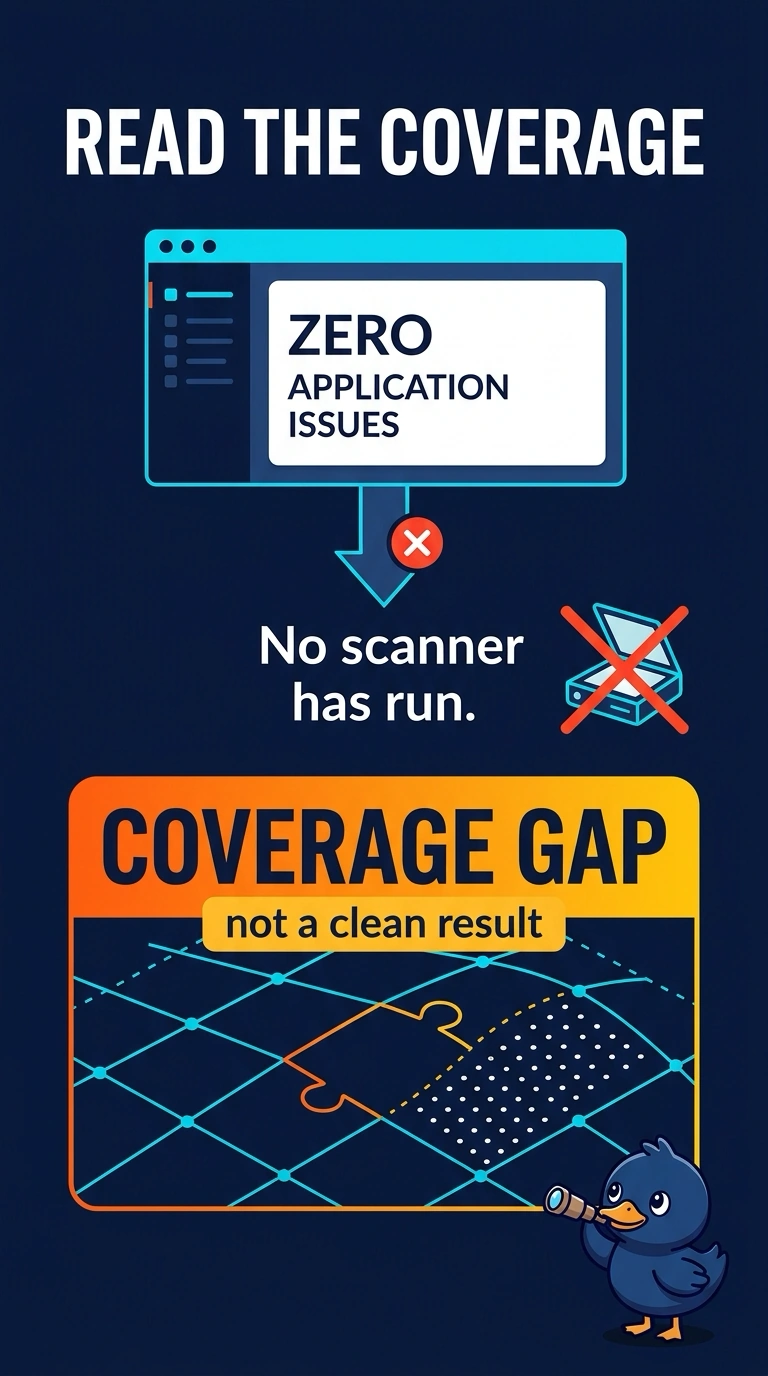
Think of a blank inspection form because nobody walked the building. Your issue count is zero, and coverage says no scanner ran, so this is a gap rather than a clean bill of health. Dropping the repository from the application would hide the gap instead of closing it.
Full Explanation
Coverage shows which repositories and pipelines a scanner actually reached. Zero application issues together with coverage that shows no scanner ran means the scanners never produced a result. That is a coverage gap, not a clean result from a scanner that ran. Calling the repository clean and removing it from the business application treats silence as success and hides the repos ASPM should still track. Drift detection reports a deployed template that no longer matches git. It does not revert defects, and it does not run in place of a repository scanner that never started. The editor trigger reports in the IDE. It does not block a merge, and it does not delete issues that were never created. Exam caveat: a repository can be in a business application and still have no coverage, so the application score is not proof each repo was scanned. Operational check: open coverage for the archive repository, confirm the scanner status is not run, attach the repository to a pipeline that executes the scan, and compare the issue count after that run.