
A broadcaster moved to a new Cortex tenant. GitLab CI still targets the old tenant, and the project webhook URL still names that old endpoint. What should they update?
Select an answer to reveal the explanation.
Short Explanation
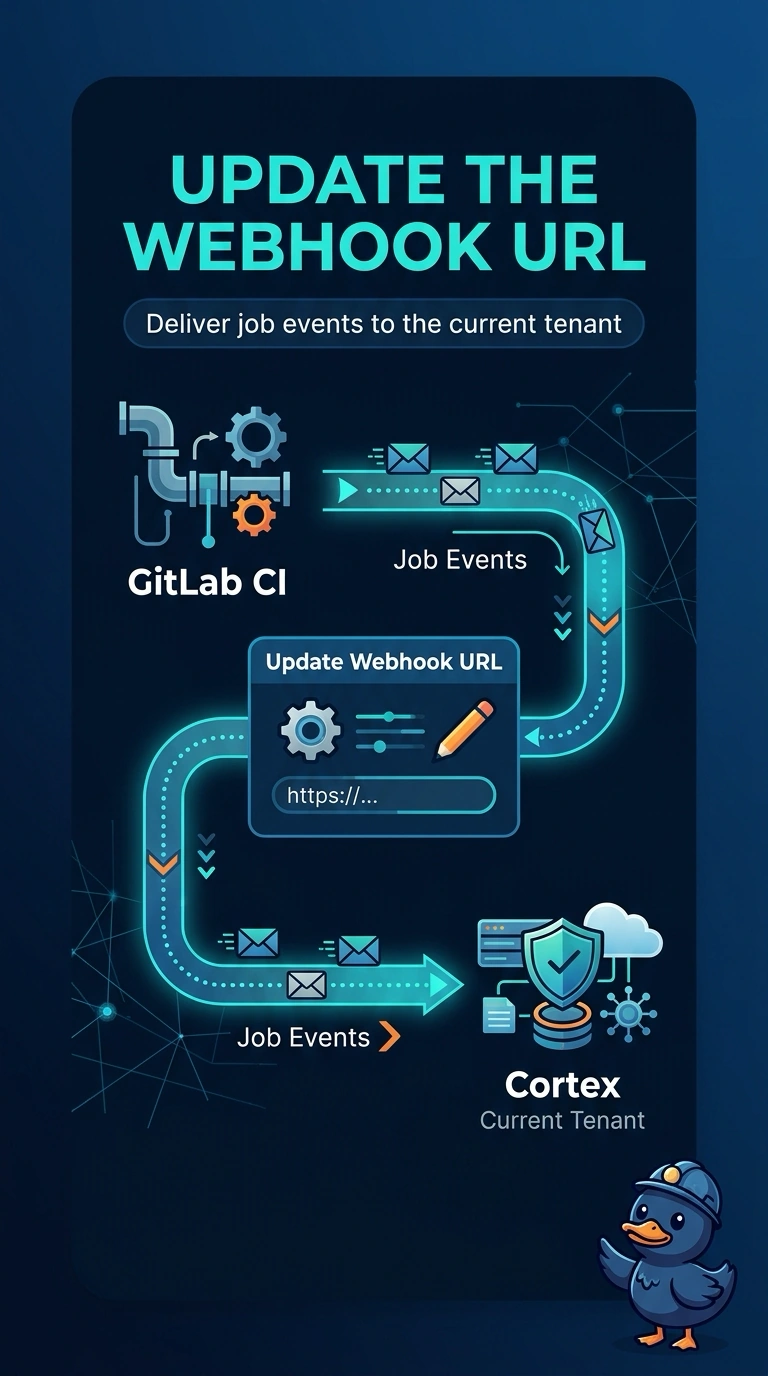
Think of a forwarding address you forgot to file. You moved tenants, and the webhook is still knocking on the old door, so GitLab keeps aiming scans at the tenant you left. Listing repositories with the old token does not move that URL, so update the endpoint the project actually calls.
Full Explanation
Webhook deliveries go where the project is configured to send them. After a tenant move, a webhook URL that still names the old tenant keeps GitLab CI pointed at that old endpoint, so scans and events do not land on the current tenant until the URL is updated. A token that can list repositories has a scope question, and the stem says the list right already works. That right does not rewrite the webhook host. The outpost registration callback moves an outpost from Pending to Connected for a cloud account. It does not choose the GitLab webhook endpoint, and GitLab onboarding is a development-system connection rather than an outpost. A prevention profile on a runner decides endpoint blocking for that agent. It does not set the URL GitLab uses for webhook delivery. Exam caveat: updating the URL and leaving a mismatched webhook secret still fails the delivery, so the secret stored for the new tenant has to match the project. Operational check: send a test hook from the project, confirm the request hits the current tenant endpoint, and confirm the old tenant no longer receives that project's events.