
New urgent-care VMs cloned from the golden image never heartbeat. Outbound TCP 443 to the regional heartbeat and upload names succeeds from the same subnet, and the agent package is present, but its service is stopped in the image. What is the fault?
Select an answer to reveal the explanation.
Short Explanation
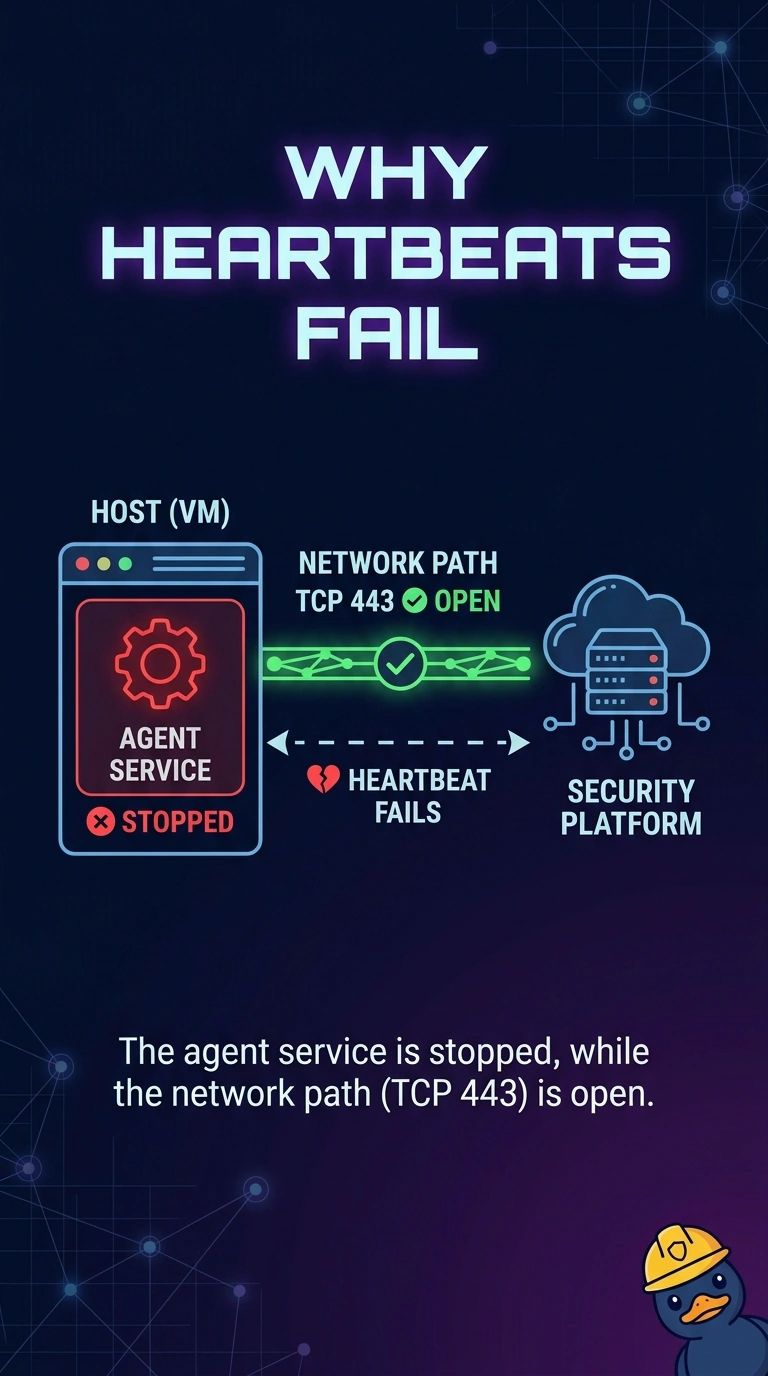
Think of a phone that is plugged in but will not ring because its handset is hung up. You’ve confirmed outbound TCP 443 works and the agent package is present, but its service is stopped in the image: the fault is the service, not the network path. Start it on a test clone, then update the golden image so new clones boot with the service running.
Full Explanation
An agent that never heartbeats can point to a blocked network path or a package that is not running. Here, outbound TCP 443 to the regional heartbeat and upload names succeeds, the agent package is present, and its service is stopped in the golden image. The stopped service is therefore the fault: every clone inherits an agent that is installed but not running, so none checks in. Missing egress from private subnets to the Cortex image-source account is not the issue; that access is needed by outpost scanner VMs to boot their scanner image, while these urgent-care VMs are customer workloads and their tested path is open. A missing Kubernetes connector on an urgent-care cluster does not explain the failure: these VMs do not use that cluster, and a connector would not start their agent service. UDP 123 blocked toward the tenant web console is also not the fault. Time synchronization uses the approved time source; the public names are Broker VM defaults, not mandatory NTP destinations for every cloned workstation. Exam caveat: if heartbeats still fail after the service is started, revisit the proxy and the heartbeat and upload names; the current evidence does not point to those network settings. Practical check: start the service on a test clone, confirm a heartbeat, and fix the golden image so future clones boot with the service running. Use the supported golden-image preparation workflow rather than simply cloning an already registered endpoint identity.