
A museum system's Cortex Cloud stack succeeds in one Azure subscription and fails in another. The failed deployment event reports AuthorizationFailed for a specific action. What should the engineer compare first?
Select an answer to reveal the explanation.
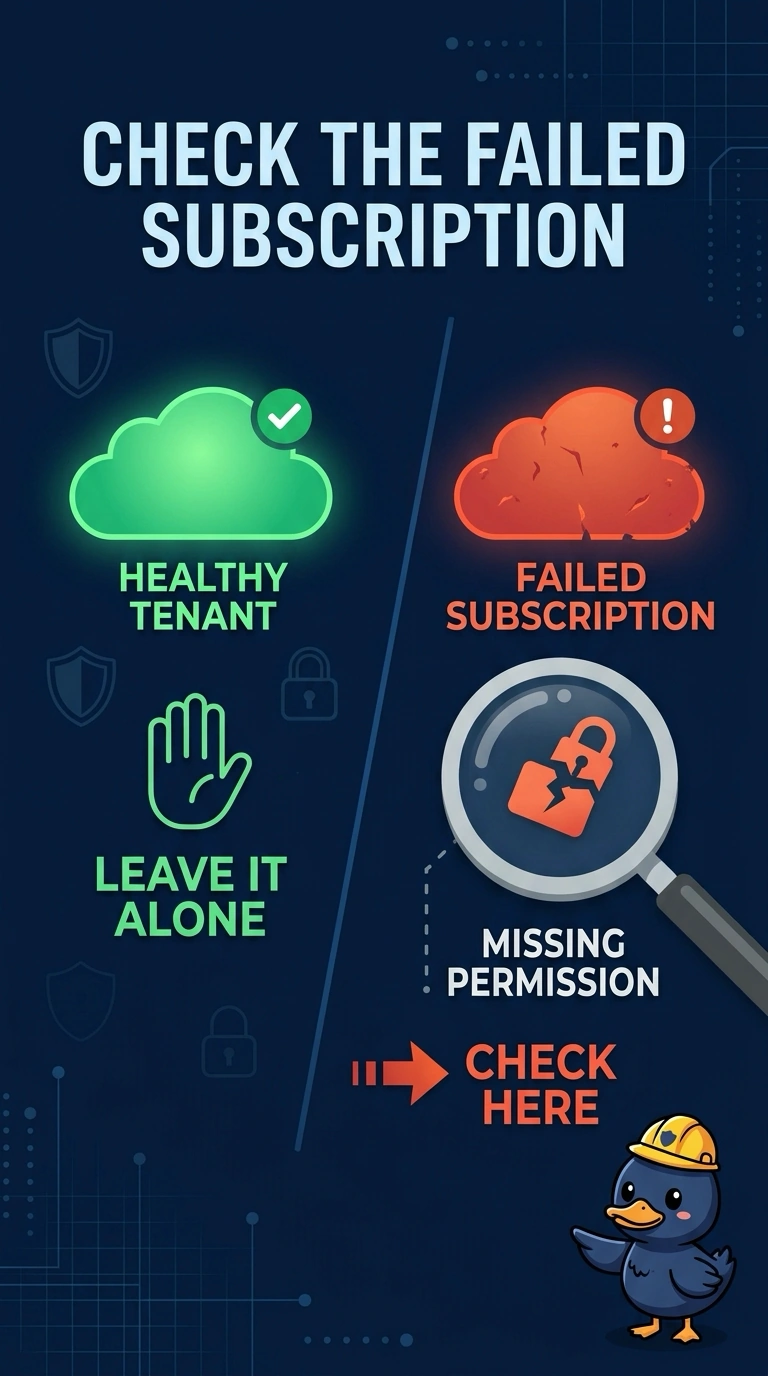
Short Explanation
You can think of the two subscriptions as doors cut from the same key blank, with one lock still changed. Compare effective permissions and policy at the failed scope using the explicit authorization error, preserving the successful onboarding. A deployment failure without such evidence can also have nonpermission causes.
Full Explanation
When the stack succeeds in one subscription and fails in another with an AuthorizationFailed event for a specific action, the difference is a local effective access issue. Compare effective permissions and policy at the failed scope using the explicit authorization error, preserving the successful onboarding. A deployment failure without such evidence can also have nonpermission causes. The successful subscription is the control case proving the tenant can accept a stack, so you leave the healthy tenant alone and scope the fix to the failed subscription. A full tenant rebuild forces both subscriptions to start over even though one onboarding already proves the shared tenant works, adding risk without targeting the scoped error. Changing the tenant region edits a shared setting that is already good enough for the subscription that worked, so it cannot explain a per-subscription authorization difference. Reinstalling the Broker VM targets a bridge appliance that does not apply to Azure onboarding stacks and ignores the explicit authorization signal. Practical check: compare the failed stack event with the successful subscription's role, add only the missing permission or clear the local deny, then rerun the failed subscription alone.